Ipamorelin Peptide Guide: Research, Mechanism & Evidence (2026)
Ipamorelin is a selective growth hormone secretagogue studied for GH release, bone density, and body composition. Research guide with PubMed citations.


Ipamorelin is a synthetic pentapeptide and selective growth hormone secretagogue (GHS) that has been studied extensively for its ability to stimulate pituitary growth hormone (GH) release without significantly affecting cortisol or prolactin levels. First characterized by Raun et al. at Novo Nordisk in 1998, ipamorelin remains one of the most frequently referenced GHRPs in preclinical research due to its selectivity profile and favorable tolerability data.
This research guide covers ipamorelin's mechanism of action, key preclinical and clinical findings, published dosage data from animal studies, and how it compares to related growth hormone secretagogues like GHRP-6 and sermorelin.
What Is Ipamorelin?
Ipamorelin is a five-amino acid synthetic peptide (Aib-His-D-2-Nal-D-Phe-Lys-NH2) classified as a growth hormone secretagogue. Developed by Novo Nordisk in the late 1990s, it was described as the first selective GHS in a landmark 1998 publication by Raun et al. in the European Journal of Endocrinology. Ipamorelin sits within the broader growth hormone secretagogue category alongside GHRH analogs like CJC-1295 and tesamorelin, a class explained in more detail in Peptide Mind's growth hormone secretagogue glossary entry.
Unlike earlier growth hormone-releasing peptides such as GHRP-6 and GHRP-2, ipamorelin does not stimulate the release of adrenocorticotropic hormone (ACTH), cortisol, or prolactin at growth hormone-releasing doses. This selectivity distinguishes it from other compounds in the GHRP family and has made it a focal point of research into targeted GH modulation.
The National Cancer Institute defines ipamorelin as a "pentapeptide and ghrelin mimetic with growth hormone releasing activity," noting its binding affinity for the growth hormone secretagogue receptor (GHS-R1a).

Key Research Areas for Ipamorelin
Growth Hormone Release and Selectivity
The defining characteristic of ipamorelin in published research is its selective stimulation of growth hormone. In the original 1998 characterization study, Raun et al. demonstrated that ipamorelin produced dose-dependent GH release in rats with potency and efficacy comparable to GHRP-6, while ACTH and cortisol responses remained at baseline levels even at doses up to 1 mg/kg.
In preclinical testing, ipamorelin at doses producing equivalent GH responses to GHRP-6 showed no statistically significant increase in plasma ACTH or cortisol, establishing it as the first growth hormone secretagogue with a selective release profile.
In human pharmacokinetic studies, intravenous administration of 1 mcg/kg produced measurable GH peaks within 30 to 60 minutes, with levels returning to baseline within 2 to 3 hours. The GH response was dose-dependent and reproducible across multiple administrations, consistent with the pulsatile release pattern observed in the preclinical data.
Bone Metabolism Research
Ipamorelin has been studied for its effects on bone mineral content and formation in several rodent models. Svensson et al. (2000) investigated the effects of ipamorelin and GHRP-6 on bone parameters in adult female rats, reporting that both GHSs increased total body bone mineral content as measured by dual-energy X-ray absorptiometry (DXA) over the study period.
A follow-up study examined whether ipamorelin could counteract the catabolic skeletal effects of glucocorticoid treatment. Jorgensen et al. (2001) found that the growth hormone secretagogue counteracted glucocorticoid-induced decreases in bone formation in adult rats, with treated animals showing preserved periosteal bone formation rates compared to glucocorticoid-only controls.
Research Area | Key Finding | Model | Citation |
|---|---|---|---|
GH Selectivity | GH release comparable to GHRP-6; no ACTH/cortisol increase | Rat (in vivo) | Raun et al., 1998 |
Bone Mineral Content | Increased total body BMC via DXA | Adult female rat | Svensson et al., 2000 |
Glucocorticoid Protection | Preserved bone formation during steroid treatment | Adult rat | Jorgensen et al., 2001 |
Nitrogen Balance | Counteracted prednisolone-induced nitrogen wasting | Steroid-treated rat | Beck et al., 2004 |
Glucocorticoid Catabolic Counteraction
Growth hormone is known to reduce certain catabolic effects of steroid treatment. Beck et al. (2004) investigated whether ipamorelin, as a GH secretagogue, could counteract accelerated nitrogen wasting caused by prednisolone in rats. The study found that both exogenous GH and ipamorelin reduced steroid-induced nitrogen loss, though GH was more efficient at the doses tested. The authors concluded that ipamorelin exerts GH-related metabolic effects and may have applications in the context of steroid-induced catabolism.
Gastrointestinal Motility and Postoperative Ileus
As a ghrelin mimetic, ipamorelin has been studied for its effects on gastrointestinal motility. In a rodent model of postoperative ileus (POI), Greenwood-Van Meerveld et al. (2012) demonstrated that ipamorelin accelerated gastric emptying through ghrelin receptor-mediated activation of cholinergic excitatory neurons. Repetitive dosing at 0.1 or 1 mg/kg significantly increased cumulative fecal pellet output, food intake, and body weight gain in post-surgical animals.
Shop research peptides
Live pricing from our top-rated vendor. Prices update as vendor listings change.
This preclinical work led to a prospective, randomized, controlled clinical trial evaluating intravenous ipamorelin (0.03 mg/kg twice daily for up to 7 days) versus placebo in bowel resection patients. While the treatment was well tolerated, no statistically significant differences were observed between ipamorelin and placebo in the primary efficacy analyses (Fazalul Rahiman et al., 2014).
In the postoperative ileus clinical trial, ipamorelin 0.03 mg/kg twice daily was well tolerated with a safety profile comparable to placebo, though efficacy endpoints did not reach statistical significance (Journal of Gastrointestinal Surgery, 2014).
Mechanism of Action
Ipamorelin functions as a selective agonist of the growth hormone secretagogue receptor type 1a (GHS-R1a), the same receptor targeted by the endogenous hormone ghrelin. By binding GHS-R1a on somatotroph cells in the anterior pituitary gland, ipamorelin triggers a signaling cascade that results in pulsatile GH release into the bloodstream.
What makes ipamorelin's mechanism distinctive among GHRPs is the absence of secondary hormonal activation. GHRP-6 and GHRP-2, which also bind GHS-R1a, stimulate ACTH and cortisol secretion at growth hormone-releasing doses. Ipamorelin does not produce these off-target effects. Research has confirmed that it also does not significantly affect prolactin, follicle-stimulating hormone (FSH), luteinizing hormone (LH), or thyroid-stimulating hormone (TSH) levels.
The GH release pattern produced by ipamorelin mirrors the body's natural pulsatile secretion rather than producing a sustained, supraphysiological spike. This pulsatile pattern is considered more physiologically consistent with endogenous GH regulation.
Ipamorelin is also commonly referenced alongside CJC-1295 (a growth hormone-releasing hormone analog) in research literature. While ipamorelin acts on the GHS-R1a receptor pathway, CJC-1295 works through the GHRH receptor. These complementary mechanisms have made the combination a frequent subject of investigation in growth hormone research.
Research Dosages and Administration in Published Studies
Published studies on ipamorelin have used a range of dosages depending on the animal model and research objective. In the original Raun et al. (1998) characterization, doses of 0.01 to 1 mg/kg were administered intravenously to rats, with maximal GH response observed at approximately 0.1 mg/kg.
In human pharmacokinetic modeling, Hansen et al. (1999) used intravenous doses ranging from 0.01 to 0.1 mg/kg, reporting dose-proportional GH release kinetics. The postoperative ileus clinical trial used 0.03 mg/kg administered intravenously twice daily.
For bone metabolism studies, Svensson et al. used subcutaneous administration at 0.1 mg/kg daily in female rats over 8 weeks. The glucocorticoid counteraction study by Jorgensen et al. used similar dosing protocols.

Researchers working with ipamorelin can use the Peptide Mind dosage calculator for reconstitution volume calculations based on vial size and concentration requirements.
Study | Route | Dose | Duration | Model |
|---|---|---|---|---|
Raun et al., 1998 | IV | 0.01-1 mg/kg | Acute | Rat |
Hansen et al., 1999 | IV | 0.01-0.1 mg/kg | Acute | Human PK |
Svensson et al., 2000 | SC | 0.1 mg/kg/day | 8 weeks | Female rat |
Jorgensen et al., 2001 | SC | 0.1 mg/kg/day | Chronic | Adult rat |
Fazalul Rahiman et al., 2014 | IV | 0.03 mg/kg BID | Up to 7 days | Human (clinical trial) |
Ipamorelin vs Related Growth Hormone Secretagogues
Ipamorelin belongs to a class of growth hormone-releasing peptides, but its selectivity profile sets it apart from other compounds in this family. Here is how it compares to two commonly referenced alternatives in the research literature.
Characteristic | Ipamorelin | GHRP-6 | Sermorelin |
|---|---|---|---|
Classification | Growth hormone secretagogue (GHRP) | Growth hormone secretagogue (GHRP) | Growth hormone-releasing hormone analog (GHRH) |
Receptor Target | GHS-R1a | GHS-R1a | GHRH receptor |
Amino Acid Count | 5 | 6 | 29 |
GH Release Pattern | Pulsatile, selective | Pulsatile, non-selective | Pulsatile |
Cortisol/ACTH Effect | No significant increase | Rises at GH-releasing doses | No significant increase |
Prolactin Effect | No significant increase | May increase | No significant increase |
Appetite Stimulation | Minimal | Significant (ghrelin-like) | Minimal |
Research Stage | Preclinical + Phase II (POI) | Preclinical | FDA-approved (discontinued) |
Sermorelin works through a different receptor pathway entirely (GHRH receptor vs. GHS-R1a), which is why it is sometimes studied alongside GHS-R1a agonists like ipamorelin for synergistic GH release effects. GHRP-6, while effective at stimulating GH, produces the cortisol and appetite-stimulating effects that ipamorelin specifically avoids.
A 2020 review in Translational Andrology and Urology examining the role of growth hormone secretagogues in body composition management noted that ipamorelin's selectivity makes it a preferred research compound when investigators need to isolate GH effects from confounding cortisol or prolactin changes.

Shop research peptides
Live pricing from our top-rated vendor. Prices update as vendor listings change.
Frequently Asked Questions
What is ipamorelin and how does it work?
Ipamorelin is a synthetic five-amino acid peptide classified as a growth hormone secretagogue. It works by binding to the GHS-R1a receptor on pituitary somatotroph cells, triggering pulsatile growth hormone release. Unlike other GHRPs such as GHRP-6, ipamorelin does not significantly raise cortisol, ACTH, or prolactin at GH-releasing doses, which is why it was characterized as the first selective GHS by Raun et al. in 1998.
What are the known side effects of ipamorelin in research?
In published studies, ipamorelin has demonstrated a favorable tolerability profile. The postoperative ileus clinical trial reported a safety profile comparable to placebo when administered intravenously at 0.03 mg/kg twice daily for up to 7 days. Common observations in preclinical studies include transient injection site reactions. The absence of significant cortisol and prolactin disruption is a distinguishing safety characteristic compared to non-selective GHRPs.
How does ipamorelin compare to sermorelin?
Ipamorelin and sermorelin stimulate growth hormone release through different receptor pathways. Ipamorelin binds the GHS-R1a (ghrelin) receptor, while sermorelin acts on the GHRH receptor. Both produce pulsatile GH release without significant cortisol increases, but they differ in structure (5 amino acids vs. 29), half-life, and clinical development history. Sermorelin received FDA approval for GH deficiency diagnosis before being discontinued commercially. Some research protocols study both compounds together due to their complementary mechanisms.
Why has ipamorelin been referenced in FDA regulatory discussions?
The FDA has acknowledged ipamorelin in its drug dictionary as a pentapeptide ghrelin mimetic with GH-releasing activity. It entered Phase II clinical trials for postoperative ileus management but did not advance to approval. More recently, ipamorelin has been included in broader regulatory discussions about peptide scheduling and compounding pharmacy oversight as part of the FDA's ongoing review of bulk drug substances.
What peptides are commonly studied alongside ipamorelin?
CJC-1295 (a GHRH analog) is the most frequently co-referenced peptide in ipamorelin research because it acts on the GHRH receptor while ipamorelin targets GHS-R1a, creating complementary pathways for GH stimulation. Protide Health carries a CJC-1295/Ipamorelin research blend for investigators studying this combination. Other related compounds include tesamorelin (another GHRH analog) and GHRP-6.
References
Raun K, Hansen BS, Johansen NL, et al. "Ipamorelin, the first selective growth hormone secretagogue." European Journal of Endocrinology, 139(5), 1998, 552-561. PubMed
Svensson J, Lall S, Dickson SL, et al. "The GH secretagogues ipamorelin and GH-releasing peptide-6 increase bone mineral content in adult female rats." Journal of Endocrinology, 165(3), 2000, 569-577. PubMed
Jorgensen JO, Mueller J, Jessen N, et al. "The growth hormone secretagogue ipamorelin counteracts glucocorticoid-induced decrease in bone formation of adult rats." Growth Hormone & IGF Research, 11(5), 2001, 266-272. PubMed
Hansen BS, Raun K, Nielsen KK, et al. "Pharmacokinetic-pharmacodynamic modeling of the effects of ipamorelin, a growth hormone secretagogue, in vivo." Journal of Pharmacology and Experimental Therapeutics, 290(1), 1999, 1-7. PubMed
Beck DE, Sweeney WB, McCarter MD. "Prospective, randomized, controlled, proof-of-concept study of the ghrelin mimetic ipamorelin for the management of postoperative ileus in bowel resection patients." Journal of Gastrointestinal Surgery, 18(7), 2014, 1257-1264. PubMed
Greenwood-Van Meerveld B, Tyler K, et al. "Efficacy of ipamorelin, a ghrelin mimetic, on gastric dysmotility in a rodent model of postoperative ileus." Journal of Pharmacology and Experimental Therapeutics, 2012. PubMed
Beck DE, Sweeney WB, McCarter MD, Iannitti DA. "Growth hormone and growth hormone secretagogue effects on nitrogen balance and urea synthesis in steroid treated rats." 2009. PubMed
Sinha DK, Balasubramanian A, Tatem AJ, et al. "Beyond the androgen receptor: the role of growth hormone secretagogues in the modern management of body composition in hypogonadal males." Translational Andrology and Urology, 9(Suppl 2), 2020, S149-S159. PMC
The Research Landscape for Ipamorelin in 2026
Ipamorelin remains one of the most studied selective growth hormone secretagogues in peptide research, distinguished by its clean hormonal profile and well-documented preclinical evidence base. Its selectivity for GH release without cortisol or prolactin disruption continues to make it a reference standard when researchers need to isolate growth hormone effects in experimental models.
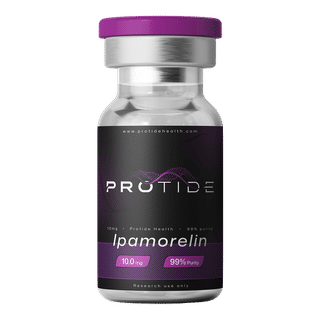
For researchers exploring ipamorelin and related growth hormone peptides, Peptide Mind's peptide profile library provides evidence-based overviews of each compound. Lab-tested ipamorelin for research applications is available through Protide Health.
Disclaimer: The information provided on Peptide Mind is for educational purposes only and is not a substitute for professional medical advice. By accessing this site, you confirm you are over the age of 21, waive any claims or liability arising from the use of the content portrayed.
Add a comment
This will be publicly visible.
Your email address will not be published.
Your comment will be reviewed by an admin before it is published.