Reviewed by the PeptideMind Team · Updated August 5, 2026
GLOW Peptide Protocol (GHK-Cu, BPC-157, TB-500) Dosage Calculator, Guide & Side Effects
Use our free GLOW peptide dosage calculator to dose GHK-Cu, BPC-157 & TB-500 correctly, plus reconstitution tips, skin and recovery benefits, and side effects to know.
As seen on






Glow Blend Dosage Schedule
Pairs a copper peptide known for skin health with two well-studied tissue-repair peptides in one shot, for people who want firmer, healthier-looking skin alongside general recovery support.
Glow Blend Skin & Repair Protocol
7 weeks, focused on skin and hair.
5 days per week
Taken Monday through Friday.
2.8 mg per injection
2.8 mg per injection, given just under the skin in the abdomen or thigh.
This blend combines GHK-Cu, BPC-157, and TB-500 to support skin health alongside general tissue repair. How much you take depends on the amount of GHK-Cu in the specific product; this targets a total blend dose of 2.8 mg (2 mg GHK-Cu, 400 mcg BPC-157, and 400 mcg TB-500).
What is Glow Blend?
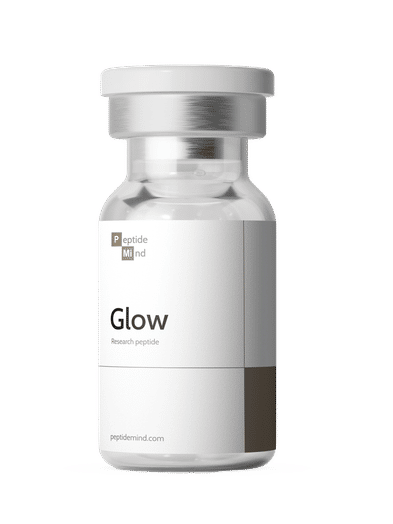
Glow Blend is a combination of three well-known research peptides (GHK-Cu, BPC-157, and TB-500) mixed together to work on skin and tissue repair from multiple angles at once. GHK-Cu boosts collagen and skin renewal, BPC-157 supports healing and blood vessel growth, and TB-500 helps cells move to where repair is needed. It's used in research and wellness settings for faster healing, skin rejuvenation, and recovery from musculoskeletal injuries.
Skin
glw
Skin
Where to buy Glow Blend
Compare real-time Glow Blend prices from vendors with third-party lab testing (COA), purity, and legitimacy, so you know exactly who's trustworthy before you buy.
Dose size
Chosen on COA purity, third-party testing, and service, no paid placements.

7 of 8 vendors third-party tested, COA purity 99.15–99.71% across published labs. Prices re-checked 59 days ago.
What Does Glow Blend Do?
GHK-Cu boosts collagen-building enzymes in the skin; BPC-157 switches on blood-vessel-growth signals and calms inflammation at the site of injury; and TB-500 grabs onto a cell's internal scaffolding protein (actin) to help cells move quickly to where they're needed. Combined, the three peptides support tissue repair from different angles at once.
Builds collagen
GHK-Cu boosts collagen-building enzymes in the skin.
Grows new vessels
BPC-157 switches on blood-vessel-growth signals and calms inflammation.
Speeds cell movement
TB-500 helps cells move quickly to where they're needed.
Glow Blend Targeted areas
Frequently Asked Questions About Glow Blend
Straight answers on reconstitution, dosing, and safety, everything you need to research with confidence. For research reference only.
Glow Blend Reconstitution Guide
Glow Blend is supplied as a freeze-dried powder that must be mixed into a injectable solution before use. Available in 70mg blend, 90mg blend sizes.
70 mg lyophilized vial
Glow Blend is supplied as a freeze-dried powder that must be mixed into a injectable solution before use. Available in 70mg blend, 90mg blend sizes.
3 mL bacteriostatic water
Adding 3 mL of bac water to a 70 mg vial gives a workable concentration for syringe dosing. More water makes microdosing easier; less concentrates each draw.
Storage after mixing
Freeze the dry powder for long-term storage, or refrigerate it for up to four weeks. Once mixed with 3mL of bacteriostatic water, refrigerate and use within about a month, kept away from light. After reconstitution, keep the vial refrigerated and use within 30 days.
Reconstitution steps
Remove caps & sanitize stoppers
Attach needle to syringe
Draw 3 mL bacteriostatic water
Insert needle into Glow Blend vial
Release water gently down the side
Swirl to dissolve — don't shake
Check for full dissolution
Refrigerate Glow Blend — good for 30 days
What Are the Benefits of Glow Blend?
What research says it may help with, and how it works in the body.
primary applications
The three ingredients are thought to work better together than alone, but formal studies testing this combination are still limited.
The GHK-Cu ingredient stimulates the body to produce more collagen, a key protein for skin and connective tissue.
The BPC-157 and TB-500 ingredients in the blend help support the regrowth and repair of tissue.
What Are the Side Effects of Glow Blend?
Who should avoid it, warning signs to watch for, and what to know before combining it with other compounds.
Stop Right Away If You Notice
Severe injection site reactions or infection
Allergic reactions (rash, difficulty breathing)
Signs of copper toxicity (nausea, jaundice)
Milder Signs to Watch For
Compare the Peptides in Glow Blend
See how BPC-157, GHK-Cu, TB-500 stack up individually on dosing, mechanism, and research before you combine them in Glow Blend.
Overview
- Type
- Single peptide
- Primary category
- Healing
- Secondary categories
- Longevity
- Research status
- Preclinical
- FDA approved
- Not FDA approved
- Popularity
- 10/10
- Body targets
- GutMuscleJoints & Bone
- Price range
- $29.99 – $320.00
- Human trial status
- Human pilot studies
- Legal status
- Research chemical
- WADA status
- Banned
Dosing
- Dose
- 250–500 mcg
- Frequency
- Daily
- Cycle
- As needed
- Route of administration
- Subcutaneous
- Common vial sizes
- 5mg10mg
Research
- Molecular weight
- 1419.54 g/mol
- Half-life
- 0.5 hrs
- Median onset
- —
- Prescription alternative
- No alternative
- Receptor target
- VEGFRGHR
- Receptor action
- Modulator
- Mechanistic pathways
- VEGF AngiogenesisGastric CytoprotectiveGHRH GH AXIS
Overview
- Type
- Single peptide
- Primary category
- Skin
- Secondary categories
- HealingLongevity
- Research status
- Experimental
- FDA approved
- Not FDA approved
- Popularity
- 10/10
- Body targets
- Skin
- Price range
- Human trial status
- Human RCTs
- Legal status
- Over-the-counter
- WADA status
- Not banned
Dosing
- Dose
- 1-2 mg
- Frequency
- 5 days on / 2 days off
- Cycle
- 8–12 weeks
- Route of administration
- Topical
- Common vial sizes
- 5mg10mg+2
Research
- Molecular weight
- 401.9 g/mol
- Half-life
- —
- Median onset
- —
- Prescription alternative
- No alternative
- Receptor target
- —
- Receptor action
- Unknown
- Mechanistic pathways
- VEGF AngiogenesisCopper Peptide Collagen
Included in
Overview
- Type
- Single peptide
- Primary category
- Healing
- Secondary categories
- Longevity
- Research status
- Preclinical
- FDA approved
- Not FDA approved
- Popularity
- 9/10
- Body targets
- MuscleHeartJoints & Bone
- Price range
- $34.00 – $332.00
- Human trial status
- Human RCTs
- Legal status
- Research chemical
- WADA status
- Banned
Dosing
- Dose
- 1–2 mg
- Frequency
- 2x/week
- Cycle
- 4–6 weeks
- Route of administration
- Subcutaneous
- Common vial sizes
- 2mg5mg+1
Research
- Molecular weight
- 889.02 g/mol
- Half-life
- 2 hrs
- Median onset
- —
- Prescription alternative
- No alternative
- Receptor target
- —
- Receptor action
- Modulator
- Mechanistic pathways
- VEGF AngiogenesisImmune ModulatingActin Cytoskeleton Regulation
Is Glow Blend FDA approved?
Glow Blend is not an FDA-approved drug. It is intended for research purposes only and is not approved for human consumption, diagnostic, or therapeutic use.
Research Use Only
Glow Blend has not been evaluated by the FDA for safety or efficacy in humans.
No Clinical Oversight
Not manufactured under FDA-regulated quality or clinical standards.
Unregulated Sourcing
Purity, dosing, and sourcing are not verified through FDA testing or oversight.

Glow Blend Cycle Length: How Long Should It Last?
This breaks down how long a typical Glow Blend cycle runs and what research suggests happens at each stage. Research shows that staying on a peptide continuously, without a break, may make it less effective over time.
That's why most research protocols build in a break between cycles, often called a washout period, to let the body reset before starting again.
- Week 1-2
- Initial tissue healing response begins
- Week 2-4
- Visible skin improvements may begin
- Week 4-8
- Collagen synthesis and regeneration effects
- Week 8-12
- Peak effects; optimal skin rejuvenation
Glow Blend Research References
It is a preclinical compound
Glow Blend
Glow Blend is a preclinical compound
Dose range 250-500mcg daily shows wound healing and anti-inflammatory properties
n.d.
Demonstrates collagen stimulation and skin improvement at 1-2mg daily doses
n.d.
Shows tissue regeneration effects at 2-5mg twice weekly dosing
n.d.