SIP Peptide Guide: Sleep Support & Delta Wave Insights
5 mins read
Discover how SIP peptides enhance sleep support, promote delta waves, and regulate circadian rhythms. Unlock better sleep now!
Research updates, peptide guides, and science-backed insights to help you understand how peptides work and what the evidence says.
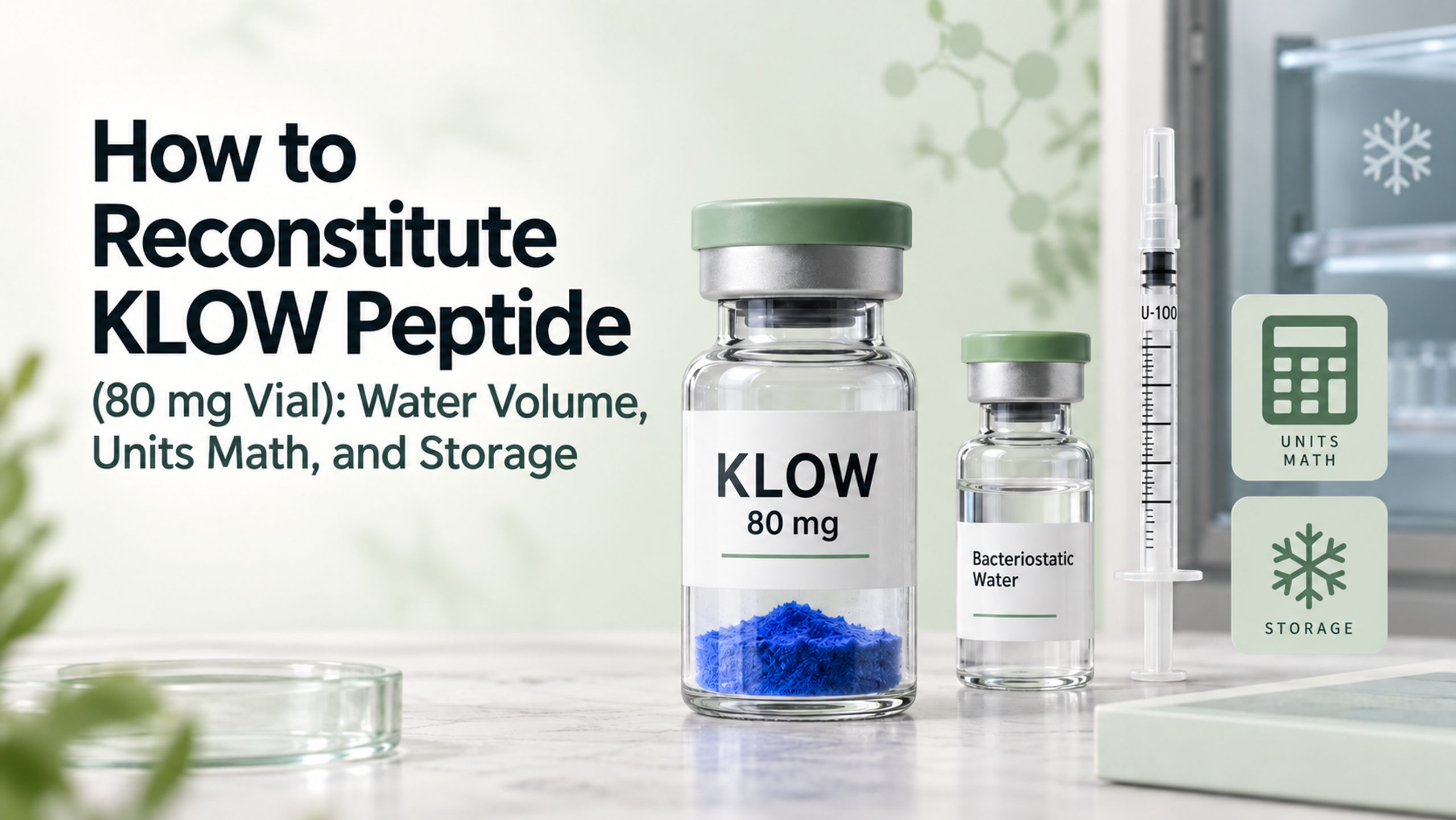

How to reconstitute KLOW peptide: 2, 2.5 or 3 mL of bacteriostatic water for the 80 mg vial, the syringe units for each, why it is blue, and how long it keeps.
Show more
Peptide Mind Research Team
September 4th, 2026
Discover how SIP peptides enhance sleep support, promote delta waves, and regulate circadian rhythms. Unlock better sleep now!

Peptides are studied for tissue repair, skin health, metabolism, cognition, and longevity. Research-backed guide covering peptide benefits, uses, and key studies.
What Are Peptides Used For? Benefits and Research Guide (2026)

DSIP (delta sleep-inducing peptide) is a nonapeptide studied for sleep quality, stress modulation, and neuroprotection. Research guide with PubMed citations.
DSIP Peptide: Delta Sleep-Inducing Peptide Research Guide (2026)
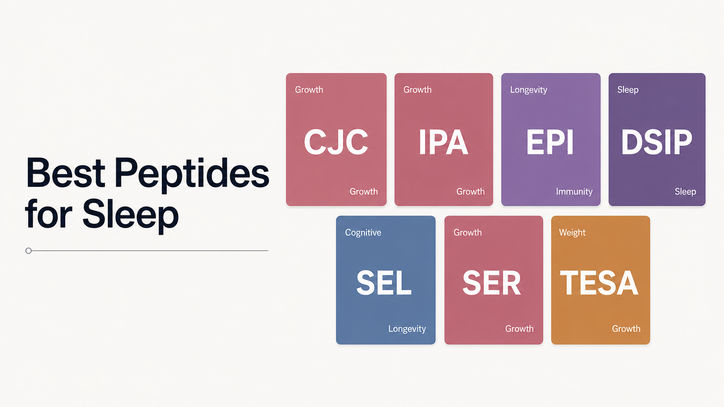
The best peptides for sleep ranked by human trial data, not reputation. DSIP, ipamorelin, epitalon, selank and MK-677 compared on evidence, timing and dosing.
A peptide dosage calculator is a free tool that converts your vial size, bacteriostatic water volume, and target dose into an exact syringe draw volume. Instead of doing the reconstitution math by hand, you enter three inputs and instantly get the concentration of your solution and how many milliliters or syringe units to draw. This calculator works for single peptide compounds and multi-peptide blends.
To calculate your peptide dose, divide the total peptide content of your vial in micrograms by the volume of bacteriostatic water you added in milliliters. This gives you your solution concentration in mcg/mL. Then divide your target dose by that concentration to get your draw volume. For example, a 5mg (5,000 mcg) vial reconstituted with 2mL of BAC water gives a concentration of 2,500 mcg/mL. A 250 mcg dose would require drawing 0.1mL. This calculator automates all of those steps instantly.
Most people add 2mL to 3mL of bacteriostatic water per vial, but the right amount depends on the dose you want to draw and the syringe size you are using. Adding 1mL to a 5mg vial gives you a concentration of 5,000 mcg/mL, making each dose very small in volume. Adding 2mL gives you 2,500 mcg/mL, which is easier to measure on a standard insulin syringe. A general guideline is to choose a volume that puts your typical dose somewhere between 10 and 30 units on a U-100 syringe. Use the calculator above to test different water volumes and find what works for your dose.
Both are made of amino acids, but peptides are much smaller than proteins. Because of their tiny size, peptides can act like tiny messengers in the body, sending specific signals to your cells to tell them exactly what to do.