Vial Septa
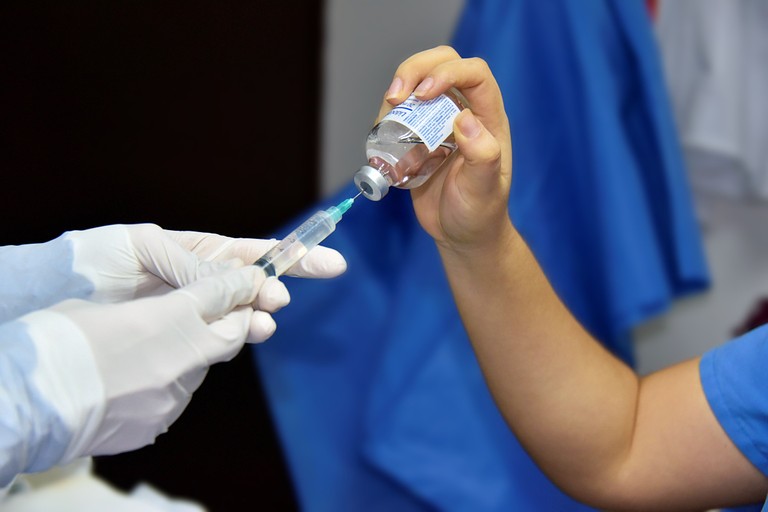
A vial septum is the small rubber disc set into the metal or plastic cap of a peptide vial, sealed under the crimped edge, that a syringe needle passes through to add or withdraw liquid without opening the vial. It's what makes a lyophilized peptide vial usable more than once: the septum reseals itself after each needle puncture, keeping the contents sterile between draws instead of exposing them to open air. Understanding what it is and how to treat it matters because a damaged or repeatedly mishandled septum is one of the more common, avoidable ways a reconstituted vial gets contaminated or loses its intended shelf life.
The septum sits directly beneath the flip-off cap or crimp seal, so it isn't visible until that cap is removed or flipped open, and it should never be pried off or removed entirely. A syringe needle is meant to pass through the center of the septum at a slight angle, not repeatedly through the exact same spot, since concentrating punctures in one location increases the chance of coring, where a small piece of rubber is sheared off by the needle tip and falls into the solution. Coring is more likely with a dull or overly large-gauge needle and less likely with a fine needle inserted smoothly and withdrawn at the same angle it entered. Wiping the septum with an alcohol swab before each puncture, letting it air dry for a few seconds, is standard practice before drawing from a vial that will be accessed more than once, whether for adding diluent during reconstitution or for pulling a dose afterward.
A septum's self-sealing property is what allows a bacteriostatic water vial or a reconstituted peptide vial to be used across multiple sessions instead of a single draw. That property degrades with repeated punctures over time; a septum accessed dozens of times develops small permanent channels that no longer close completely, which is one practical reason vials are treated as having a limited number of draws even when the peptide itself is still within its usable window. Visible signs a septum has been compromised include a cap that no longer sits flush, visible tears or indentations, or resistance that feels different from a fresh puncture. None of these are reasons to force the needle through harder; they're reasons to treat that vial's remaining contents with more caution.
The septum itself has no bearing on the concentration or dose calculations that follow reconstitution; those depend entirely on the vial's total peptide mass and the diluent volume added, not on how the liquid enters or leaves the vial. Where the septum does matter is technique: inserting the needle at an angle rather than straight down, avoiding excess lateral pressure that can bend the needle against the rubber, and not leaving a needle seated in the septum between draws, which keeps a channel open to outside air longer than necessary. For the step-by-step process of using a vial's septum correctly during a reconstitution, including diluent volume and swirling technique, see the guide on reconstitution.