Reviewed by the PeptideMind Team · Updated August 21, 2026
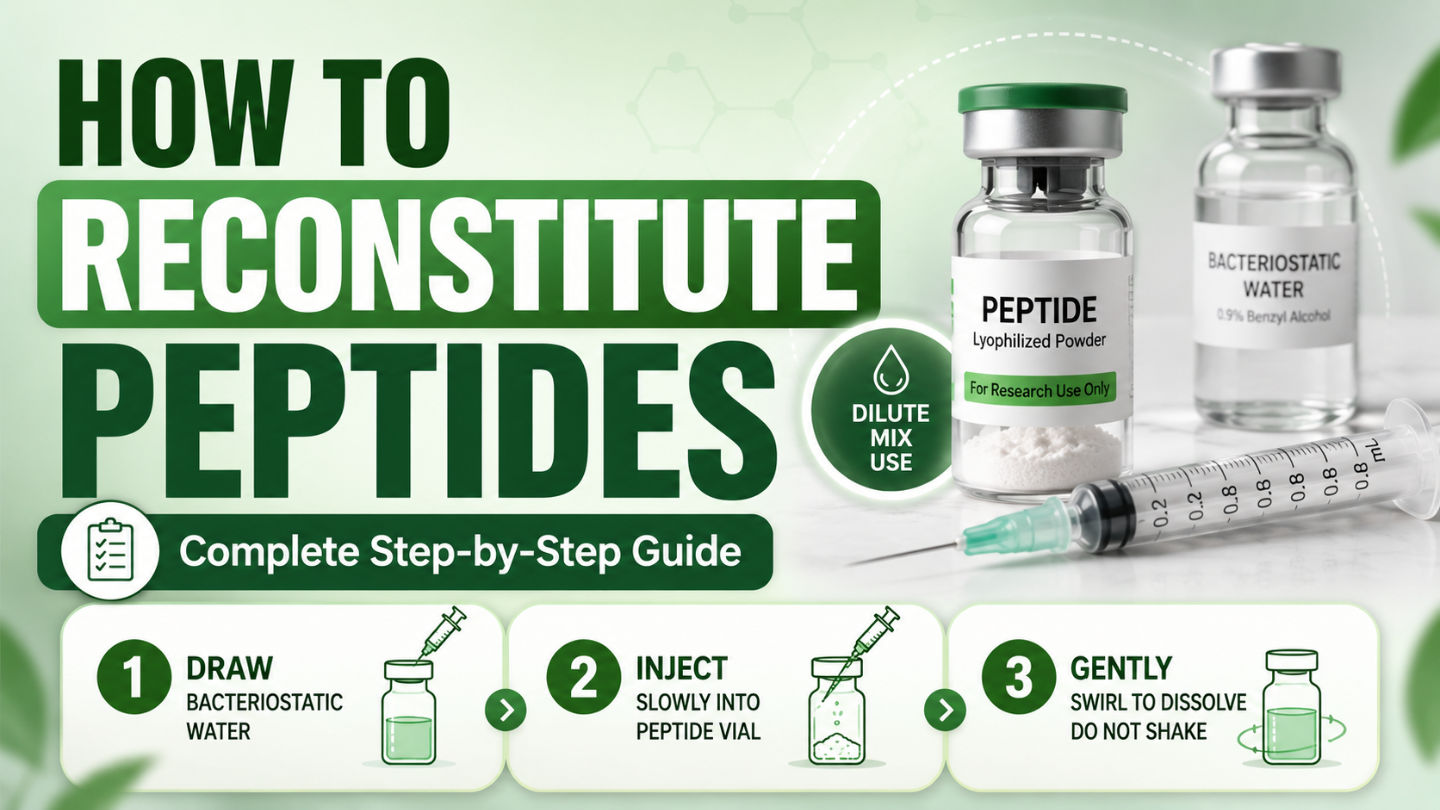
How to Reconstitute Peptides: Complete Step-by-Step Guide
Learn exactly how to reconstitute peptides with bacteriostatic water: step-by-step mixing instructions, reconstitution ratios for BPC-157, semaglutide, CJC-1295/Ipamorelin and more, plus storage tips.
As seen on






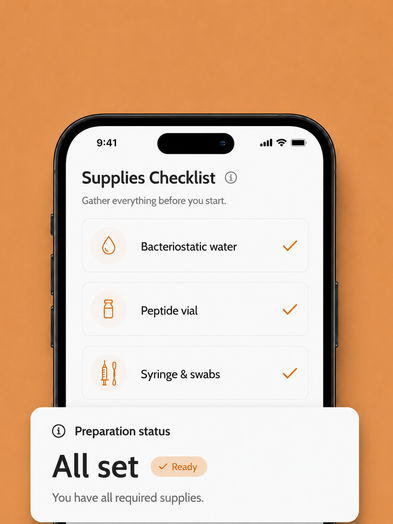
What You'll Need
Gather everything before you start so the vial isn't left open longer than necessary.
Bacteriostatic water
Sterile water with 0.9% benzyl alcohol — the standard diluent for peptide reconstitution. Do not substitute plain sterile water for long-term storage.
Peptide vial
Your lyophilized (freeze-dried) peptide, still sealed, stored at room temperature or refrigerated until use.
Syringe & alcohol swabs
An insulin syringe sized to the volume of water you're drawing, plus alcohol swabs to sanitize both vial tops.
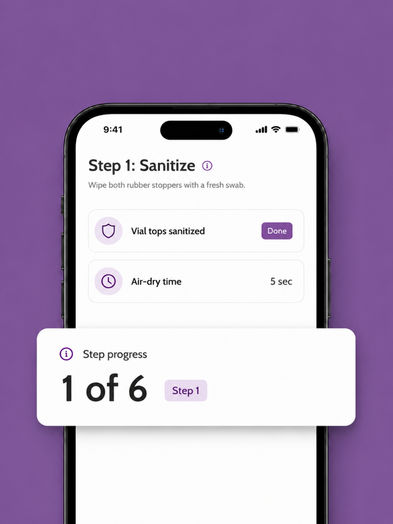
Step 1: Sanitize Both Vial Tops
Wipe the rubber stopper of the peptide vial and the bacteriostatic water vial with a fresh alcohol swab.
Swab both stoppers
Use a new alcohol swab on the peptide vial and another on the bacteriostatic water vial to prevent contamination.
Let it air-dry
Wait a few seconds for the alcohol to evaporate before inserting a needle, which keeps alcohol out of the vial.
Our top-rated vendor
Our rankings are based solely on third-party lab testing rigor, COA transparency, and pricing, no paid placements, no affiliate influence. We update this list as new data comes in.
Based on current scores, this vendor ranks highest across those criteria.

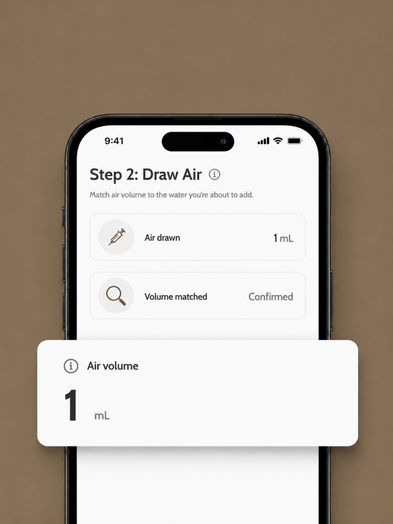
Step 2: Draw Air Into the Syringe
Pull back the plunger to draw an amount of air equal to the amount of water you're about to add.
Match air to water volume
Drawing air first and injecting it into the water vial equalizes pressure, making the water easier to draw out cleanly.
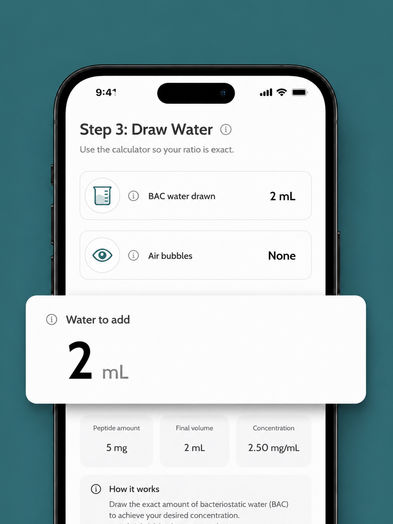
Step 3: Draw the Bacteriostatic Water
Inject the air into the water vial, invert it, and draw out the exact amount of water your ratio calls for.
Use the calculator for exact volume
The amount of water you add determines your final concentration, so use the dosage calculator to keep your ratio precise.
Check for air bubbles
Tap the syringe and push out any trapped air before removing the needle from the vial.
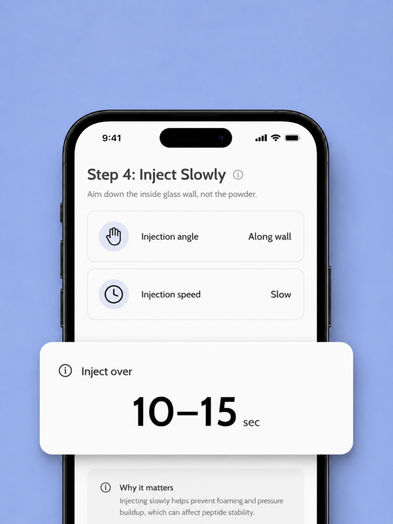
Step 4: Inject the Water Slowly
Insert the needle through the peptide vial's stopper at an angle, aiming the stream down the inside glass wall.
Aim down the glass, not the powder
Letting the water run down the wall instead of blasting the lyophilized powder directly prevents the peptide from foaming or degrading.
Go slowly
A slow, steady injection over several seconds protects the peptide's structure far better than a quick push.
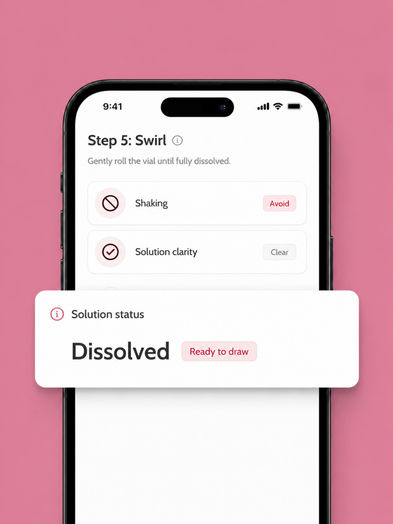
Step 5: Swirl, Never Shake
Gently roll or swirl the vial between your palms until the powder fully dissolves into a clear solution.
Do not shake the vial
Shaking introduces agitation that can denature the peptide's structure. Swirling is gentle enough to dissolve it without damage.
Confirm it's fully clear
The solution should look clear with no visible particles or cloudiness before you draw a dose.
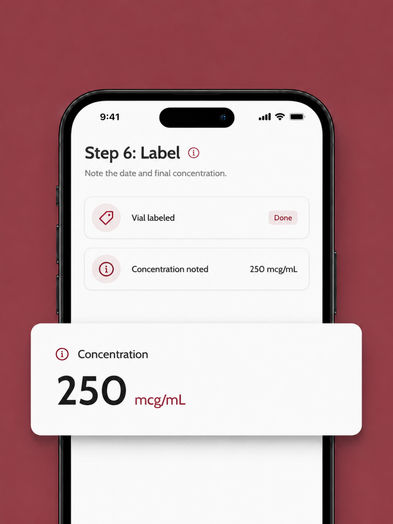
Step 6: Label the Vial
Write the reconstitution date and final concentration directly on the vial or a piece of tape.
Note the date and concentration
Once mixed, it's easy to lose track of when a vial was reconstituted, so label it immediately to keep dosing accurate.
Peptide Reconstitution Ratio Chart:
BPC-157, TB-500, CJC-1295 & More
A quick-reference table for how much bacteriostatic water to add per vial, plus typical dosing, frequency, and cycle length for the most commonly researched peptides. Tap any peptide for its full reconstitution guide. Always confirm the ratio against your own vial's exact mg amount before drawing a dose. For research purposes only, not for human consumption or therapeutic use.
BPC
Healing
- Purpose
- Recovery & Repair
- Vial Size
- 10 mg
- BAC Water
- 3 mL
- Dosing
- 250–500 mcg
- Protocol
- Daily, as needed
Tb5
Healing
- Purpose
- Recovery & Repair
- Vial Size
- 10 mg
- BAC Water
- 3 mL
- Dosing
- 1–2 mg
- Protocol
- Every 2 days, 4–6 weeks
CjCi
Growth
- Purpose
- Fat Loss / Muscle
- Vial Size
- 10 mg blend
- BAC Water
- 2 mL
- Dosing
- 300 mcg each
- Protocol
- 1–3×/day, 12–24 weeks
PT-141
Sexual
- Purpose
- Sexual Health
- Vial Size
- 10 mg
- BAC Water
- 3 mL
- Dosing
- 500–1000 mcg
- Protocol
- As needed, as needed
Ser
Growth
- Purpose
- Muscle Growth
- Vial Size
- 5 mg
- BAC Water
- 3 mL
- Dosing
- 500 mcg
- Protocol
- 2–3×/week, 8 weeks
Aod
Weight
- Purpose
- Weight + Fat Loss
- Vial Size
- 10 mg
- BAC Water
- 2 mL BAC water
- Dosing
- 500 mcg
- Protocol
- Daily, 8 weeks
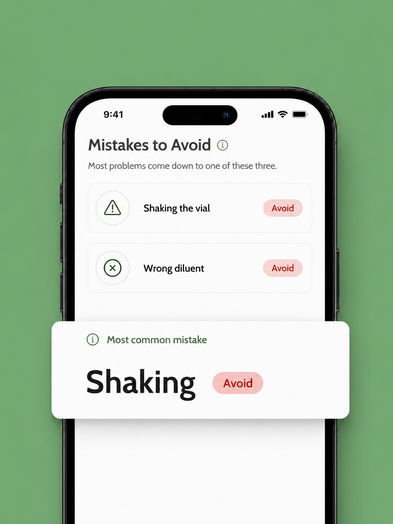
Common Reconstitution Mistakes to Avoid
Most reconstitution problems come down to one of these three errors.
Shaking instead of swirling
Vigorous shaking is the most common cause of a degraded peptide solution. Always swirl gently.
Using the wrong diluent
Plain sterile water lacks the preservative that keeps a reconstituted vial stable for weeks, use bacteriostatic water.
Skipping the calculator
Eyeballing the water volume leads to inconsistent, inaccurate dosing. Always calculate the exact ratio first.
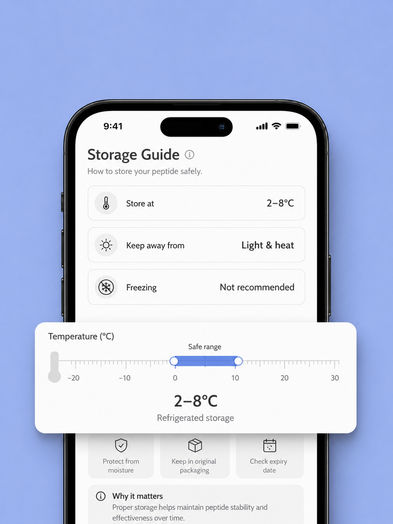
How to Store a Reconstituted Vial
Proper storage is what determines how long your reconstituted peptide stays stable.
Refrigerate immediately
Store the vial at 36–46°F (2–8°C), away from light, as soon as it's mixed.
Use within the labeled window
Most reconstituted peptides remain stable for roughly 2–4 weeks refrigerated, check your specific peptide's guidance.
Keep it out of direct light
UV exposure accelerates degradation, store the vial in its original box or a dark drawer inside the fridge.
Reconstitution Questions, Answered
The most common questions people have before mixing their first vial.