Reviewed by the PeptideMind Team · Updated August 5, 2026
Retatrutide Dosage Calculator: GLP-3 Peptide Dosage Guide & Side Effects
Use our free Retatrutide dosage calculator to find your dose and bac water/reconstitution amounts, plus benefits backed by trial data showing up to 24-29% body weight loss and side effects to know.
As seen on






GLP-3 (Retatrutide) Dosage Schedule
The same gradual step-up used in the Phase 3 TRIUMPH weight loss trials, giving your body four full weeks at each dose before the next increase. This pacing produced the same weight loss with fewer stomach side effects than jumping in higher.
Retatrutide Clinical Titration
32 weeks with the dose increasing over time, focused on weight management.
1 days per week
Taken Sunday.
2–12 mg
Starts at 2 mg and increases to 12 mg over 5 phases as your body adjusts. Injected just under the skin in the abdomen or thigh.
Retatrutide is an experimental medication that activates three different gut hormone pathways at once. In the Phase 3 TRIUMPH trials, everyone starts at 2 mg per week and steps up every four weeks: 2, 4, 6, 9, then 12 mg. Most side effects, especially nausea, show up right after a dose increase rather than at a steady dose, which is why the ramp is gradual.
What is GLP-3 (Retatrutide)?
GLP-3 is an experimental, lab-made peptide that acts on three different appetite and metabolism hormone pathways at the same time, which is more than most weight-loss drugs on the market today. In mid-stage human trials, it led to over 24% average body weight loss after about a year. It's currently in late-stage trials for obesity, type 2 diabetes, and a form of fatty liver disease.
Weight
GLP-3
Metabolic
Where to buy GLP-3 (Retatrutide)
Compare real-time GLP-3 (Retatrutide) prices from vendors with third-party lab testing (COA), purity, and legitimacy, so you know exactly who's trustworthy before you buy.
Dose size
Chosen on COA purity, third-party testing, and service, no paid placements.

4 of 4 vendors third-party tested, COA purity 99.49–99.991% across published labs. Prices re-checked 64 days ago.
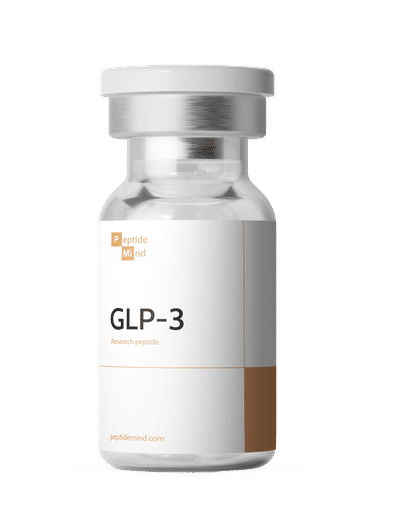
What Does GLP-3 (Retatrutide) Do?
It activates several gut-hormone receptors at once: some boost insulin release, slow digestion, and increase fullness, while another raises energy expenditure and encourages fat breakdown. The combination is designed so the fat-burning benefits aren't canceled out by the blood-sugar-raising effects of the latter pathway.
Multiple gut-hormone receptors
Activates several gut-hormone receptors at once.
Improves blood sugar & fullness
Some boost insulin release, slow digestion, and increase fullness.
Balances fat burning
Another raises energy expenditure without canceling out the benefits.
GLP-3 (Retatrutide) Targeted areas
Frequently Asked Questions About GLP-3 (Retatrutide)
Straight answers on reconstitution, dosing, and safety, everything you need to research with confidence. For research reference only.
GLP-3 (Retatrutide) Reconstitution Guide
GLP-3 (Retatrutide) is supplied as a freeze-dried powder that must be mixed into a injectable solution before use. Available in 10mg, 15mg, 24mg, 30mg sizes.
30 mg lyophilized vial
GLP-3 (Retatrutide) is supplied as a freeze-dried powder that must be mixed into a injectable solution before use. Available in 10mg, 15mg, 24mg, 30mg sizes.
2 mL bacteriostatic water
Adding 2 mL of bac water to a 30 mg vial gives a workable concentration for syringe dosing. More water makes microdosing easier; less concentrates each draw.
Storage after mixing
Freeze the dry powder, protected from light. Once mixed with liquid, refrigerate and use within about a month, and don't freeze it once mixed. After reconstitution, keep the vial refrigerated and use within 30 days.
Reconstitution steps
Remove caps & sanitize stoppers
Attach needle to syringe
Draw 2 mL bacteriostatic water
Insert needle into GLP-3 (Retatrutide) vial
Release water gently down the side
Swirl to dissolve — don't shake
Check for full dissolution
Refrigerate GLP-3 (Retatrutide) — good for 30 days
Chemical Makeup
40
Amino Acids
GLP-3 (Retatrutide)
His
HPosition 1
Sec
UPosition 2
Glu
EPosition 3
Gly
GPosition 4
Thr
TPosition 5
Phe
FPosition 6
Thr
TPosition 7
Ser
SPosition 8
Asp
DPosition 9
Val
VPosition 10
Ser
SPosition 11
Ser
SPosition 12
Tyr
YPosition 13
Leu
LPosition 14
Glu
EPosition 15
Gly
GPosition 16
Gln
QPosition 17
Ala
APosition 18
Ala
APosition 19
Lys
KPosition 20
Glu
EPosition 21
Phe
FPosition 22
Ile
IPosition 23
Ala
APosition 24
Trp
WPosition 25
Leu
LPosition 26
Val
VPosition 27
Arg
RPosition 28
Gly
GPosition 29
Arg
RPosition 30
Gly
GPosition 31
Pro
PPosition 32
Ser
SPosition 33
Ser
SPosition 34
Gly
GPosition 35
Ala
APosition 36
Pro
PPosition 37
Pro
PPosition 38
Pro
PPosition 39
Ser
SPosition 40
What Are the Benefits of GLP-3 (Retatrutide)?
What research says it may help with, and how it works in the body.
weight loss
Weight loss kept continuing without leveling off even after 48 weeks, suggesting it may offer even greater benefits over the long term.
Helps treat obesity by reducing appetite, increasing the amount of energy the body burns, and making the body's metabolism work more efficiently.
Clinical trials found an average weight loss of 17.5% after 24 weeks, increasing to 24.2% after 48 weeks.
type 2 diabetes
Keeps blood sugar well controlled while keeping the risk of dangerously low blood sugar (hypoglycemia) very low.
Lowered long-term blood sugar levels (measured by a marker called HbA1c) by up to 2.16 percentage points, with 82% of people reaching the healthy target of below 6.5%.
Notably improves how well the body responds to insulin, which may reduce how much injected insulin a person needs.
cardiovascularmetabolic
Consistently lowered both numbers of blood pressure readings (systolic and diastolic) across multiple trials.
Reduced fat buildup in the liver by up to 82%, with liver fat returning to normal levels in 90% of participants.
Lowered harmful (non-HDL) cholesterol by up to 26.9% and blood fat levels (triglycerides) by up to 40.6%.
What Are the Side Effects of GLP-3 (Retatrutide)?
Who should avoid it, warning signs to watch for, and what to know before combining it with other compounds.
Who Should Avoid It
Personal or family history of medullary thyroid carcinoma
MEN2 syndrome
Severe renal impairment
Stop Right Away If You Notice
Severe persistent nausea or vomiting preventing adequate nutrition
Signs of pancreatitis: severe abdominal pain radiating to back
Severe hypoglycemia symptoms: confusion, dizziness, sweating
Excessive weight loss (>3 lbs per week consistently or >25% total body weight)
Gallbladder problems: severe right upper abdominal pain
Milder Signs to Watch For
Is GLP-3 (Retatrutide) FDA approved?
GLP-3 (Retatrutide) is not an FDA-approved drug. It is intended for research purposes only and is not approved for human consumption, diagnostic, or therapeutic use.
Research Use Only
GLP-3 (Retatrutide) has not been evaluated by the FDA for safety or efficacy in humans.
No Clinical Oversight
Not manufactured under FDA-regulated quality or clinical standards.
Unregulated Sourcing
Purity, dosing, and sourcing are not verified through FDA testing or oversight.

GLP-3 (Retatrutide) Cycle Length: How Long Should It Last?
This breaks down how long a typical GLP-3 (Retatrutide) cycle runs and what research suggests happens at each stage. Research shows that staying on a peptide continuously, without a break, may make it less effective over time.
That's why most research protocols build in a break between cycles, often called a washout period, to let the body reset before starting again.
- Week 1-2
- Initial appetite suppression and mild GI effects as body adapts to triple hormone activation
- Week 2-4
- Noticeable food cravings reduction and portion size decrease; early weight loss (2-5%)
- Week 4-8
- Significant appetite control and steady weight loss (5-10%); improved glucose control
- Week 8-16
- Substantial weight reduction (10-18%) with enhanced energy expenditure
- Week 16-24
- Major weight loss milestone (15-22%) with cardiovascular benefits and liver fat reduction
- Week 24-48
- Maximum clinical efficacy (20-24.2%) with comprehensive metabolic improvements
GLP-3 (Retatrutide) Research References
It is a preclinical compound
GLP-3 (Retatrutide)
GLP-3 (Retatrutide) is a preclinical compound
Landmark RCT in 338 participants showing dose-dependent weight loss; 12mg dose achieved 24.2% reduction—highest recorded for any obesity medication. NEJM.
2023
Trial in 281 participants with type 2 diabetes: 16.9% weight loss and HbA1c reductions up to 2.16%. The Lancet.
2023
Metabolic dysfunction-associated steatotic liver disease study: 82% liver fat reduction with normalization in >90% at highest doses. Nature Medicine.
2024
Cryo-EM structures reveal simultaneous activation of GLP-1R, GIPR, and GCGR, explaining superior clinical efficacy. Cell Discovery.
2024
Browse user-created protocols
Real protocols from the community that include GLP-3 (Retatrutide)
Weight
cag
Weight
GLP-3
Weight
GLP-3
METABOLIC
Mtp
Growth
tes
Weight
GLP-3
Weight
tesa
Metabolic
mot