Reviewed by the PeptideMind Team · Updated July 29, 2026
Tirzepatide vs Semaglutide:
Key differences comparison
The main difference between tirzepatide and semaglutide is how many gut-hormone receptors each one activates. Tirzepatide (Mounjaro, Zepbound) is a dual GIP/GLP-1 receptor agonist. Semaglutide (Ozempic, Wegovy) activates the GLP-1 receptor alone. That extra GIP activity is why tirzepatide tends to produce greater average weight loss in head-to-head trials, though both are FDA-approved and share a similar side-effect profile.
Weight
GLP-2
Metabolic
VS
Weight
GLP-1
Metabolic
As seen on






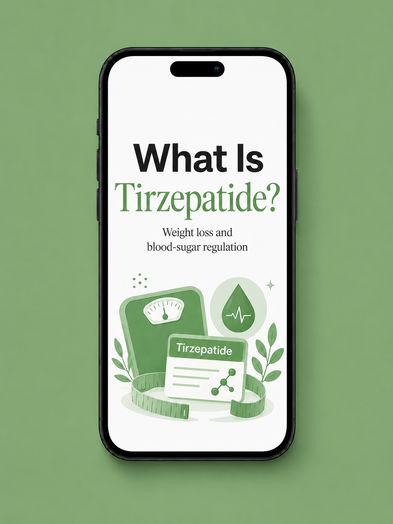
What Is Tirzepatide?
Tirzepatide is a lab-made peptide that activates two different gut-hormone receptors at once instead of just one. That dual action is why it's linked to some of the strongest weight-loss and blood-sugar results of any approved medication in its class.
A dual-receptor design
Tirzepatide activates both the GIP and GLP-1 receptors, combining two hormone pathways instead of relying on one.
What it's best known for
Sold as Mounjaro for type 2 diabetes and Zepbound for chronic weight management, both FDA-approved.
Where it stands legally
FDA-approved as a prescription medication under both brand names. Research-grade tirzepatide sold online is not approved for human use and is labeled for research only.
What Is Semaglutide?
Semaglutide is a lab-made copy of a gut hormone that targets a single receptor to reduce appetite, slow digestion, and help regulate blood sugar. It's one of the most widely prescribed weight-loss and diabetes medications on the market.
A single-receptor design
Semaglutide activates only the GLP-1 receptor, found in the pancreas, brain, and gut.
What it's best known for
Sold as Ozempic and Rybelsus for type 2 diabetes and Wegovy for chronic weight management, both FDA-approved.
Where it stands legally
FDA-approved as a prescription medication under all three brand names. Research-grade semaglutide sold online is not approved for human use and is labeled for research only.

Tirzepatide vs Semaglutide at a Glance
A side-by-side look at how tirzepatide and semaglutide differ in how they work, how they're dosed, what they cost, and where each stands legally.
Overview
- Type
- Single peptide
- Primary category
- Weight
- Secondary categories
- Metabolic
- Research status
- Fda Approved
- FDA approved
- FDA approved
- Popularity
- 10/10
- Body targets
- MetabolicGut
- Price range
- $51.00 – $400.00
- Human trial status
- FDA approved
- Legal status
- FDA-approved drug
- WADA status
- Not banned
Dosing
- Dose
- 2.5–15 mg
- Frequency
- Weekly
- Cycle
- 16–48 weeks
- Route of administration
- Subcutaneous
- Common vial sizes
- 5mg10mg
Research
- Molecular weight
- 4813.45 g/mol
- Half-life
- 120 hrs
- Median onset
- 21 days
- Prescription alternative
- Has alternative
- Receptor target
- GLP1RGIPR
- Receptor action
- Agonist
- Mechanistic pathways
- GLP1 Receptor AgonismGLP1 GIP DUAL Agonism
Included in
Overview
- Type
- Single peptide
- Primary category
- Weight
- Secondary categories
- Metabolic
- Research status
- Fda Approved
- FDA approved
- FDA approved
- Popularity
- 10/10
- Body targets
- MetabolicGut
- Price range
- $49.00 – $174.99
- Human trial status
- FDA approved
- Legal status
- FDA-approved drug
- WADA status
- Not banned
Dosing
- Dose
- 0.25–2.4 mg (titrated)
- Frequency
- Weekly
- Cycle
- 16+ weeks
- Route of administration
- Subcutaneous
- Common vial sizes
- 5mg10mg+1
Research
- Molecular weight
- 4113.641 g/mol
- Half-life
- 168 hrs
- Median onset
- 7 days
- Prescription alternative
- Has alternative
- Receptor target
- GLP1R
- Receptor action
- Agonist
- Mechanistic pathways
- GLP1 Receptor Agonism
Included in
Our top-rated vendor
Our rankings are based solely on third-party lab testing rigor, COA transparency, and pricing, no paid placements, no affiliate influence. We update this list as new data comes in.
Based on current scores, this vendor ranks highest across those criteria.

Weight Loss: Tirzepatide vs Semaglutide
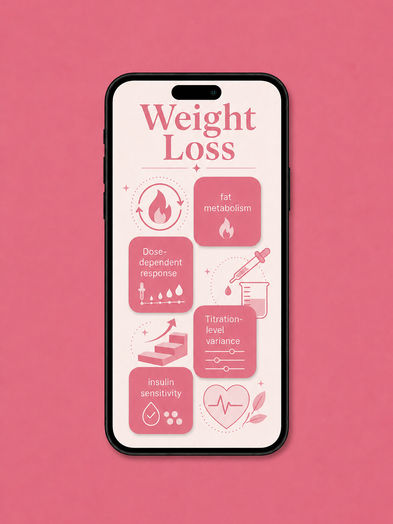
In the SURMOUNT-5 head-to-head trial, tirzepatide produced significantly greater average weight loss than semaglutide over 72 weeks, and newer pooled analyses and real-world data back up that gap. Tirzepatide's added GIP activity is thought to drive the larger effect on top of the shared GLP-1 pathway — though weight loss is only one part of the picture, and semaglutide still has the longer cardiovascular-outcomes track record (more on that below).
Head-to-head trial result
SURMOUNT-5 found tirzepatide produced about 20% average body weight loss versus roughly 14% for semaglutide over 72 weeks in adults with obesity. Broader pooled analyses across multiple trials show a similar pattern, at roughly −11.4% versus −7.3%, and a large real-world cohort study (Truveta) found about −11.2% versus −8.8% at 6 months.
More people hit bigger weight-loss milestones
A larger share of tirzepatide users reach 10%, 15%, and 20%+ total weight loss than semaglutide users at comparable time points, though plenty of people reach those same milestones on semaglutide too — individual response varies a lot.
Why the gap exists
Tirzepatide's added GIP receptor activity is thought to enhance insulin sensitivity and fat metabolism beyond what GLP-1 activation alone achieves.
GLP-2 (Tirzepatide) Dosage Guide for Weight LossGLP-2 (Tirzepatide) Dosage Calculator
This is Tirzepatide, a medication that activates two gut hormone pathways (GIP and GLP-1) to help with weight loss and blood sugar. Dosing starts at 2.5 mg once weekly for four weeks, then moves to 5 mg, and can rise in 2.5 mg steps every four weeks up to a maximum of 15 mg. Maintenance doses are 5, 10, or 15 mg weekly. Some people use very small 'microdoses' of 0.5 mg or less, or split the weekly dose into two injections, to reduce side effects. Splitting doses has shown to lower the peak blood level by roughly 28%, which is the usual explanation for less nausea.
Vial size
10 mg
Bacteriostatic water
2 mL
Dosing
2.5–15 mg
Frequency
Weekly
Cycle
16–48 weeks
Benefit
Weight Loss
Side Effects: Tirzepatide vs Semaglutide
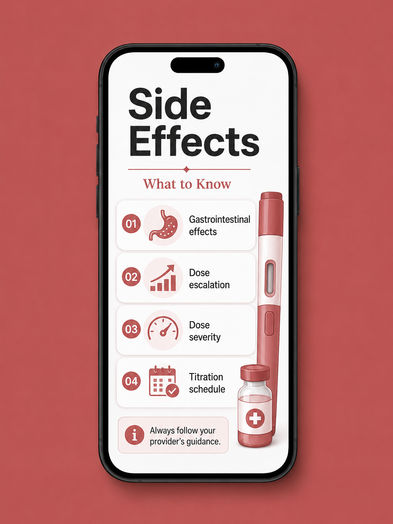
Both peptides share a similar side-effect profile because they act on overlapping gut-hormone pathways. Gastrointestinal effects are the most commonly reported for each, especially during dose escalation.
Shared GI side effects
Nausea, diarrhea, constipation, and reduced appetite are the most frequently reported effects for both, typically easing as the body adjusts to each dose increase.
Dose-dependent severity
Side effects tend to track with dose level rather than which peptide is used, which is why both follow a slow titration schedule.
Less common concerns
Gallbladder issues and pancreatitis are rare but reported for both. Anyone with a personal or family history of thyroid tumors should discuss either option with a clinician.
Muscle Loss: Does Tirzepatide or Semaglutide Cause More?
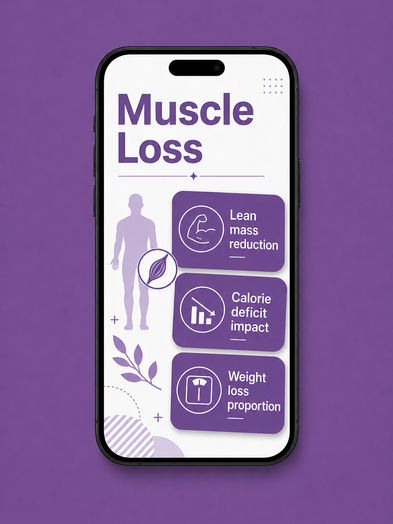
Both peptides can reduce lean body mass alongside fat mass, since any large calorie deficit tends to affect muscle to some degree. Neither has been shown to cause meaningfully more muscle loss than the other at matched amounts of weight lost.
Lean mass loss tracks total weight lost
Roughly a quarter of the weight lost on either peptide is lean mass, which is in line with what's seen in most calorie-deficit weight-loss research, not a peptide-specific effect.
No clear head-to-head difference
Available trial data doesn't show tirzepatide causing significantly more or less muscle loss than semaglutide when comparable weight loss is achieved.
Resistance training and protein intake matter more
Research on GLP-1 therapies consistently points to strength training and adequate protein as the biggest levers for preserving muscle, regardless of which peptide is used.
GLP-1 (Semaglutide) Dosage Guide for Weight LossGLP-1 (Semaglutide) Dosage Calculator
This is Semaglutide, a long-acting medication that helps control appetite and blood sugar. Dosing starts at 0.25 mg once weekly and steps up every four weeks: 0.25 → 0.5 → 1 → 1.7 → 2.4 mg, with most people settling at 1.7 or 2.4 mg. It's also available as a ready-to-use pen that doesn't require mixing with water, and as a once-daily pill.
Vial size
18 mg
Bacteriostatic water
3 mL
Dosing
0.25–2.4 mg (titrated)
Frequency
Weekly
Cycle
16+ weeks
Benefit
Weight Loss
Cost Comparison
Both peptides are expensive without insurance coverage, whether purchased as branded prescriptions or as compounded/research-grade versions. List prices vary by brand, dose, and pharmacy.
Brand-name pricing
Mounjaro/Zepbound and Ozempic/Wegovy list prices are broadly comparable, typically running over $1,000/month without insurance, though manufacturer savings cards can lower out-of-pocket cost significantly.
Compounding rules tightened in 2026
Both drugs are off the FDA shortage list, so large-scale compounding is no longer broadly allowed — it's now mostly limited to patients with a documented medical need, like an ingredient allergy or a non-standard dose.
Compounded semaglutide & tirzepatide cost
Where still available, compounded semaglutide runs about $99–$178/month and compounded tirzepatide about $125–$278/month — both well under brand list price, though supply now varies by provider.
Insurance coverage varies
Coverage for either peptide depends heavily on the specific indication (diabetes vs. weight management) and the individual insurance plan.

Switching Between Tirzepatide and Semaglutide
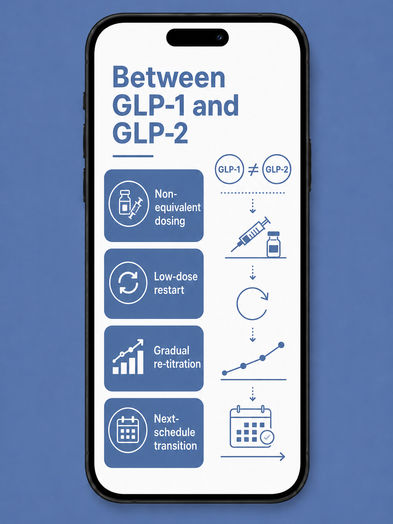
Some people move from one to the other after plateauing on semaglutide, or to compare how well they tolerate each one. Switching isn't a simple dose conversion — the two peptides aren't dosed on a 1:1 basis, so a fresh titration matters.
Start low, even coming from a high dose
Most switch protocols start tirzepatide at 2.5–5 mg/week regardless of the semaglutide dose someone was previously on, then re-titrate from there to limit GI side effects.
Timing between doses
Most protocols pick up the new peptide on the next scheduled weekly dosing day rather than adding an extra dose or a long washout period, though individual timing should be discussed with a clinician.
Side effects can restart
Because tirzepatide activates an additional receptor pathway, some GI side effects (nausea, bloating) can reappear briefly during re-titration even after a person was fully adjusted to semaglutide.
Which Is Safer, Tirzepatide or Semaglutide?
Both are FDA-approved with overlapping safety profiles, and the shared warnings (thyroid, pancreatitis, gallbladder) apply equally to each. The one real difference worth knowing: semaglutide has a more established cardiovascular evidence base, since its dedicated outcomes trials have been running longer.
Semaglutide has the longer cardiovascular track record
Semaglutide's cardiovascular benefit is backed by dedicated outcomes trials — SUSTAIN-6, PIONEER-6, and the large SELECT trial — that have already reported results. Tirzepatide's own dedicated cardiovascular outcomes trials (including NCT07619508 and NCT06980623) are still ongoing, so its heart-health data, while promising, is less mature than semaglutide's.
Same warnings apply to both
Both carry warnings around thyroid C-cell tumors (seen in animal studies), pancreatitis, and gallbladder issues, based on their shared hormone-receptor mechanism.
Longer track record for semaglutide
Semaglutide has been in clinical use longer than tirzepatide, giving it a slightly longer real-world safety record, though both are actively monitored post-approval.

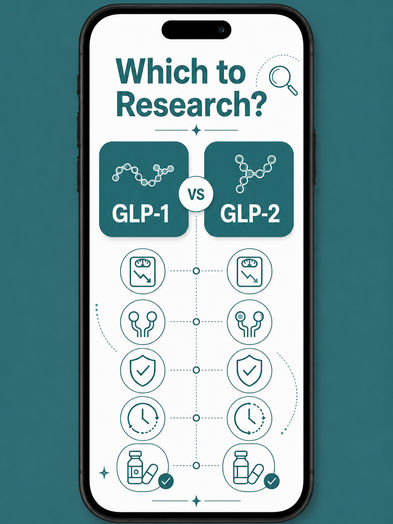
Tirzepatide vs Semaglutide: Which Should You Research?
Unlike BPC-157 and TB-500, tirzepatide and semaglutide aren't combined. They're two approaches to the same underlying pathway, and the choice mostly comes down to how much added effect the extra GIP activity is worth for a given research goal.
If maximum average weight loss is the goal
Tirzepatide's dual-receptor mechanism is linked to greater average weight loss in head-to-head trial data, at the cost of a shorter approval track record.
If a longer safety track record matters more
Semaglutide has been studied and prescribed for longer, giving it a more established real-world safety record — including a more mature cardiovascular-outcomes evidence base — at a somewhat lower average effect size.
Neither is a casual research chemical
Both are FDA-approved prescription drugs. Research-grade versions sold online are labeled for research only and are not intended for self-administration.
Frequently Asked Questions: Tirzepatide vs Semaglutide
Straight answers on how tirzepatide and semaglutide compare, and how each is dosed. For research reference only.
Tirzepatide vs Semaglutide: Dosing Basics
Both peptides are dosed once weekly with a gradual titration schedule to limit gastrointestinal side effects, but the starting dose, step-up amount, and maintenance range differ between the two.
Tirzepatide dosing
Starts at 2.5 mg/week, increasing by 2.5 mg every 4 weeks up to a 5–15 mg/week maintenance dose, injected once weekly.
Semaglutide dosing
Starts at 0.25 mg/week, increasing by 0.25–0.5 mg every 4 weeks up to a 2.4 mg/week maintenance dose, injected once weekly.
Use a peptide-specific calculator
Vial concentration and reconstitution volume change the actual draw for both peptides. Use a dosage calculator to get an exact number instead of guessing from a general range.

Other Comparisons
Weight
Sur
Weight
Weight
GLP-2
Metabolic
Survodutide vs Tirzepatide: Key differences comparison
Survodutide is a dual GLP-1/glucagon receptor agonist still in Phase 3 trials and not yet FDA-approved. Tirzepatide is a dual GLP-1/GIP receptor agonist already FDA-approved as Mounjaro and Zepbound. Here's how survodutide and tirzepatide compare on mechanism, trial data, and availability.
Weight
GLP-3
Metabolic
Weight
GLP-2
Metabolic
Retatrutide vs Tirzepatide: Key differences comparison
Retatrutide is a triple GIP/GLP-1/glucagon receptor agonist that has produced the largest average weight loss seen in a Phase 3 obesity trial to date, but it's still investigational. Tirzepatide is a dual GIP/GLP-1 receptor agonist that's FDA-approved and available today. Here's how retatrutide and tirzepatide compare.
Healing
Bpc
Longevity
Healing
Tb5
Longevity
BPC-157 vs TB-500: The Wolverine peptide stack comparison
BPC-157 acts locally at the site of injury. TB-500 acts systemically through the bloodstream. Here's how BPC-157 and TB-500 compare, and why they're often combined into the Wolverine Stack.