Empty
FDA APPROVAL PENDING
Limited research
Empty
Learn moreEmpty
0
Amino acids
Molecular weight
Peptide
Type
We’re still collecting and reviewing information on this peptide to ensure the overview we publish is both accurate and informative. Our team is developing a more detailed summary, and we’ll share more as soon as it is ready.
No visual available
Due to this peptide having no amino acids, there is no molecular chain to display.
Chemical Makeup
Community interest
This peptide is still gaining traction in the community.
This overview is informational and based on aggregated descriptions from studies and user reports.
Was it helpful?YesNoDosing tools
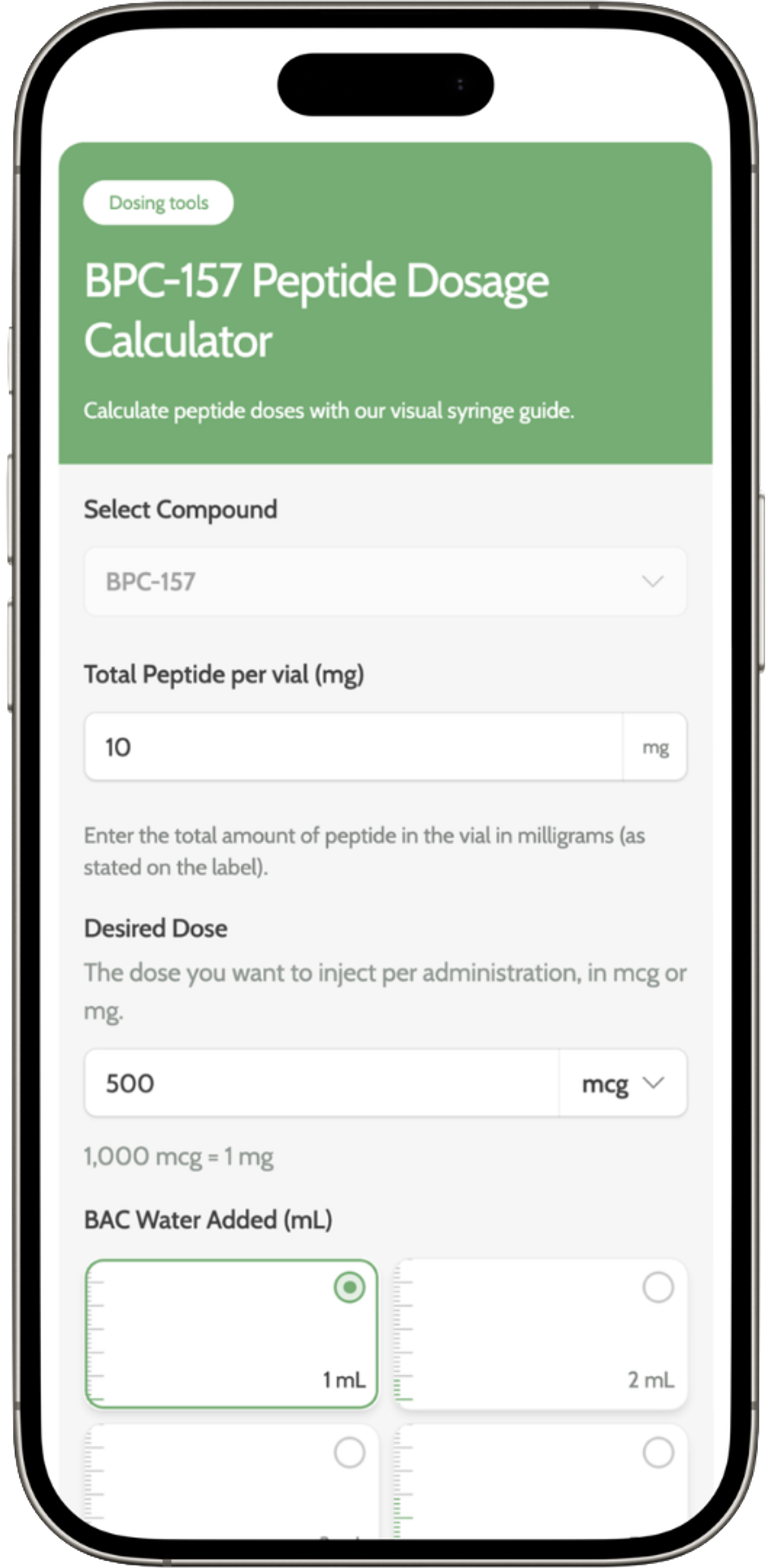
Empty Peptide Dosage Calculator
Calculate peptide doses with our visual syringe guide.
mg
Enter the total amount of peptide in the vial in milligrams (as stated on the label).
The dose you want to inject per administration, in mcg or mg.
1,000 mcg = 1 mg
1 mL
2 mL
3 mL
5 mL
Custom
Volume of bacteriostatic water you add to reconstitute the powder. Use BAC water for preservation.
Injection Results
Based on your vial and dilution inputs.
Empty
SINGLE COMPOUNDVolume per injection
0.05
mL
Concentration
10.00
mg/mL
Doses per vial
20
doses
Total injections per vial
20 injections
How it works
Based on a 10 mg Empty vial diluted with 1 mL of bacteriostatic water, each 500 mcg injection equals 0.05 mL.
1mL / 100 units
5 units
0.050 mL
Reference Guide
Dosing Cycle
- Peptide
- Empty
- Dosing
- Dosing Frequency
- Cycle Duration
- Storage
Note: Triple agonist; microdose for fewer side effects
Reconstitution Tips
- Use bacteriostatic water (BAC) — contains 0.9% benzyl alcohol for preservation
- Inject water slowly — aim down the vial wall, not directly onto powder
- Never shake — gently swirl or roll the vial until dissolved
- Store properly — refrigerate at 2-8°C after reconstitution
- Use within 28 days — most reconstituted peptides remain stable for about 4 weeks
- Keep sterile — always clean vial tops with alcohol before drawing
Comments
0.0
0 reviews
5
4
3
2
1
No comments yet
Be the first to share your experience. Your review helps others make more informed decisions.
Frequently asked questions
What is a peptide dosage calculator?
A peptide dosage calculator is a free tool that converts your vial size, bacteriostatic water volume, and target dose into an exact syringe draw volume. Instead of doing the reconstitution math by hand, you enter three inputs and instantly get the concentration of your solution and how many milliliters or syringeunits to draw. This calculator works for single peptide compounds and multi-peptide blends.
How do I calculate peptide dosage from a vial?
To calculate your peptide dose, divide the total peptide content of your vial in micrograms by the volume of bacteriostatic water you added in milliliters. This gives you your solution concentration in mcg/mL. Then divide your target dose by that concentration to get your draw volume. For example, a 5mg (5,000 mcg) vial reconstituted with 2mL of BAC water gives a concentration of 2,500 mcg/mL. A 250 mcg dose would require drawing 0.1mL. This calculator automates all of those steps instantly.
How much Bacteriostatic water should I add to a peptide vial?
Most people add 2mL to 3mL of bacteriostatic water per vial, but the right amount depends on the dose you want to draw and the syringe size you are using. Adding 1mL to a 5mg vial gives you a concentration of 5,000 mcg/mL, making each dose very small in volume. Adding 2mL gives you 2,500 mcg/mL, which is easier to measure on a standard insulin syringe. A general guideline is to choose a volume that puts your typical dose somewhere between 10 and 30 units on a U-100 syringe. Use the calculator above to test different water volumes and find what works for your dose.
How are peptides different from proteins?
Both are made of amino acids, but peptides are much smaller than proteins. Because of their tiny size, peptides can act like tiny messengers in the body, sending specific signals to your cells to tell them exactly what to do.
Calculate peptide dosages
Learning how to calculate a peptide dose? Use our beginner-friendly peptide dosage, blend, and accumulation calculators. Enter vial size, reconstitution volume, and target dose to get exact draw volumes instantly. No guesswork, just clear guidance that helps prevent common mistakes.