Reviewed by the PeptideMind Team · Updated August 29, 2026
GLP-1 Calorie Calculator
How many calories should you eat on semaglutide or tirzepatide? Enter your stats to get a TDEE-based calorie target adjusted for GLP-1 use, with a protein floor to protect muscle mass. Free, no sign-up needed. Not medical advice.
peptidemind.com
Used to calculate BMR via Mifflin-St Jeor.
years
lbs
ft
in
Most commonly cited target in GLP-1 literature
Educational estimate only, not medical advice. Calorie needs vary between individuals. Talk to your prescriber before making dietary changes on GLP-1.
As seen on






How the GLP-1 calorie calculator works
Three inputs, one result: your TDEE, your GLP-1 adjusted calorie target, and a protein target based on your body weight. All numbers come from published BMR and nutrition research, not guesswork.
Enter your stats
Input your biological sex, age, weight, and height. Switch between imperial and metric using the toggle at the top of the calculator.
Select your activity level
Pick how active you are in a typical week. This turns your BMR into your TDEE — the number of calories you burn per day before the drug's effect.
Read your calorie and protein targets
The calculator shows your maintenance TDEE, your GLP-1 adjusted calorie target, and a daily protein target based on your body weight. Print it to bring to your prescriber.
Why Calories Still Matter on GLP-1
GLP-1 medications reduce your appetite, but they don't set your calorie or protein targets for you. Here's what to watch.
GLP-1 suppresses appetite, not always enough
Semaglutide and tirzepatide reduce hunger, but they don't set your calorie target for you. Eating too little on top of the drug's suppression can push you well below safe levels, especially on higher doses.
Going too low is a real risk
Dropping below roughly 1,200 kcal (women) or 1,500 kcal (men) while on a GLP-1 raises the risk of nutrient deficiencies, hair loss, and muscle breakdown. This calculator flags your result if it hits that floor.
The deficit is already built in
GLP-1 medications create a calorie deficit on their own through appetite suppression. This calculator sets your target about 20% below your TDEE, reflecting the typical intake reduction seen in published GLP-1 trials.

Why Protein Is the Most Important Macro on GLP-1
Fast weight loss without enough protein means losing muscle alongside fat. Here's what the research says about protecting lean mass on semaglutide and tirzepatide.
Muscle loss is the hidden risk of fast weight loss
Rapid calorie reduction without enough protein accelerates the loss of lean mass alongside fat. On GLP-1, where weight comes off quickly, protein intake is the main lever you control.
1.2–1.5 g/kg is the evidence-based range
Published research on GLP-1 trials and protein-preservation studies consistently cites 1.2–1.5 g of protein per kg of body weight as the minimum range to protect muscle during a calorie deficit. This calculator uses that range as the default.
Protein is prioritized first in the macro split
Once your protein target is set, the remaining calories are divided between fat and carbs. This mirrors the approach used in GLP-1 dietary protocols and ensures you hit your protein floor before filling in the rest.
GLP-1 Calorie Calculator: Frequently Asked Questions
Answers on calorie targets, protein floors, and how GLP-1 affects your daily energy needs. For learning only, not medical advice.
How to Use Your Results
Your GLP-1 calorie target is a starting point, not a prescription. Here's how to put the numbers to work.
GLP-1 Target is your daily calorie goal
This is the number to aim for on days when the drug has suppressed your appetite. It sits about 20% below your maintenance level, which lines up with the intake reduction reported across major semaglutide and tirzepatide trials.
Hit your protein number first
Protein is the most important macro to track on GLP-1. Fill your protein target first each day, then let fat and carbs fall where they may within your remaining calorie budget.
Bring your result to your prescriber
Print the result and show it to your doctor or dietitian. Your prescriber can adjust the targets based on your health history, current dose, and how your body is responding to the medication.

Calculate peptide dosages
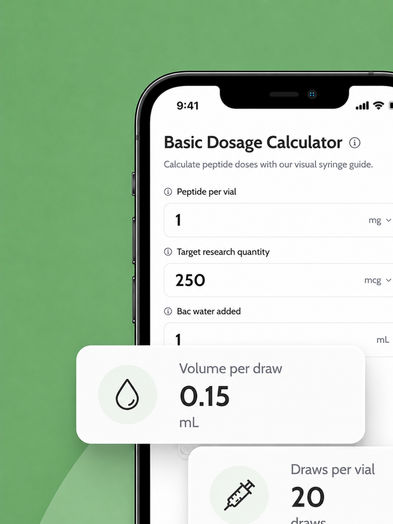
Reference our peptide quantity, blend, and accumulation calculators for laboratory purposes. Enter vial size, reconstitution volume, and target research quantity to calculate exact draw volumes instantly. All calculators are for research use only and do not constitute dosing or administration guidance.
