TB-500 vs Thymosin Beta-4: Key Research Differences (2026)
TB-500 vs Thymosin Beta-4 compared: structure, the LKKTETQ actin-binding domain, mechanism, and preclinical research. A research-framed guide for 2026.

TB-500 vs Thymosin Beta-4 is one of the most misunderstood comparisons in peptide research, because the two are closely related but not identical. Thymosin Beta-4 (Tβ4) is a naturally occurring 43-amino acid protein, while TB-500 is a synthetic peptide built around the short actin-binding region of that protein. This guide examines what the published literature actually says about their structure, shared mechanism, and the distinct ways each has been studied in preclinical models, updated for 2026.
TB-500 vs Thymosin Beta-4: Quick Research Comparison
TB-500 and Thymosin Beta-4 share a common actin-binding motif but differ in size, origin, and the breadth of biological activity documented in research. Thymosin Beta-4 is the full endogenous protein; TB-500 is a synthetic construct centered on its active fragment. The table below summarizes the core distinctions before the sections that follow expand on each.
Characteristic | Thymosin Beta-4 (Tβ4) | TB-500 |
|---|---|---|
Type | Endogenous (naturally occurring) protein | Synthetic peptide construct |
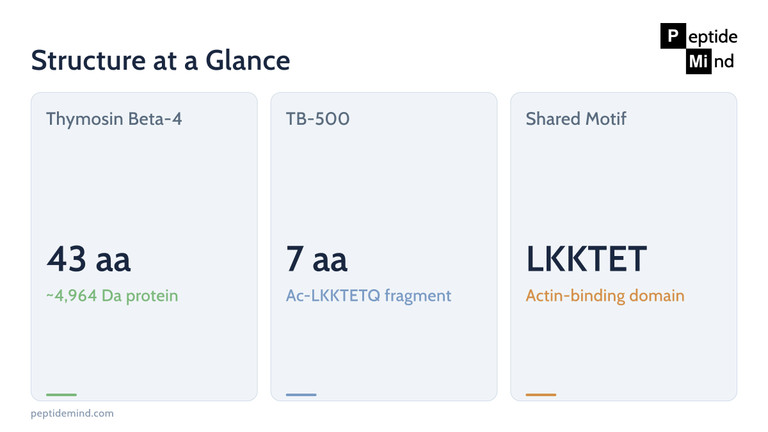
Amino acid length | 43 amino acids | Marketed as the 7-residue fragment (Ac-LKKTETQ) or full-length synthetic Tβ4 |
Molecular weight | ~4,964 Da | ~889 Da (fragment) |
Key shared motif | LKKTET actin-binding domain (residues 17 to 23) | Centered on the same LKKTET motif |
Primary research focus | Tissue repair, angiogenesis, cardiac and corneal research | Actin regulation and tissue repair research |
Research stage | Preclinical | Preclinical |
A recurring point of confusion is that many suppliers label vials "TB-500" while selling full-length synthetic Tβ4, so the two names are often used interchangeably in the commercial market even though they describe different molecules in the scientific literature.
What Is Thymosin Beta-4?
Thymosin Beta-4 is a highly conserved, water-soluble 43-amino acid acidic polypeptide that functions as the major actin-sequestering molecule in mammalian cells. It was characterized as part of the thymosin family of peptides and carries a molecular weight of roughly 4,964 Da, according to a foundational 2005 review in Trends in Molecular Medicine by Goldstein, Hannappel, and Kleinman. The protein is found in nearly all cell types and is present at high concentrations in platelets and white blood cells.
In research settings, Tβ4 is studied as a regulatory protein with a role in cell migration, actin dynamics, and tissue repair signaling. The same review describes its investigation in dermal and corneal wound models and in cardiac injury models. These findings come from preclinical and animal research and have not been established as approved uses in humans.
The molecule's defining feature is its actin-binding domain, the LKKTET sequence located at residues 17 to 23. This short motif anchors Tβ4 to actin monomers and is the structural basis for the synthetic fragment that became known as TB-500.
What Is TB-500?
TB-500 is a synthetic peptide derived from the active region of Thymosin Beta-4, most precisely defined as the acetylated 7-amino acid sequence Ac-LKKTETQ corresponding to residues 17 to 23 of the parent protein. Because TB-500 isolates this short actin-binding motif, it is far smaller and structurally simpler than full-length Tβ4 and lacks the additional functional domains present across the rest of the 43-residue chain.
In practice, the term carries two meanings. In the primary literature, TB-500 generally refers to the LKKTETQ fragment used to probe the actin-binding function of Tβ4. In the research-chemical market, "TB-500" is frequently applied to vials that actually contain full-length synthetic Thymosin Beta-4. This labeling overlap is the single biggest reason researchers conflate the two compounds. When reviewing the literature, you'll find that the precise molecule studied matters more than the trade name attached to it.
TB-500 vs Thymosin Beta-4: Shared Mechanism of Action
Both TB-500 and Thymosin Beta-4 act primarily through actin sequestration, the process of binding globular (monomeric) G-actin to regulate how much is available for filament assembly. Tβ4 binds G-actin with high affinity and inhibits nucleotide exchange, holding actin in a polymerization-incompetent state until cellular signals release it. This regulation of the actin cytoskeleton influences cell shape and the formation of structures at the leading edge of migrating cells.
The LKKTET motif is the functional anchor for this interaction in both molecules, which is why TB-500, built around that exact motif, reproduces the actin-binding behavior of the parent protein. Research has also connected this domain to vascular activity: a 2003 study on the actin-binding site reported that the region promoting actin interaction is also associated with angiogenic activity in experimental models. These observations were made in laboratory and animal systems and have not been confirmed in human clinical trials.
Where the two molecules diverge is in the activity beyond actin binding. The full Tβ4 protein contains additional regions that interact with other pathways, so its documented range of biological activity in research is broader than that of the isolated fragment.
In a controlled rat study, topical or intraperitoneal Thymosin Beta-4 was associated with a 42% increase in reepithelialization at four days and as much as 61% at seven days compared with saline controls, alongside a measurable rise in angiogenesis. These results were observed under controlled laboratory conditions and should be interpreted with caution.

Where the Research Diverges
Shop research peptides
Live pricing from our top-rated vendor. Prices update as vendor listings change.
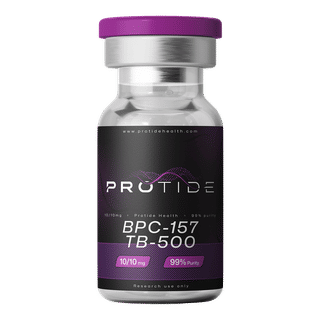
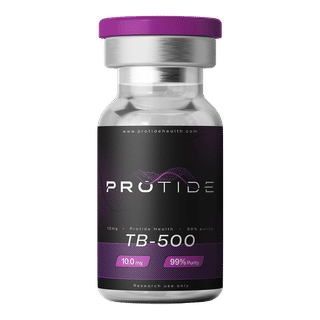
Thymosin Beta-4 has a wider documented research footprint than the isolated TB-500 fragment because the full protein engages pathways beyond actin sequestration. Three areas illustrate the difference.
Dermal and Corneal Wound Research
Tβ4 has been examined extensively in skin and eye injury models. The 1999 rat wound study published in the Journal of Investigative Dermatology by Malinda and colleagues reported faster reepithelialization, roughly 11% greater wound contraction by day 7, and a statistically significant 1.5-fold increase in epidermal cell migration after topical application. Separate corneal research published in 2009 described Tβ4 as a wound-healing and anti-inflammatory agent in ocular models. These outcomes were observed in animal and laboratory models and may not translate directly to human physiology.

Cardiac Research
One of the most cited distinctions for the full protein is its cardiac work. In a 2004 study published in Nature, Bock-Marquette and colleagues reported that Thymosin Beta-4 formed a complex with PINCH and integrin-linked kinase (ILK), activating the survival kinase Akt and, after coronary artery ligation in mice, associating with improved early cardiomyocyte survival and cardiac function. A later 2007 study reported cardioprotective findings after experimental myocardial infarction. This data comes from animal models, and further controlled research is needed before any conclusions about human outcomes can be drawn.
Actin Regulation and Cell Migration
The narrower, mechanism-focused research, the work most directly applicable to the isolated TB-500 fragment, centers on actin dynamics and cell motility. Because the LKKTET motif drives actin binding, the fragment is studied chiefly as a tool for understanding cytoskeletal regulation rather than the multi-pathway activity attributed to the whole protein. This distinction is the practical core of the TB-500 vs Thymosin Beta-4 comparison.
Research Dosages and Administration in Published Studies
Published preclinical studies have used a range of dosages and routes that vary by model and molecule, so direct comparison is difficult. In the dermal wound research, Thymosin Beta-4 was applied topically and intraperitoneally in rat models, with administration repeated over several days. Cardiac studies in mice used intraperitoneal and intracardiac delivery. These figures describe what specific studies used in animals; they are not recommendations, and no standardized human research dosing has been established.
Researchers calculating concentrations for either compound can use the Peptide Mind dosage calculator to convert vial size and diluent volume into working concentrations. Because TB-500 fragment and full-length Tβ4 differ substantially in molecular weight, the same milligram quantity represents very different molar amounts, a detail worth confirming against any product's certificate of analysis.
TB-500 vs Thymosin Beta-4: Which Does the Research Support?
Neither compound is "better" in a research sense; they answer different questions. Thymosin Beta-4 is the appropriate subject when the research concerns the full protein's documented activity across tissue repair, angiogenesis, and cardiac models. The TB-500 fragment is the appropriate subject when the goal is to isolate and study the actin-binding function of the LKKTET motif specifically. Because commercial "TB-500" often contains full-length Tβ4, researchers should verify the exact molecule and purity on a third-party certificate of analysis rather than relying on the product name. For context on how Tβ4 compares with other compounds studied in the same space, see the Peptide Mind guide to peptides studied for injury recovery, which covers BPC-157, GHK-Cu, and related research.
Frequently Asked Questions
Is TB-500 the same as Thymosin Beta-4?
Not exactly. In the scientific literature, TB-500 refers to a synthetic fragment (Ac-LKKTETQ) of the 43-amino acid Thymosin Beta-4 protein, centered on its actin-binding domain. In the research-chemical market, however, vials labeled TB-500 frequently contain full-length synthetic Tβ4, which is why the names are often treated as interchangeable. The distinction matters for any study that depends on the precise molecule.
What is the difference between TB-500 and TB4?
TB4 is shorthand for Thymosin Beta-4, the complete 43-amino acid protein. TB-500 is the synthetic peptide built around the LKKTET actin-binding motif found within that protein. TB4 has a broader documented range of activity in preclinical research, while the isolated TB-500 fragment is studied mainly for actin regulation. Both remain preclinical research compounds.
What does the LKKTETQ sequence do?
LKKTETQ is the acetylated form of the actin-binding domain located at residues 17 to 23 of Thymosin Beta-4. This motif anchors the molecule to G-actin monomers and is the structural basis for actin sequestration. Research has also associated this region with angiogenic activity in experimental models, though these findings come from preclinical work and have not been validated in human clinical trials.
Shop research peptides
Live pricing from our top-rated vendor. Prices update as vendor listings change.
Why do suppliers label full-length Thymosin Beta-4 as TB-500?
The naming overlap is largely historical and commercial. "TB-500" became a widely recognized market term, and many suppliers apply it to full-length synthetic Tβ4 because the names are associated in buyer searches. For research purposes, the certificate of analysis and mass spectrometry data identify the actual molecule far more reliably than the label.
Are TB-500 and Thymosin Beta-4 approved for human use?
No. Both are research compounds intended for laboratory and preclinical investigation only. The studies discussed here were conducted in animal and cell-culture models, and findings from preclinical research may not translate to human outcomes.
References
Goldstein AL, Hannappel E, Kleinman HK. "Thymosin β4: actin-sequestering protein moonlights to repair injured tissues." Trends in Molecular Medicine, 2005. https://pubmed.ncbi.nlm.nih.gov/16099219/
Malinda KM, Sidhu GS, Mani H, et al. "Thymosin beta4 accelerates wound healing." Journal of Investigative Dermatology, 1999. https://pubmed.ncbi.nlm.nih.gov/10469335/
Bock-Marquette I, Saxena A, White MD, Dimaio JM, Srivastava D. "Thymosin beta4 activates integrin-linked kinase and promotes cardiac cell migration, survival and cardiac repair." Nature, 2004;432:466-472. https://pubmed.ncbi.nlm.nih.gov/15565145/
Bock-Marquette I, et al. "Thymosin beta4 is cardioprotective after myocardial infarction." Annals of the New York Academy of Sciences, 2007. https://pubmed.ncbi.nlm.nih.gov/17600280/
Philp D, Huff T, Gho YS, Hannappel E, Kleinman HK. "The actin binding site on thymosin beta4 promotes angiogenesis." FASEB Journal, 2003. https://pubmed.ncbi.nlm.nih.gov/14500546/
Sosne G, Qiu P, Goldstein AL, Wheater M. "Thymosin beta 4: a novel corneal wound healing and anti-inflammatory agent." Clinical Ophthalmology, 2009. https://pubmed.ncbi.nlm.nih.gov/19668473/
Two Names, One Molecular Family
The TB-500 vs Thymosin Beta-4 question comes down to scope: Thymosin Beta-4 is the full 43-amino acid protein with a broad preclinical research record, while TB-500 is the synthetic peptide built around its LKKTET actin-binding motif, often sold as full-length Tβ4 despite the different name. For any rigorous study, the molecule confirmed by a certificate of analysis matters more than the label on the vial. Researchers comparing options can review lab-tested TB-500 and related compounds at Protide Health.
Research Disclaimer
The information presented in this article is for educational and research purposes only. Peptide Mind provides evidence-based research summaries and does not offer medical advice, diagnosis, or treatment recommendations. All peptides discussed are intended for in vitro and preclinical research use only. Consult a qualified healthcare professional before making any health-related decisions. The research cited may not reflect the full body of available evidence, and findings from preclinical studies may not translate to human outcomes. By accessing this site, you confirm you are over the age of 21, waive any claims or liability arising from the use of the content portrayed, and fully indemnify Peptide Mind against any unauthorized usage, claims, or liability in accordance with our Terms of Service.
Add a comment
This will be publicly visible.
Your email address will not be published.
Your comment will be reviewed by an admin before it is published.