What Is Angiogenesis? A Simple Guide to Blood Vessel Growth
Angiogenesis is how your body grows new blood vessels from existing ones. Learn the simple definition, the step-by-step process, VEGF's role, and why researchers study it.


Angiogenesis is the process your body uses to grow new blood vessels from blood vessels that already exist. The word comes from two Greek roots: angio, meaning vessel, and genesis, meaning creation. Put simply, angiogenesis is the body's way of extending its plumbing so that fresh blood can reach a tissue that needs more oxygen and nutrients.
This single process touches almost everything in biology. It is active when a cut on your skin closes over, when muscles adapt to exercise, and during early development before birth. It also has a darker side: tumors can switch it on to feed their own growth. Because angiogenesis sits at the center of so many tissue and vascular events, it has become a major focus in modern research, including the study of peptides such as BPC-157 and TB-500.
This guide explains angiogenesis in plain language, walks through how it actually works step by step, and shows why it matters in biology, in cancer, and in peptide research.
What Is Angiogenesis? The Simple Definition
Angiogenesis is the formation of new blood vessels that branch out from existing ones. These new vessels deliver oxygen and nutrients to tissues and carry away waste products, which is why the process is so important to staying alive and growing.
Your body already contains an enormous network of blood vessels. Estimates suggest an adult has roughly 60,000 miles (about 100,000 kilometers) of them. Angiogenesis is how that network expands into new or oxygen-starved areas. Think of it like a growing city that needs to extend its road system: when a new neighborhood appears, builders branch fresh roads off the existing ones rather than starting from scratch.
It is worth separating two related terms that are easy to mix up:
Angiogenesis is the growth of new vessels from vessels that already exist. This is the main process happening throughout your life.
Vasculogenesis is the formation of brand-new blood vessels from scratch, mostly during early embryonic development before a vessel network exists.
A short way to remember the difference: vasculogenesis builds the first roads, and angiogenesis adds new branches to the roads you already have.
How Does Angiogenesis Work? The Step-by-Step Process
Angiogenesis works through a sequence of signals and cell movements that begins when a tissue runs low on oxygen. The most common version is called sprouting angiogenesis, named because new vessels grow out like sprouts from a plant stem.
Here is the process broken into simple steps:
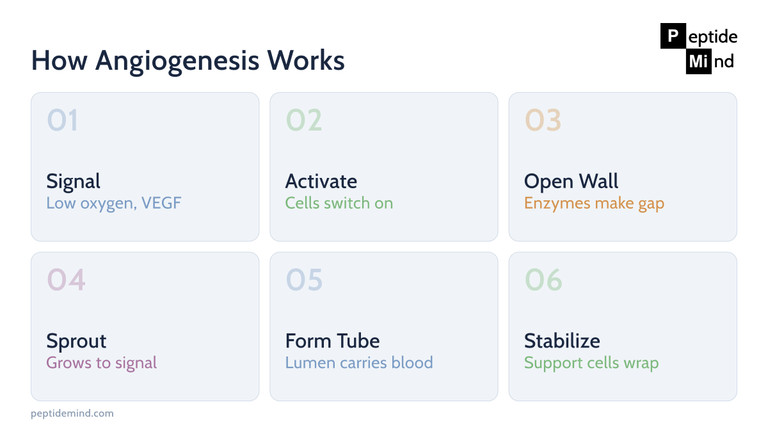
A tissue calls for help. When cells do not get enough oxygen, a state called hypoxia, they release a chemical signal asking for a better blood supply. The main signal is a protein called vascular endothelial growth factor, or VEGF.
Endothelial cells wake up. VEGF travels to the nearest blood vessel and binds to the cells lining its inner wall, called endothelial cells. This binding activates those cells.
The vessel wall opens. Activated endothelial cells release enzymes called proteases that break down part of the vessel wall, creating an opening for new growth.
A sprout grows toward the signal. New endothelial cells push out through the opening and migrate toward the source of the VEGF, like a vine growing toward sunlight.
A new tube forms. The growing sprout hollows out to form a tube, called a lumen, that connects back to the original vessel and can finally carry blood.
The new vessel stabilizes. Support cells wrap around the fresh vessel to strengthen it, and blood begins to flow through the new route.
The whole sequence is tightly balanced. Specialized "tip" cells lead the way and sense the signal, while "stalk" cells follow behind and build the body of the new vessel. When the balance works correctly, the body grows exactly the vessels it needs and no more.
What Triggers Angiogenesis?
Low oxygen, or hypoxia, is the most common trigger. When a tissue is growing, injured, or working hard, its existing blood supply can fall short. The oxygen-starved cells respond by producing VEGF and other growth factors, which kick off the steps above. Inflammation and certain tissue-repair signals can start the process too.
What Is VEGF? The Key Driver of Angiogenesis
VEGF, short for vascular endothelial growth factor, is the most important signal that turns angiogenesis on. Researchers often describe it as the key mediator of the process because it does more than any other single factor to start and direct new vessel growth.
VEGF works by attaching to docking points called receptors on the surface of endothelial cells. The most important of these is VEGFR2 (vascular endothelial growth factor receptor 2). When VEGF binds VEGFR2, it sets off a chain of internal signals that tell the cell to divide, move, and form new vessel structures. This VEGF-to-VEGFR2 connection is the central switch that researchers study when they want to understand or influence angiogenesis.
Shop research peptides
Live pricing from our top-rated vendor. Prices update as vendor listings change.
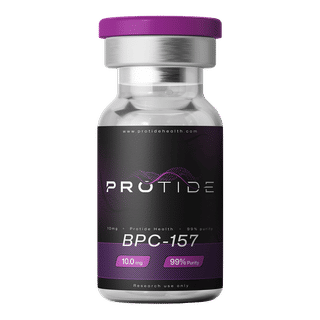
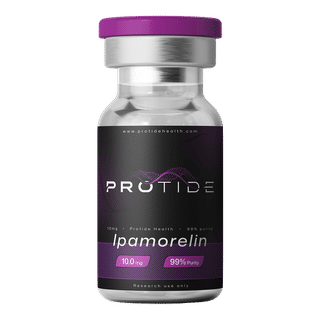
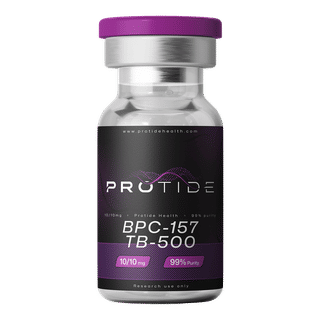
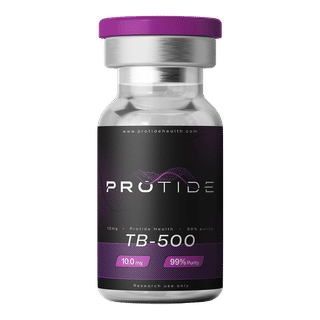
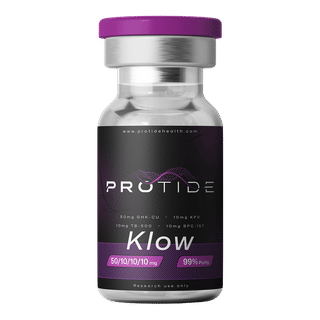
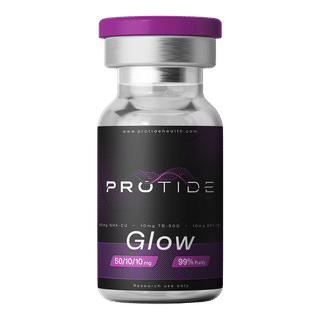
Because VEGF is so central, it shows up everywhere in this topic. It is the signal that healthy tissues use during wound healing, the signal that tumors hijack to feed themselves, and the target that many cancer medicines try to block.
Angiogenesis in Biology: Wound Healing, Growth, and Everyday Repair
In healthy biology, angiogenesis is a normal and necessary process that keeps tissues supplied with blood as they change, grow, and recover. It is not a rare event; it happens throughout your life whenever a tissue needs a richer blood supply.
Some of the everyday situations where angiogenesis is active include:
Wound healing. When skin or muscle is damaged, new vessels grow into the area to deliver oxygen and the building blocks that close the wound. Angiogenesis is one of the core stages of normal wound healing.
Exercise and muscle adaptation. Working muscles demand more oxygen, which can prompt new capillaries to form so blood can reach the active tissue.
Development and growth. A developing body constantly extends its vessel network to match growing organs and tissues.
The menstrual cycle. The lining of the uterus rebuilds its blood supply each month, one of the clearest examples of angiogenesis in a healthy adult.
In all of these cases, the body switches angiogenesis on when it is needed and off when the job is done. Problems tend to appear when that on-off balance breaks, which is exactly what happens in cancer.
What Is Angiogenesis in Cancer? Understanding Tumor Angiogenesis
In cancer, angiogenesis is the process tumors use to grow their own blood supply so they can keep getting larger. This is called tumor angiogenesis, and it is one of the reasons cancers can expand and spread.
The idea traces back to researcher Judah Folkman, who proposed in 1971 that solid tumors cannot grow large without recruiting new blood vessels.
Folkman demonstrated that a tumor deprived of its own blood supply generally cannot grow beyond about 1 to 2 millimeters in size, and may wither instead of expanding.
A tumor of that size has reached the limit of what nearby vessels can feed by simple diffusion. To grow further, it triggers what scientists call the angiogenic switch. The tumor starts producing large amounts of VEGF and other growth factors, tipping the natural balance heavily toward new vessel growth. The result is a tangle of new vessels that feed the tumor, carry away its waste, and can provide a route for cancer cells to travel to other parts of the body.
What Are Angiogenesis Inhibitors?
Angiogenesis inhibitors are substances designed to block new blood vessel growth, with the goal of cutting off a tumor's blood supply. The thinking is straightforward: if a tumor cannot build new vessels, it struggles to grow beyond that 1 to 2 millimeter ceiling.
Many of these inhibitors work by targeting VEGF directly. The best-known example is bevacizumab (brand name Avastin), the first angiogenesis inhibitor approved by the United States Food and Drug Administration, cleared in 2004. It is a manufactured antibody that grabs onto VEGF and prevents it from reaching its receptors on endothelial cells, which slows the formation of tumor-feeding vessels. This approach is sometimes called anti-angiogenic or anti-VEGF treatment, and VEGF remains the central target of the field.

Why Angiogenesis Matters in Peptide Research
In peptide research, angiogenesis is one of the most closely studied mechanisms because several research peptides appear to influence how blood vessels form in preclinical models. For laboratories investigating tissue and vascular biology, the VEGF and VEGFR2 pathway is a frequent focus.
Two peptides come up most often in this context:
BPC-157. In preclinical research, the pentadecapeptide BPC-157 has been associated with pro-angiogenic activity. In rodent and cultured-cell studies, researchers have linked it to increased expression and activation of VEGFR2, the same receptor described earlier in this article.
TB-500 (Thymosin beta-4). In preclinical models, TB-500 has been studied for its effect on endothelial cell migration, one of the movement steps involved in building new vessels.
One frequently cited finding illustrates why researchers pay attention:
Shop research peptides
Live pricing from our top-rated vendor. Prices update as vendor listings change.
In cultured endothelial cells and rodent models, BPC-157 was associated with increased VEGFR2 expression and internalization, a step linked to activation of the VEGFR2 signaling pathway. (Hsieh et al., Journal of Molecular Medicine, 2016)
It is important to read findings like this carefully. This research was conducted in cell cultures and rodent models, not in humans, and it describes biological mechanisms rather than any approved use or outcome. These peptides are sold and discussed strictly as research compounds, and the science remains preclinical. Nothing here should be read as evidence of a benefit in people.

For readers who want to go deeper into the underlying science, Peptide Mind maintains research overviews of BPC-157 and TB-500.
Frequently Asked Questions
What is angiogenesis in simple terms?
Angiogenesis is the growth of new blood vessels from blood vessels that already exist. It is how your body extends its blood supply to reach tissues that need more oxygen and nutrients, such as a healing wound or a developing organ.
What is the main process of angiogenesis?
The main process is called sprouting angiogenesis. A low-oxygen tissue releases a signal called VEGF, nearby vessel-lining cells activate and break through the vessel wall, a new sprout grows toward the signal, and that sprout hollows into a tube that connects back and carries blood.
What is the key mediator of angiogenesis?
The key mediator is vascular endothelial growth factor, or VEGF. It is the main signal that starts and directs new vessel growth by binding to receptors, especially VEGFR2, on the cells that line blood vessels.
What is angiogenesis in cancer?
In cancer, angiogenesis is how a tumor builds its own blood supply to keep growing. The tumor releases large amounts of VEGF to trigger new vessel growth, a shift known as the angiogenic switch. Without it, solid tumors generally cannot grow beyond about 1 to 2 millimeters.
What is the difference between angiogenesis and vasculogenesis?
Angiogenesis grows new vessels from existing ones and happens throughout life. Vasculogenesis forms the very first blood vessels from scratch, mainly during early embryonic development. In short, vasculogenesis builds the first network and angiogenesis expands it.
What is an angiogenesis inhibitor?
An angiogenesis inhibitor is a substance that blocks the growth of new blood vessels. In cancer research, the goal is to starve a tumor of its blood supply. Many inhibitors, such as bevacizumab, work by blocking VEGF so it cannot reach its receptors.
What is angiogenesis in wound healing?
In wound healing, angiogenesis is the stage where new blood vessels grow into damaged tissue. These vessels deliver the oxygen and nutrients the area needs to rebuild, making angiogenesis a core part of how the body closes a wound.
Why do peptide researchers study angiogenesis?
Shop research peptides
Live pricing from our top-rated vendor. Prices update as vendor listings change.
Researchers study angiogenesis because some research peptides, including BPC-157 and TB-500, appear to influence the VEGF pathway and new vessel formation in preclinical models. Understanding this mechanism clarifies what these compounds do at the cellular level in laboratory settings.
Disclaimer
The peptides discussed in this article are research compounds intended for laboratory and research use only. They are not approved for human or veterinary use, and nothing in this article is medical advice or a claim of any health benefit. All peptide-related findings described here come from preclinical research in cell cultures or animal models. Always consult appropriate experts and follow all applicable laws and institutional guidelines.
References
Cleveland Clinic. "What Is Angiogenesis?" https://my.clevelandclinic.org/health/articles/24206-angiogenesis
National Center for Biotechnology Information (NCBI Bookshelf). "Overview of Angiogenesis." https://www.ncbi.nlm.nih.gov/books/NBK53238/
ScienceDirect Topics. "Sprouting Angiogenesis." https://www.sciencedirect.com/topics/biochemistry-genetics-and-molecular-biology/sprouting-angiogenesis
Lugano R, et al. "Biological Basis of Tumor Angiogenesis and Therapeutic Intervention." PMC. https://www.ncbi.nlm.nih.gov/pmc/articles/PMC6032330/
Ferrara N, et al. "Targeting angiogenesis: progress with anti-VEGF treatment with large molecules." Nature Reviews Clinical Oncology. https://www.nature.com/articles/nrclinonc.2009.110
Hsieh MJ, et al. "Therapeutic potential of pro-angiogenic BPC157 is associated with VEGFR2 activation and up-regulation." Journal of Molecular Medicine / PubMed. https://pubmed.ncbi.nlm.nih.gov/27847966/
"Regeneration or Risk? A Narrative Review of BPC-157 for Musculoskeletal Healing." PMC. https://pmc.ncbi.nlm.nih.gov/articles/PMC12446177/
Add a comment
This will be publicly visible.
Your email address will not be published.
Your comment will be reviewed by an admin before it is published.