Is NAD a Peptide? No, It's a Coenzyme (2026 Guide)
No, NAD is not a peptide. It is a coenzyme made from vitamin B3. Learn how NAD and peptides differ, why people confuse the two, and what the research shows.

No, NAD is not a peptide. NAD is a coenzyme, a small helper molecule built from two nucleotides and made in the body from vitamin B3. Peptides are something different: short chains of amino acids. The two get grouped together in longevity and wellness circles, and some clinics even use the phrase "NAD peptide," but the chemistry is not the same. This guide explains what NAD actually is, what a peptide actually is, how the two differ, and why the mix-up happens so often.
Is NAD a Peptide? The Short Answer
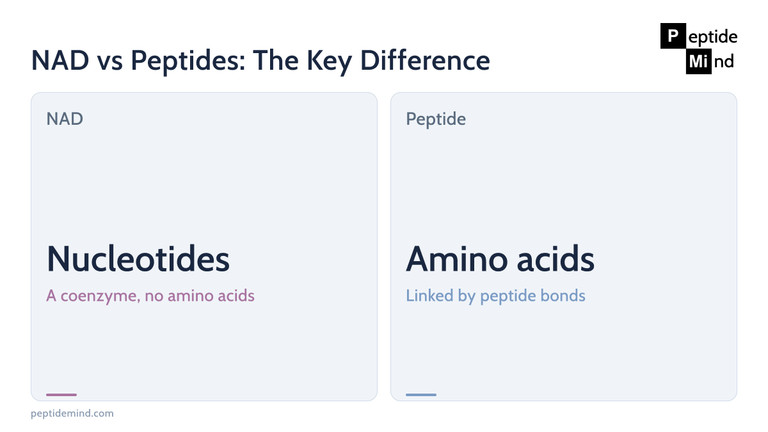
No, NAD is not a peptide, and neither is NAD+. NAD stands for nicotinamide adenine dinucleotide, and it is classified as a coenzyme, not a peptide. The simplest way to see the difference is to look at what each molecule is made of. A peptide is a chain of amino acids linked by peptide bonds. NAD contains no amino acids and no peptide bonds at all. It is built from two nucleotides, the same family of building blocks that make up DNA and RNA.
Major medical references agree on this point. According to the Cleveland Clinic, NAD is a tiny molecule found in every cell that participates in the reactions cells use to turn food into energy. A 2021 review in PMC describes NAD+ as a cellular coenzyme involved in both metabolic and signaling reactions. Nowhere in that classification does the word peptide appear, because NAD belongs to an entirely separate chemical category.
The quick comparison below shows why the two molecules are not interchangeable.
Feature | NAD (and NAD+) | Peptide |
|---|---|---|
Molecule type | Coenzyme (a dinucleotide) | Short chain of amino acids |
Building blocks | Two nucleotides | Amino acids |
Defining bond | Phosphodiester bond | Peptide (amide) bond |
Made from | Vitamin B3 (niacin) | Amino acids |
Contains amino acids? | No | Yes |
Common examples | NAD+, NADH | Insulin, oxytocin, glutathione |
What Is NAD, Exactly?
NAD is a coenzyme, which means it is a small molecule that other molecules need in order to do their jobs. Its full name, nicotinamide adenine dinucleotide, describes its structure. The word dinucleotide means it is made of two nucleotides joined together. One nucleotide carries a building block called nicotinamide (a form of vitamin B3), and the other carries adenine (the same base found in DNA). A sugar and phosphate group connect them through a link called a phosphodiester bond.
Put simply, NAD is closer in design to a piece of DNA than to a protein or peptide. Its chemical formula is C21H27N7O14P2, and it has a molecular weight of about 664 daltons. That formula contains zero amino acids, which is the single clearest reason it cannot be a peptide.
NAD is found in every living cell and is one of the most important molecules in metabolism. It works mainly as an electron carrier, shuttling electrons during the chemical reactions that release energy from food. A 2021 review in Nature Reviews Molecular Cell Biology notes that NAD+ also acts as a required cofactor for enzymes called sirtuins, CD38, and PARPs, which are involved in processes such as DNA repair and cell signaling. These are established roles in cell biology and are separate from any claim about supplements.

NAD vs NAD+ vs NADH
People often see NAD, NAD+, and NADH used as if they mean the same thing, which adds to the confusion. They are closely related forms of one molecule. NAD is the general name. NAD+ is the form that is ready to accept electrons, and NADH is the form that is carrying them. The molecule cycles back and forth between these two states as it moves energy around the cell.
Form | What it is | Role in the cell |
|---|---|---|
NAD | The general name for the molecule | The coenzyme overall |
NAD+ | The "empty" or oxidized form | Accepts electrons |
NADH | The "loaded" or reduced form | Carries electrons |
None of these three forms is a peptide. They are all the same coenzyme in different states.
What Is a Peptide?
A peptide is a short chain of amino acids linked together by peptide bonds. Amino acids are the small building blocks that also make up proteins, and a peptide bond is the chemical connection that joins one amino acid to the next. Most scientific sources define a peptide as a chain shorter than roughly 50 amino acids, with longer chains classified as proteins. If you want a fuller breakdown, Peptide Mind has a beginner guide on what a peptide is.
Familiar examples make the category clear. Insulin is a peptide hormone of 51 amino acids. Oxytocin is a peptide of 9 amino acids. Glutathione is a peptide of just 3 amino acids. In research settings, compounds such as BPC-157 and GHK-Cu are also peptides studied in preclinical models. What all of these share is the same basic design: amino acids strung together by peptide bonds. That design is exactly what NAD does not have.
NAD vs Peptides: The Key Differences
NAD and peptides differ at the most basic level, which is the parts they are built from. A peptide is assembled from amino acids. NAD is assembled from nucleotides. Because the building blocks are different, the bonds are different too: peptides rely on peptide bonds, while NAD relies on a phosphodiester bond. This is not a small technicality. It is the reason chemists place them in separate molecular families.
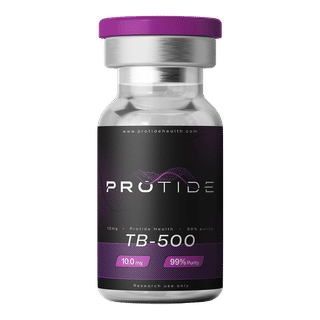
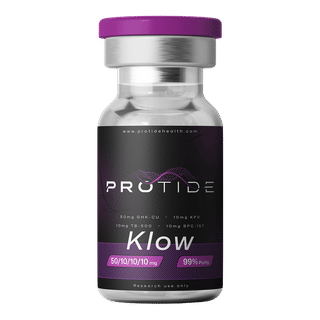
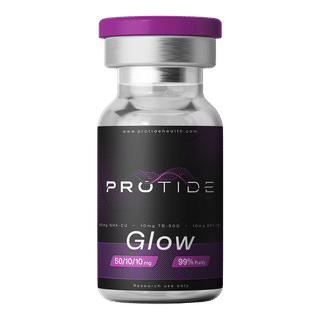
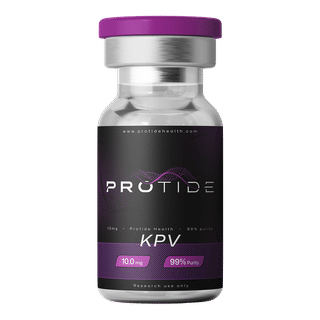
Shop research peptides
Live pricing from our top-rated vendor. Prices update as vendor listings change.
A helpful way to picture it: if amino acids are like letters that spell out a word (the peptide), then nucleotides are a completely different alphabet. NAD is not a short word made of the wrong letters; it is written in another language entirely. The two can sit next to each other in the same wellness conversation and still have nothing structural in common.
Their jobs differ as well. NAD works as a general-purpose coenzyme that countless enzymes depend on for energy reactions across the whole cell. Peptides tend to act as specific signals, binding to particular targets to trigger a defined response. One is a broad chemical helper; the other is a precise messenger.
NAD+ is a cellular coenzyme that plays an essential role in both metabolic and signaling reactions, participating in redox reactions as an electron carrier. (Conlon, Plastic and Reconstructive Surgery, 2021)
It is worth noting that the two molecules are not unrelated in the body. Some peptides studied in longevity research are thought to influence NAD-related pathways indirectly. That connection is about how pathways interact, not about NAD being a peptide. These observations come largely from preclinical research and have not been confirmed as health outcomes in humans.
Why Do People Call It a "NAD Peptide"?
The phrase "NAD peptide" is a popular misnomer, not a scientific term. It shows up for a few understandable reasons, and none of them change the underlying chemistry.
First, NAD and peptides are often offered side by side in the same longevity and wellness settings. Many clinics provide both as intravenous (IV) drips or injections, so the two get mentally filed into the same category even though they are different molecules. When something is sold next to peptides and delivered the same way, people reasonably assume it is one.
Second, some products marketed as "NAD peptides" are not NAD at all. They are NAD precursors, which are smaller molecules the body converts into NAD. The two most common are nicotinamide mononucleotide (NMN) and nicotinamide riboside (NR). These precursors are studied for their ability to raise NAD+ levels in the body. In a 2018 randomized study, oral nicotinamide riboside was well tolerated and increased blood NAD+ levels in healthy middle-aged and older adults by roughly 60%. Those results come from a small human study and do not establish any specific health outcome. Notably, neither NMN nor NR is a peptide either; both are nucleotide-based, just like NAD.
Third, marketing language is loose. "Peptide" has become a wellness buzzword, so it sometimes gets attached to anything sold in the same space. The label is catchy, but it is not accurate when applied to NAD.
NAD in Longevity and Cellular Research
NAD has become a major focus of aging research, which is another reason it appears so often alongside peptides. The interest is grounded in a consistent observation: NAD+ levels gradually decline with age. The 2021 Nature Reviews Molecular Cell Biology review reports that tissue NAD+ levels fall during ageing across multiple species, including rodents and humans. This is an association observed in research, and the full consequences in humans are still being studied.
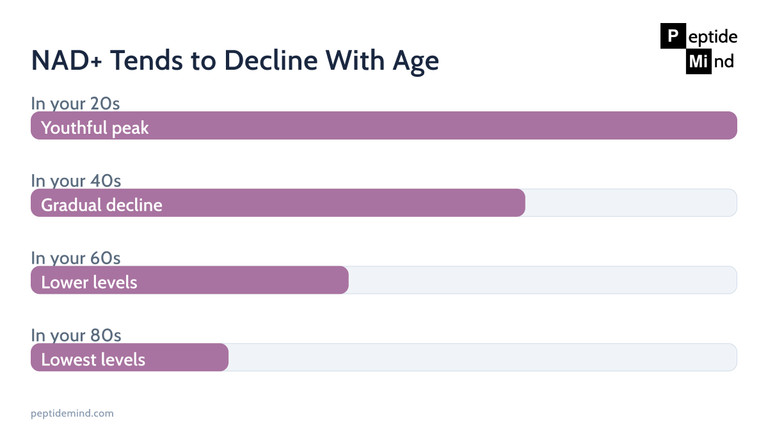
That decline is why precursors like NMN and NR are studied as ways to restore NAD+ levels. A 2022 human study found that oral NMN supplementation safely increased blood NAD+ levels in healthy subjects. These are early findings from small trials, and larger controlled studies are needed before any conclusions can be drawn about long-term effects in people.
For a structured overview of how NAD is studied, including the research context and related compounds, see the Peptide Mind NAD research profile. Researchers comparing compounds in this space can also use the peptide dosage calculator when working with reconstituted materials in the lab.
Frequently Asked Questions
Is NAD a peptide or a coenzyme?
NAD is a coenzyme, not a peptide. It is classified as a dinucleotide, meaning it is built from two nucleotides rather than from amino acids. A 2021 review describes NAD+ as a cellular coenzyme central to metabolism and signaling. Because it contains no amino acids and no peptide bonds, it does not meet the definition of a peptide.
What is the difference between NAD and peptides?
The main difference is what they are made of. NAD is a coenzyme built from nucleotides, while peptides are built from amino acids joined by peptide bonds. NAD acts as a broad helper molecule in energy reactions across the cell, whereas peptides usually act as specific signaling molecules. They belong to two separate chemical families.
Shop research peptides
Live pricing from our top-rated vendor. Prices update as vendor listings change.
Is NAD+ a peptide?
No, NAD+ is not a peptide. NAD+ is simply the oxidized, electron-accepting form of NAD, the same coenzyme discussed throughout this guide. Changing between NAD+ and NADH does not change its chemical category. Both forms are nucleotide-based coenzymes, not amino acid chains.
What is a "NAD peptide"?
"NAD peptide" is an informal marketing phrase rather than a real scientific category. It is sometimes used because NAD is offered alongside peptides in wellness settings, and sometimes because a product labeled this way is actually an NAD precursor such as NMN or nicotinamide riboside. In every case, NAD itself remains a coenzyme, not a peptide.
Is NAD the same as a GLP-1 weight-management compound?
No. GLP-1 receptor agonists are peptides studied for their effects on metabolic pathways, while NAD is a coenzyme involved in energy reactions. They are different types of molecules with different mechanisms. Any comparison between them is a comparison between two unrelated chemical classes, and findings in this area come from research rather than from established outcomes.
Are NAD and peptides studied together?
Yes, NAD and certain peptides are sometimes examined together in preclinical research, particularly in studies of metabolism and cellular aging. Some peptides are thought to interact with NAD-related pathways. These observations come from laboratory and animal models and have not been confirmed as health outcomes in humans.
Is NAD a peptide supplement?
No. Supplements containing NAD or its precursors are not peptide supplements, because NAD and precursors like NMN and NR are nucleotide-based rather than amino acid chains. The "peptide" label on some of these products is marketing language, not an accurate description of the molecule.
Research Disclaimer
The information presented in this article is for educational and research purposes only. Peptide Mind provides evidence-based research summaries and does not offer medical advice, diagnosis, or treatment recommendations. All peptides and compounds discussed are intended for in vitro and preclinical research use only. Consult a qualified healthcare professional before making any health-related decisions. The research cited may not reflect the full body of available evidence, and findings from preclinical studies may not translate to human outcomes.
References
Conlon NJ. "The Role of NAD+ in Regenerative Medicine." Plastic and Reconstructive Surgery, vol. 150, no. 4S, 2022, pp. 41S-48S. https://pmc.ncbi.nlm.nih.gov/articles/PMC9512238/
Covarrubias AJ, Perrone R, Grozio A, Verdin E. "NAD+ metabolism and its roles in cellular processes during ageing." Nature Reviews Molecular Cell Biology, vol. 22, 2021, pp. 119-141. https://pmc.ncbi.nlm.nih.gov/articles/PMC7963035/
Cleveland Clinic. "NAD (Nicotinamide Adenine Dinucleotide)." 2026. https://my.clevelandclinic.org/health/body/nad-nicotinamide-adenine-dinucleotide
Martens CR, et al. "Chronic nicotinamide riboside supplementation is well-tolerated and elevates NAD+ in healthy middle-aged and older adults." Nature Communications, vol. 9, 2018. https://pmc.ncbi.nlm.nih.gov/articles/PMC5876407/
"Oral Administration of Nicotinamide Mononucleotide Is Safe and Efficiently Increases Blood Nicotinamide Adenine Dinucleotide Levels in Healthy Subjects." 2022. https://pmc.ncbi.nlm.nih.gov/articles/PMC9036060/
The Bottom Line on NAD and Peptides
So, is NAD a peptide? No. NAD is a coenzyme built from nucleotides and made from vitamin B3, while peptides are short chains of amino acids. They look related only because they share the same longevity and wellness spotlight, not because they share any chemistry. Understanding that NAD is a coenzyme, not a peptide, makes the rest of the topic far easier to follow, including the precursors and pathways often discussed alongside it. To go deeper into how this molecule is studied, explore the Peptide Mind NAD research profile.
Add a comment
This will be publicly visible.
Your email address will not be published.
Your comment will be reviewed by an admin before it is published.