What Is a Peptide? Structure, Types, and Function Explained
A peptide is a short chain of amino acids linked by peptide bonds. Learn what peptides are, how peptide bonds form, peptides vs. proteins, the main types, and examples.


A peptide is a short chain of two or more amino acids linked together by chemical connections called peptide bonds. Peptides sit between single amino acids and large proteins on the size scale of biological molecules, which is why they are often described as "short proteins." They appear almost everywhere in living systems, from the hormones your body produces to the bioactive fragments released when you digest food, and they have become a major focus of skincare, nutrition, and pharmaceutical research. This guide explains exactly what a peptide is, how a peptide bond forms, how peptides differ from proteins, the main types and examples, what peptides are used for, and where they fit into modern research.
What Is a Peptide?
A peptide is a molecule made of two or more amino acids joined in a chain by peptide bonds. The amino acids are the individual units, and the peptide bond is the link that holds each unit to the next. Most scientific sources define a peptide as a chain shorter than roughly 50 amino acids, with anything longer generally classified as a protein.
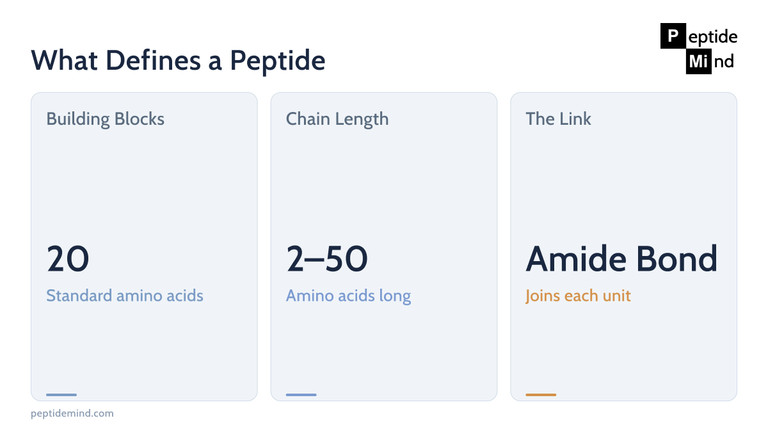
The number of amino acids in the chain gives peptides their more specific names. A chain of two amino acids is a dipeptide, three is a tripeptide, and chains of up to around a dozen are often called oligopeptides. Longer chains are referred to as polypeptides. When a polypeptide folds into a stable three-dimensional shape and reaches a molecular mass of about 10,000 daltons or more, it is usually called a protein.
What Are Amino Acids?
Amino acids are the chemical building blocks of every peptide and protein. There are 20 standard amino acids used to build peptides in the human body, and each one shares the same basic structure: a central carbon atom bonded to an amino group, a carboxyl group, a hydrogen atom, and a variable side chain. That side chain is what makes each amino acid unique, giving it a distinct size, charge, and chemical behavior. The specific order of amino acids in a chain, known as the sequence, determines how the finished peptide behaves.
What Is a Peptide Bond?
A peptide bond is the covalent chemical link that joins two amino acids together, and it is the defining feature of every peptide. It forms when the carboxyl group of one amino acid reacts with the amino group of the next, releasing a single molecule of water in the process. Because water is removed as the bond forms, chemists call this a condensation or dehydration reaction.

A peptide bond is a specific type of covalent bond known as an amide bond. Its main function is structural: it links amino acids into a stable chain and forms the continuous backbone that gives every peptide and protein its shape. Each new peptide bond extends the chain by one amino acid, and repeating the reaction many times produces the long backbones seen in polypeptides and proteins.
The two ends of the resulting chain are chemically different: one end has a free amino group, called the N-terminus, and the other has a free carboxyl group, called the C-terminus. Sequences are conventionally written and read from the N-terminus to the C-terminus.
Peptide bonds are strong and do not break apart easily under normal conditions. In living systems, breaking them down requires specialized enzymes called peptidases or proteases, which is part of how the body digests dietary protein into smaller peptides and free amino acids.
Peptides vs. Proteins: What Is the Difference?
The main difference between a peptide and a protein is size, though structure and function also separate the two. Peptides are short chains, generally fewer than about 50 amino acids, while proteins are long chains that fold into complex, stable three-dimensional shapes. Both are built from the same amino acids and the same peptide bonds, so the distinction is one of scale and organization rather than chemistry.
The table below summarizes the practical differences researchers use to tell them apart.
Feature | Peptide | Protein |
|---|---|---|
Chain length | Roughly 2 to 50 amino acids | Typically 50+ amino acids |
Molecular mass | Usually below 10,000 daltons | Usually 10,000 daltons or more |
Structure | Short, often flexible chains | Folded into defined 3D shapes |
Examples | Oxytocin, glutathione, insulin (51 aa, a borderline case) | Hemoglobin, collagen, antibodies |
Stability | Can break down quickly in the body | Generally more stable once folded |
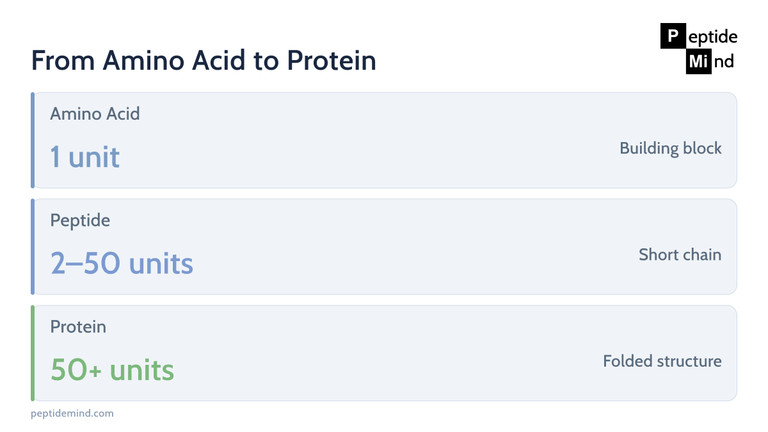
A polypeptide is the term that bridges the two. It refers to any single, unbranched chain of amino acids, and a protein is made of one or more polypeptide chains folded into a functional shape. The boundary is not perfectly sharp. Insulin, a hormone made of 51 amino acids across two chains, is frequently described as a peptide hormone even though its length sits right at the conventional protein threshold. This overlap is why many sources simply call peptides "short proteins."
Common Examples of Peptides
Shop research peptides
Live pricing from our top-rated vendor. Prices update as vendor listings change.
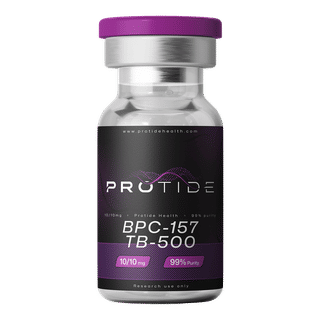
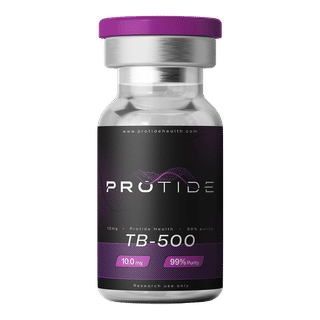
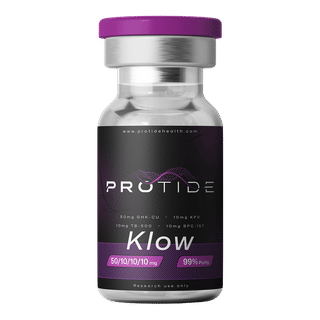
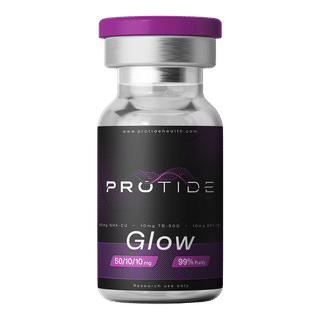
Peptides are everywhere in biology and in consumer products, which makes concrete examples the easiest way to understand them. The table below lists widely recognized peptides and what category each belongs to.
Peptide | Type | What it is |
|---|---|---|
Insulin | Hormone | A 51-amino-acid hormone that regulates blood sugar; the first peptide drug |
Oxytocin | Hormone | A 9-amino-acid signaling peptide involved in social bonding and labor |
Glutathione | Antioxidant | A 3-amino-acid peptide (tripeptide) found in nearly every cell |
Collagen peptides | Cosmetic / nutritional | Short fragments of collagen protein, sold as supplements |
GHK-Cu (copper peptide) | Cosmetic / research | A 3-amino-acid peptide bound to copper, studied in skin research |
Glucagon-like peptide-1 (GLP-1) | Hormone | A gut hormone studied widely in metabolic research |
These examples show the range of what counts as a peptide, from tiny three-amino-acid molecules like glutathione to borderline cases like insulin. They also illustrate why peptides appear in such different contexts: the same basic chemistry underlies hormones, antioxidants, skincare ingredients, and research compounds.
Types of Peptides
Peptides are grouped into several functional categories based on what they do in biology and how they are studied. The major types include the following.
Peptide hormones act as chemical messengers in the endocrine system. Insulin, oxytocin, and vasopressin are classic examples that carry signals between organs and tissues.
Signaling and signal peptides direct cellular activity. A signal peptide is a short sequence that tags a newly made protein and directs it to the correct location in the cell, while other signaling peptides influence processes such as how the body uses energy and how cells communicate.
Antimicrobial peptides are part of the innate immune defenses of many organisms and have been studied for their activity against bacteria and other pathogens in laboratory research.
Bioactive food peptides are fragments released from dietary proteins during digestion. They have been identified in foods including eggs, milk, fish, soy, oats, beans, and flaxseed, and are investigated in nutrition science.
Cosmetic peptides are short sequences used in skincare formulations. Collagen peptides and copper peptides such as GHK-Cu are the most familiar examples and are studied in cosmetic research.
Research peptides are synthesized specifically for laboratory study, where scientists examine their structure and activity in cell cultures and animal models.
How Peptides Are Made
Peptides are produced in two broad ways: naturally inside living organisms and synthetically in a laboratory. Both routes assemble amino acids in a defined sequence, but the machinery is very different.
Naturally Occurring Peptides
A natural peptide is one produced by a living organism. In the body, peptides are built by ribosomes, the cellular structures that read genetic instructions and link amino acids in the correct order. Many naturally occurring peptides act as signaling molecules, carrying messages between cells and tissues, while others are released when larger dietary proteins are broken down during digestion.
Synthetic Peptides
A synthetic peptide is assembled outside the body using chemical or biological methods. The most common chemical approach is solid-phase peptide synthesis, a technique in which amino acids are added one at a time to a growing chain anchored to a solid resin. This method allows precise control over the sequence and makes it possible to produce peptides that are identical to natural ones or designed with entirely new sequences. Biological production, using engineered bacteria or yeast, is another route, and it is how recombinant human insulin is manufactured today.
What Are Peptides Used For?
Peptides are used across medicine, cosmetics, nutrition, and scientific research, and the application depends entirely on the specific peptide. Because peptides can be designed to match precise sequences, they are studied for a wide range of biological roles. The main areas include the following.
In clinical medicine, certain peptides are approved prescription medicines. Insulin, first synthesized in 1921, remains the best-known example, and since then more than 80 peptide-based medicines have been approved worldwide for conditions across metabolic, cardiovascular, and other areas of medicine. These are regulated pharmaceuticals prescribed and supervised by physicians.
In cosmetics, short peptides are formulated into serums and creams that are studied in skin research. In nutrition, collagen peptides and bioactive food peptides are sold as dietary supplements. In laboratory science, a large and growing catalog of peptides is synthesized purely for research, where investigators study how individual sequences interact with cells and tissues. It is important to note that research peptides have not been evaluated or approved for human use, and findings from cell cultures and animal models do not necessarily translate to humans.
Peptides in Scientific Research
Peptides are a major focus of modern biochemical and pharmaceutical research because their sequences can be precisely defined and modified. Since the first synthesis of insulin in 1921, which became the first commercial peptide drug in 1923, more than 170 peptide candidates have entered active clinical development, with many more in preclinical study. Most peptide-based medicines have molecular weights between roughly 500 and 5,000 daltons.
In laboratory settings, researchers study a wide range of peptides to understand how specific sequences interact with cells and tissues. Compounds such as BPC-157 and GHK-Cu are examples of peptides examined in preclinical research, including studies in rodent models and cultured cells. It is important to note that findings from cell cultures and animal models do not necessarily translate to humans, and many research peptides have not been evaluated or approved for human use. For a broader overview of individual compounds and how they are studied, see our ultimate guide to peptides.
Working with research peptides involves careful handling. Because peptides are typically supplied as a freeze-dried powder, they must be reconstituted with bacteriostatic water before they can be measured accurately in the lab. Our peptide dosage calculator and reconstitution guide walk through the math involved. Peptides are also studied in skincare science, where short sequences are examined in cosmetic research; you can read more in our overview of skincare peptides.
Shop research peptides
Live pricing from our top-rated vendor. Prices update as vendor listings change.
Therapeutic peptides are composed of well-ordered amino acids, usually with molecular weights of 500 to 5,000 daltons. Since the synthesis of the first therapeutic peptide, insulin, in 1921, more than 80 peptide drugs have been approved worldwide. (Wang et al., Signal Transduction and Targeted Therapy, 2022)
Frequently Asked Questions
What is a peptide made of?
A peptide is made of amino acids linked together by peptide bonds. There are 20 standard amino acids, and the specific order in which they are joined defines each peptide and determines how it behaves.
Is a peptide the same as a protein?
No, but they are closely related. A peptide is a short chain of amino acids, generally fewer than 50, while a protein is a much longer chain that folds into a defined three-dimensional shape. Both are built from the same amino acids and peptide bonds, so the difference is mainly one of size and structure.
What is the difference between a peptide and an amino acid?
An amino acid is a single building block, while a peptide is a chain of two or more amino acids joined by peptide bonds. Put simply, amino acids are the individual links and a peptide is the chain those links form.
What is a polypeptide?
A polypeptide is a single, continuous, unbranched chain of amino acids joined by peptide bonds. The term usually describes chains longer than a short peptide, and a protein is made of one or more polypeptide chains folded into a functional shape.
What is a peptide hormone?
A peptide hormone is a hormone made of a chain of amino acids that acts as a chemical messenger in the body. Insulin, oxytocin, and vasopressin are common examples. Peptide hormones differ from steroid hormones, which are built from lipids rather than amino acids.
What is a collagen peptide?
A collagen peptide is a short fragment of collagen, the structural protein found in skin, bones, and connective tissue. Collagen peptides are produced by breaking down whole collagen into smaller, more easily absorbed pieces, and they are commonly sold as nutritional supplements and studied in skin and joint research.
What is a copper peptide?
A copper peptide is a small peptide bound to a copper ion. The most studied example is GHK-Cu, a three-amino-acid sequence that occurs naturally in the body and is examined in skin and cosmetic research. As with all cosmetic peptides, research findings do not guarantee specific outcomes.
What is a peptide supplement?
A peptide supplement is a dietary product containing short chains of amino acids, most often collagen peptides or other bioactive peptides derived from food proteins. In the United States, supplements are not evaluated by the FDA the way prescription medicines are, so quality and content can vary between products.
What is a GLP peptide?
GLP stands for glucagon-like peptide, a family of naturally occurring gut hormones. GLP-1 and GLP-2 are peptide hormones the body produces, and the GLP-1 class has become the basis for several approved metabolic medicines. These are regulated prescription drugs, distinct from research peptides sold for laboratory use only.
Shop research peptides
Live pricing from our top-rated vendor. Prices update as vendor listings change.
What is a C-peptide?
A C-peptide, or connecting peptide, is a short chain released when the body produces insulin. Because it is made in equal amounts to insulin, a C-peptide blood test is used in medicine to measure how much insulin a person's pancreas is producing, which helps in evaluating diabetes.
Is a peptide a steroid?
No. Peptides and steroids are chemically different classes of molecules. Peptides are chains of amino acids connected by peptide bonds, whereas steroids are built around a four-ring carbon structure derived from lipids. The two have entirely different chemical structures and origins.
What is a peptide injection?
A peptide injection refers to a peptide delivered as a liquid solution rather than taken by mouth, since many peptides are broken down in the digestive tract. In clinical medicine, approved peptide pharmaceuticals such as insulin are formulated this way. Many other peptides are sold strictly as research compounds and are not approved for human use; this article is educational and does not describe how to use any peptide.
Are peptides safe?
Safety depends entirely on the specific peptide and its regulatory status. Approved peptide medicines such as insulin have been tested and are prescribed under medical supervision. Many peptides sold online are research compounds that have not been evaluated for human use, so their safety in people is unknown. Anyone considering a peptide product should consult a qualified healthcare professional.
How many amino acids are in a peptide?
A peptide generally contains between 2 and roughly 50 amino acids. Shorter chains have specific names: two amino acids form a dipeptide, three form a tripeptide, and chains up to about a dozen are called oligopeptides. Beyond roughly 50 amino acids, the molecule is usually classified as a protein.
References
Wang L, Wang N, Zhang W, et al. Therapeutic peptides: current applications and future directions. Signal Transduction and Targeted Therapy. 2022. https://pmc.ncbi.nlm.nih.gov/articles/PMC8844085/
Chakrabarti S, Guha S, Majumder K. Food-Derived Bioactive Peptides in Human Health. Nutrients. 2018. https://pmc.ncbi.nlm.nih.gov/articles/PMC6265732/
Muttenthaler M, King GF, Adams DJ, Alewood PF. Trends in peptide drug discovery. Nature Reviews Drug Discovery. https://pmc.ncbi.nlm.nih.gov/articles/PMC10609221/
Progress in peptide and protein therapeutics: challenges and strategies. PMC. https://pmc.ncbi.nlm.nih.gov/articles/PMC12750180/
Pickart L, Margolina A. Regenerative and Protective Actions of the GHK-Cu Peptide in the Light of the New Gene Data. International Journal of Molecular Sciences. 2018. https://pmc.ncbi.nlm.nih.gov/articles/PMC6073405/
Peptide. Wikipedia. https://en.wikipedia.org/wiki/Peptide
Research Disclaimer
The information presented in this article is for educational and research purposes only. Peptide Mind provides evidence-based research summaries and does not offer medical advice, diagnosis, or treatment recommendations. All peptides discussed are intended for in vitro and preclinical research use only. Consult a qualified healthcare professional before making any health-related decisions. The research cited may not reflect the full body of available evidence, and findings from preclinical studies may not translate to human outcomes. By accessing this site, you confirm you are over the age of 21, waive any claims or liability arising from the use of the content portrayed, and fully indemnify Peptide Mind against any unauthorized usage, claims, or liability in accordance with our Terms of Service.
Add a comment
This will be publicly visible.
Your email address will not be published.
Your comment will be reviewed by an admin before it is published.