What Is MitoPrime? NAD+/MOTS-c/5-Amino-1MQ Blend (2026)
MitoPrime is a research blend of NAD+, MOTS-c, and 5-Amino-1MQ in one 120mg vial. A research guide to the components, mechanism, dosage, and safety.


MitoPrime is a three-component research blend that packs NAD+ (100 mg), MOTS-c (10 mg), and 5-Amino-1MQ (10 mg) into a single 120 mg lyophilized vial. It is sold for laboratory research, and each ingredient targets the same broad goal from a different angle: cellular energy, metabolism, and the biology of aging. Two of the three are not classical peptides at all, which is the first thing worth clearing up.
This guide breaks down what sits inside the vial, how the three compounds are thought to work together, what the published research actually shows for each one, and where the honest gaps are. There is no human trial of this exact combination, so the evidence here is built from studies on the individual components, most of it preclinical.
Looking to source MitoPrime for research? The three-component NAD+/MOTS-c/5-Amino-1MQ blend is carried by select online research-chemical suppliers. Browse our vendors directory to compare research suppliers and manufacturers by community ratings, COA access, and testing standards. For research use only.
What's inside a MitoPrime vial

A standard MitoPrime vial holds 120 mg of total lyophilized powder, split three ways. The ratio is heavily weighted toward NAD+, with the two metabolic compounds dosed at a tenth of that each.
Component | Amount | What it is | Primary research target |
|---|---|---|---|
NAD+ | 100 mg | Coenzyme (from vitamin B3) | Cellular energy, DNA repair, sirtuin activity |
MOTS-c | 10 mg | Mitochondrial-derived peptide | Insulin sensitivity, fat oxidation, exercise capacity |
5-Amino-1MQ | 10 mg | Small-molecule NNMT inhibitor | Fat cell metabolism, NAD+ preservation |
Only MOTS-c is a true peptide. NAD+ is a coenzyme, and 5-Amino-1MQ is a small molecule. A correctly labelled vial names all three compounds, their individual amounts, and the 120 mg total. If the label lists ergothioneine, or only two of the three compounds, it is a different product.

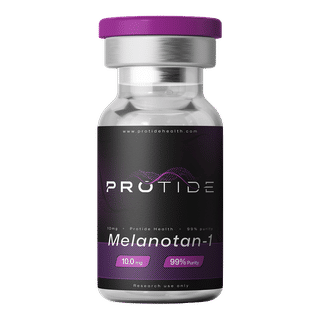
Example of a MitoPrime peptide vial showing all three components and their amounts (100 mg NAD+, 10 mg MOTS-c, 10 mg 5-Amino-1MQ), the 100/10/10 split, and 99% purity. Source: Protide Health.
How the three components are meant to work together
The logic behind the blend is a NAD+ story. NAD+ is the shared currency that ties the three ingredients into one thesis, and each compound touches that pool in a different place.
Start with the raw material. NAD+ itself is the coenzyme that mitochondria burn through to make ATP and that sirtuins and DNA-repair enzymes consume as fuel. Levels of it fall as we age. Adding NAD+ directly is the most literal way to top up the tank.
Now the enzyme problem. An enzyme called NNMT (nicotinamide N-methyltransferase) drains the NAD+ salvage pathway by methylating nicotinamide, one of NAD+'s precursors. When NNMT runs hot, less precursor gets recycled back into NAD+. 5-Amino-1MQ blocks NNMT, which in preclinical models frees up more of that precursor and lifts NAD+ inside fat tissue. So one ingredient supplies NAD+, and another is thought to stop the body from wasting it.
MOTS-c is the third lever. It is encoded inside mitochondrial DNA and activates AMPK, the cell's master energy sensor, pushing tissue toward burning fuel rather than storing it. Its own activity is sensitive to the cell's NAD+ and metabolic state.
Put the three together and the pitch is a loop: supply NAD+, protect NAD+, then flip on the pathways that spend it productively. It is a coherent rationale. It is also, at the blend level, a hypothesis. No study has tested these three together in animals or humans, so the synergy is reasoned from mechanism, not measured.

NAD+ (100 mg): the coenzyme doing the heavy lifting
NAD+ (nicotinamide adenine dinucleotide) is not a peptide and not a drug. It is a coenzyme your cells already make from vitamin B3, and it is central to two things: shuttling electrons through energy metabolism, and serving as a required cofactor for sirtuins, PARPs, and CD38.
The reason it shows up in longevity blends is decline. A 2021 review in Nature Reviews Molecular Cell Biology describes a gradual drop in tissue and cellular NAD+ across aging in rodents and humans, and links that fall to metabolic disease, cognitive decline, and sarcopenia [1]. Restoring NAD+ has become one of the more active areas in aging research.
Shop research peptides
Live pricing from our top-rated vendor. Prices update as vendor listings change.
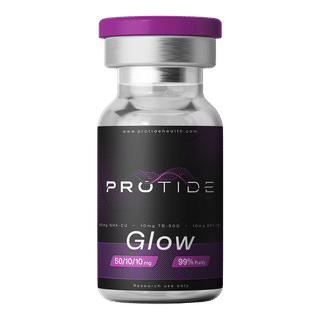
One honest caveat belongs here. Injecting or infusing NAD+ directly is different from taking a precursor like NR or NMN, and the pharmacokinetics of a large NAD+ dose are still debated. The 100 mg in a MitoPrime vial is a research quantity, not a validated clinical protocol. For the broader picture, our NAD and peptides explainer covers why the two get confused.
MOTS-c (10 mg): the mitochondrial-derived peptide
MOTS-c is the genuine peptide of the group, a 16-amino-acid chain encoded within the mitochondrial 12S rRNA gene. It behaves less like a structural peptide and more like a hormone that reports on mitochondrial stress.
Its research record is the strongest of the three. In the original 2015 Cell Metabolism paper, MOTS-c activated AMPK, improved insulin sensitivity in diet-induced obese mice, and reduced age-related insulin resistance in older animals [2]. A 2021 Nature Communications study then showed that MOTS-c is induced by exercise and that treating mice, including animals started late in life, boosted running capacity and physical performance across young, middle-aged, and old groups [3]. Exercise raised skeletal-muscle MOTS-c roughly 12-fold in that work.
"MOTS-c can significantly enhance physical performance in young, middle-age, and old mice." — Reynolds et al., Nature Communications, 2021 [3]
The ceiling on all of this is the same ceiling every mitochondrial peptide hits: the outcome data is rodent data. Circulating MOTS-c is detectable in humans and declines with age, but no completed human trial of administered MOTS-c has read out. Our full MOTS-c research guide goes deeper on dosing figures and the metabolic literature.
5-Amino-1MQ (10 mg): the NNMT inhibitor that isn't a peptide
5-Amino-1MQ (5-amino-1-methylquinolinium) is a small-molecule inhibitor of NNMT. Calling it a peptide is wrong, though nearly every vendor does. It matters because a small molecule behaves differently from a peptide in dosing, stability, and how it is studied.
The interest traces to a 2014 Nature paper showing that knocking down NNMT in fat and liver protected mice against diet-induced obesity, glucose intolerance, and fatty liver, partly by shifting adipose NAD+ and SAM levels [4]. That put NNMT on the map as a metabolic target. In 2018, a Biochemical Pharmacology study reported that membrane-permeable NNMT inhibitors given to obese mice cut white fat mass and body weight and shrank adipocytes [5]. 5-Amino-1MQ is the most talked-about compound in that class.
So the fat-loss buzz around this ingredient rests on a real mechanism and real animal data. What it does not yet have is a controlled human trial. Our 5-Amino-1MQ guide walks through dosage figures, side-effect reports, and why the "peptide" label sticks despite the chemistry.
Potential benefits studied for the blend
Because no one has studied MitoPrime as a single product, its claimed benefits are inherited from the individual components. Here is where each claim actually stands.
Fat loss and body composition. The strongest single thread. 5-Amino-1MQ and MOTS-c both reduced fat mass in rodent studies through NAD+-linked and AMPK-linked mechanisms [2][5]. Human confirmation is missing.
Cellular energy. Grounded in mechanism. NAD+ is required for ATP production, and topping up a declining pool is the rationale [1]. Whether a person feels more energy is not something the trials measured.
Insulin sensitivity and glucose handling. Supported in animals for MOTS-c specifically [2].
Longevity and healthy aging. The most speculative. It rests on NAD+ decline being an aging driver and on MOTS-c extending healthspan in mice [1][3]. No human longevity outcome exists for any of these compounds, alone or blended.
Read that list as a set of research directions, not promises. The blend sits at the front edge of metabolic research, which is exactly why the marketing runs ahead of the evidence.

MitoPrime dosage: what a 10 to 12 mg draw delivers
A MitoPrime vial states its split on the label: 100 mg NAD+ / 10 mg MOTS-c / 10 mg 5-Amino-1MQ. That is the total content of the dry vial, not a per-dose amount. Reconstitution sets the concentration, and because the 10:1:1 ratio is locked, a single draw volume determines all three at once.
Reconstituted with 3 mL of bacteriostatic water, a 120 mg vial holds 40 mg/mL. Each unit on an insulin syringe delivers 0.4 mg of total blend, so the commonly referenced 10 to 12 mg draw is 25 to 30 units.
Draw | Volume | Total blend | NAD+ | MOTS-c | 5-Amino-1MQ |
|---|---|---|---|---|---|
10 units | 0.1 mL | 4 mg | 3.3 mg | 333 mcg | 333 mcg |
20 units | 0.2 mL | 8 mg | 6.7 mg | 667 mcg | 667 mcg |
25 units | 0.25 mL | 10 mg | 8.3 mg | 833 mcg | 833 mcg |
30 units | 0.3 mL | 12 mg | 10 mg | 1 mg | 1 mg |
40 units | 0.4 mL | 16 mg | 13.3 mg | 1.3 mg | 1.3 mg |
50 units | 0.5 mL | 20 mg | 16.7 mg | 1.7 mg | 1.7 mg |
How that compares to each compound dosed separately
Shop research peptides
Live pricing from our top-rated vendor. Prices update as vendor listings change.
Compound | Standalone dose | Frequency | Cycle | Delivered at 25 to 30 units |
|---|---|---|---|---|
500 mcg to 5 mg | 2 times weekly | 4 weeks | 833 mcg to 1 mg, in range | |
1 to 5 mg | Daily | 16+ weeks | 833 mcg to 1 mg, at the floor | |
50 to 100 mg | 2 to 3 times weekly | Ongoing | 8.3 to 10 mg, well under |
Two of the three line up. MOTS-c sits comfortably inside its range, and at the 30 unit end 5-Amino-1MQ reaches its 1 mg floor exactly. Daily or every-other-day frequency also suits both, since 5-Amino-1MQ is a daily compound and MOTS-c at roughly 1 mg per day accumulates to 3 to 7 mg per week against a standalone weekly total of 1 to 10 mg.
The NAD+ arithmetic worth understanding
A single standalone NAD+ dose is referenced around 50 to 100 mg. A whole MitoPrime vial contains 100 mg of NAD+, which is one standalone dose in total. Spread across the 10 to 12 draws that vial yields, each draw carries 8.3 to 10 mg, roughly a tenth of a typical NAD+ injection. Meaning that MitoPrime behaves as a MOTS-c and 5-Amino-1MQ vial with a supporting quantity of NAD+.
Vial count and cycle length
At 10 to 12 mg per draw, one 120 mg vial yields 10 to 12 draws.
Schedule | Vial lasts | 4 to 8 week cycle |
|---|---|---|
Daily | 10 to 12 days | ~3 to 5 vials |
Every other day | 20 to 24 days | ~1.5 to 3 vials |
Disclaimer: None of the above is a protocol. There is no established human dose for this blend, no completed human trial of any of the three compounds, and no safety data for the combination. Treat every figure here as laboratory arithmetic, not dosing guidance.

For the mechanics of measuring accurately, our reconstitution guide and the dosage calculator do the math.
MitoPrime Reconstitution Details
The workflow mirrors any lyophilized compound. The powder is dissolved in bacteriostatic water, and the volume of water sets the concentration. Draw a fraction of that solution and you get a fraction of each of the three ingredients in the same fixed ratio. You cannot dose the components independently in a pre-mixed blend, which is the main trade-off versus buying them separately. That locked-ratio tradeoff is the defining feature of a peptide blend, as opposed to a set of peptides reconstituted and dosed on their own.
Step | What happens | Tool |
|---|---|---|
Reconstitute | Add bacteriostatic water to the 120 mg powder | |
Set concentration | Water volume determines mg per unit on the syringe | |
Measure a dose | Each draw keeps the 100/10/10 ratio locked | Insulin syringe |
Safety and side effects
There is no safety file for MitoPrime as a combined product, so the risk picture is assembled from the parts, and it is thin for all three in humans.
NAD+ infusions are associated with flushing, nausea, and chest tightness when pushed too fast, effects tied to rate more than dose. MOTS-c has little human safety data of any kind. 5-Amino-1MQ, as an NNMT inhibitor, alters a pathway involved in NAD+ and methylation balance, and its long-term effects in people are simply unstudied. Anyone with a hormone-sensitive condition, anyone pregnant or nursing, and anyone on prescription metabolic or diabetes medication sits outside what the research can speak to at all.
The blanket point holds: these compounds are sold for laboratory research only, none is an approved drug, and none has an established human dose.
The MitoPrime name problem: peptide blend vs. ergothioneine
Search "MitoPrime" and you will hit two completely different products, and most articles never mention it. This is the single biggest source of confusion around the name.
MitoPrime® (capital, trademarked) is a branded form of L-ergothioneine, an antioxidant amino acid sold by NNB Nutrition and used in capsules from brands like Xymogen. It has nothing to do with NAD+, MOTS-c, or 5-Amino-1MQ. It is a single ingredient, taken orally, marketed for antioxidant and longevity support.
Shop research peptides
Live pricing from our top-rated vendor. Prices update as vendor listings change.
MitoPrime (the peptide blend) is the NAD+/MOTS-c/5-Amino-1MQ research vial this guide covers, sold by research-chemical vendors as an injectable metabolic stack.
Same name, unrelated chemistry, different aisle. If a product page talks about ergothioneine, capsules, or "the longevity vitamin," you are looking at the supplement. If it lists a 120 mg vial with three metabolic compounds, that is the blend. Checking the ingredient list settles it in seconds.
How MitoPrime fits among metabolic blends
Pre-mixed metabolic vials are having a moment, and MitoPrime is one entry in a crowded shelf. Its identity is the NAD+-centric angle: most fat-loss stacks lean on GLP-1 compounds or growth-hormone peptides, while this one is built around the NAD+ salvage pathway and mitochondrial signaling.
The convenience of a fixed blend is also its limitation. You get three compounds in one reconstitution, but you cannot adjust the ratio, and you inherit the evidence gaps of all three at once. Researchers who want control often prefer the components separately. For the wider landscape, see our roundups of peptides studied for fat loss, longevity peptides, and popular peptide stacks.
Frequently asked questions
Where can you buy MitoPrime?
MitoPrime is stocked by online research-chemical suppliers like Protide Health that carry pre-mixed blends, usually listed as "MitoPrime," "NAD+/MOTS-c/5-Amino-1MQ blend". Availability shifts often, and not every supplier stocks the three-component version. Our vendors directory lists research suppliers and manufacturers that may supply it, with community ratings, COA access, testing standards, and shipping options so you can compare before you order. Everything listed is sold for laboratory research use only.
How much MitoPrime is in each dose?
That depends entirely on reconstitution, since 120 mg is the dry vial content, not a dose. Reconstituting with 3 mL gives 40 mg/mL, so each unit on an insulin syringe delivers 0.4 mg of total blend. The commonly referenced 10 to 12 mg draw is therefore 25 to 30 units, carrying 8.3 to 10 mg NAD+, 833 mcg to 1 mg MOTS-c, and 833 mcg to 1 mg 5-Amino-1MQ. The 10:1:1 ratio is locked once mixed, so you cannot adjust one component without moving all three. Those figures come from community research logs rather than established doses, and no human dosing study exists for this blend or for any compound in it.
Can you take NAD+ and 5-Amino-1MQ together?
In this blend they are already combined, and the pairing has a mechanistic rationale: NAD+ supplies the coenzyme, while 5-Amino-1MQ blocks the NNMT enzyme that would otherwise drain NAD+ precursors [4]. That said, the combination has not been tested for safety or effect in a human trial, so "can" here means chemically formulated together, not clinically validated.
Can you take MOTS-c and 5-Amino-1MQ together?
In this blend they are already combined, at 10 mg each per 120 mg vial. The rationale is complementary: MOTS-c activates AMPK to push tissue toward burning fuel rather than storing it [2], while 5-Amino-1MQ inhibits NNMT to preserve the NAD+ pool those pathways draw on [4][5]. No study has tested the two together in animals or humans, so the pairing is reasoned from mechanism, not measured.
Is NM120 the same as MitoPrime?
Usually, yes. NM120, Mito Blend, Mito Prime and MitoPrime are vendor names for the same 120 mg NAD+/MOTS-c/5-Amino-1MQ composition at the 100/10/10 split. Naming is not standardised across the research-chemical market, so the only reliable identifier is the composition printed on the label, not the product name. Confirm all three compounds and their individual amounts appear before assuming two listings are the same product.
Does 5-Amino-1MQ help with weight loss?
In animal studies, yes. NNMT inhibition reduced fat mass and body weight in obese mice [4][5]. There is no completed human weight-loss trial of 5-Amino-1MQ, so the effect in people remains unproven despite heavy marketing.
What is the difference between 5-Amino-1MQ and MOTS-c?
They are different classes of compound doing different jobs. MOTS-c is a 16-amino-acid peptide encoded in mitochondrial DNA that activates AMPK [2][3]. 5-Amino-1MQ is a small molecule, not a peptide, that inhibits the NNMT enzyme to preserve NAD+ precursors [4][5]. MOTS-c has the broader research record, including exercise-capacity data in aged mice. 5-Amino-1MQ has the more direct fat-mass data, roughly 35% fat-mass reduction in obese mice over 11 days [5]. Neither has completed a human trial.
Shop research peptides
Live pricing from our top-rated vendor. Prices update as vendor listings change.
Is MOTS-c good for weight loss?
MOTS-c improved insulin sensitivity and reduced obesity in diet-induced obese mice by activating AMPK [2]. Like the rest of this blend, the fat-loss evidence is preclinical, and human outcome data does not yet exist.
Who should avoid 5-Amino-1MQ?
Anyone pregnant or nursing, anyone with a hormone-sensitive condition, and anyone on prescription diabetes or metabolic drugs falls outside what the research covers. Because it is an unstudied compound in humans, cautious researchers treat it as experimental across the board.
What is the best peptide for mitochondria?
MOTS-c is the peptide most directly tied to mitochondrial function, since it is encoded in mitochondrial DNA and signals mitochondrial stress [2][3]. SS-31 (elamipretine) is another compound studied for mitochondrial support. "Best" is not established, because head-to-head human data does not exist.
Is MitoPrime the same as the ergothioneine supplement?
No. The trademarked MitoPrime® supplement is L-ergothioneine, an oral antioxidant with no relation to this blend. The MitoPrime peptide vial is the NAD+/MOTS-c/5-Amino-1MQ research product. Check the ingredient list to tell them apart.
The bottom line
MitoPrime is a NAD+/MOTS-c/5-Amino-1MQ research blend built on a tidy idea: supply NAD+, stop the body from wasting it, and switch on the pathways that spend it. Each component has real preclinical support, and MOTS-c in particular has a solid animal record. What none of them has, alone or blended, is a completed human trial, so the blend belongs firmly in the research-and-hypothesis column rather than the proven-protocol one. Sold for laboratory use only, it is not an approved drug and has no established human dose.
Disclaimer
This article is for educational and informational purposes only and describes research findings. It is not medical advice, and the compounds discussed are intended for laboratory research use only. Consult a qualified healthcare professional before making any health decisions.
References
Covarrubias AJ, et al. NAD+ metabolism and its roles in cellular processes during ageing. Nature Reviews Molecular Cell Biology. 2021. https://www.nature.com/articles/s41580-020-00313-x
Lee C, et al. The mitochondrial-derived peptide MOTS-c promotes metabolic homeostasis and reduces obesity and insulin resistance. Cell Metabolism. 2015. https://www.cell.com/cell-metabolism/fulltext/S1550-4131(15)00061-3
Reynolds JC, et al. MOTS-c is an exercise-induced mitochondrial-encoded regulator of age-dependent physical decline and muscle homeostasis. Nature Communications. 2021. https://www.nature.com/articles/s41467-020-20790-0
Kraus D, et al. Nicotinamide N-methyltransferase knockdown protects against diet-induced obesity. Nature. 2014. https://www.nature.com/articles/nature13198
Neelakantan H, et al. Selective and membrane-permeable small molecule inhibitors of nicotinamide N-methyltransferase reverse high fat diet-induced obesity in mice. Biochemical Pharmacology. 2018. https://pmc.ncbi.nlm.nih.gov/articles/PMC5826726/
Add a comment
This will be publicly visible.
Your email address will not be published.
Your comment will be reviewed by an admin before it is published.