
5-Amino-1MQ Peptide: Benefits, Dosage & Safety (2026)
9 mins read
5-Amino-1MQ is a small-molecule NNMT inhibitor studied for fat loss and NAD+, not a true peptide. A research guide to its benefits, dosage, and side effects.

The Peptide Mind research team consists of experienced researchers and certified peptide therapy experts dedicated to making complex peptide science accessible. We specialize in analyzing clinical trials, peer-reviewed medical literature, and emerging data on peptide therapies. Disclaimer: Our content is strictly for educational and research purposes, and is not intended as medical advice.
5-Amino-1MQ is a small-molecule NNMT inhibitor studied for fat loss and NAD+, not a true peptide. A research guide to its benefits, dosage, and side effects.
Global peptide therapeutics market: roughly $50B-$141B in 2025-26 depending on scope, ~8% annual growth. Every estimate, GLP-1 sale, and FDA stat, fully sourced.
Peptide Therapeutics Market: Statistics & Market Size (2026)

MitoPrime is a research blend of NAD+, MOTS-c, and 5-Amino-1MQ in one 120mg vial. A research guide to the components, mechanism, dosage, and safety.

Compare the 10 best peptide companies of 2026, ranked by third-party lab testing, COA transparency, and verified community reviews. See how the top research peptide vendors compare.
The 10 Best Peptide Companies of 2026, Ranked by Third-Party Lab Testing
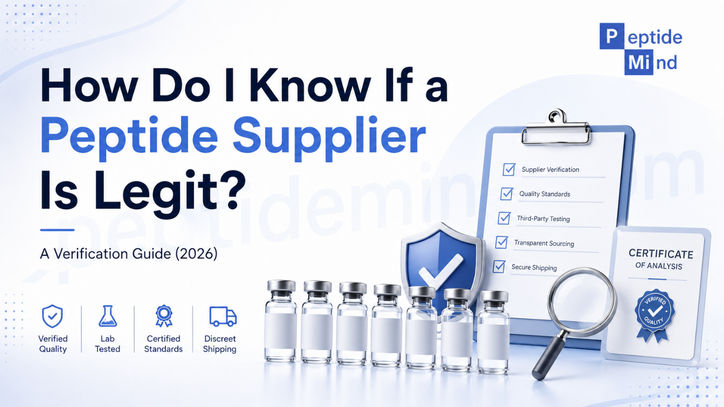
How do I know if a peptide supplier is legit? Verify COAs, HPLC testing, business registration, and RUO compliance before you buy peptides in 2026.
How Do I Know If a Peptide Supplier Is Legit? A Verification Guide (2026)

Compare 8 trusted BPC-157 peptide for sale vendors ranked by purity, COA testing, pricing, and shipping for RUO buyers in 2026.
8 Best BPC-157 Vendors: Where to Buy BPC-157 Peptide for Sale in 2026
The 10 most popular peptides people take in 2026, sorted by category: healing, weight loss, growth hormone, skin, cognition, and sexual health.
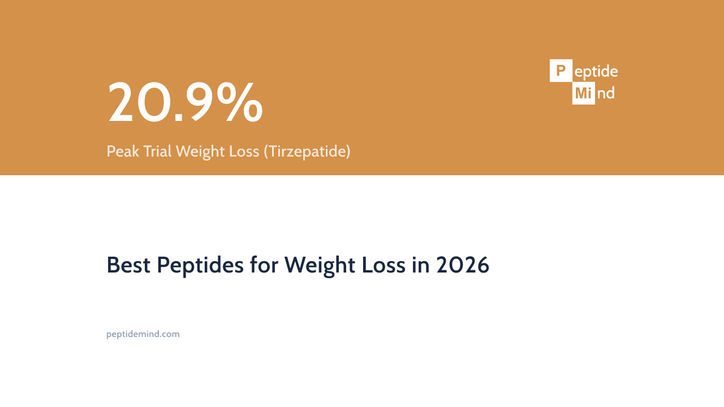
Peptides for weight loss include FDA-approved GLP-1 drugs and non-prescription options. Compare types, costs, safety, and results for 2026.
Best peptides for bodybuilding, compared for mechanism, legal status, and safety, including BPC-157, CJC-1295, and TB-500.
Best Peptides for Bodybuilding: 9 Top Options Ranked for 2026
The best peptides for healing in 2026: BPC-157, TB-500, GHK-Cu, and more, ranked by mechanism, safety, and recovery use case.
Top 7 Best Peptides for Healing in 2026 (Ranked and Reviewed)

We tracked 177 live offers across 14 vendors and 13 peptides. See real per-vial and per-mg prices, monthly protocol costs, and why the same vial varies 8x.
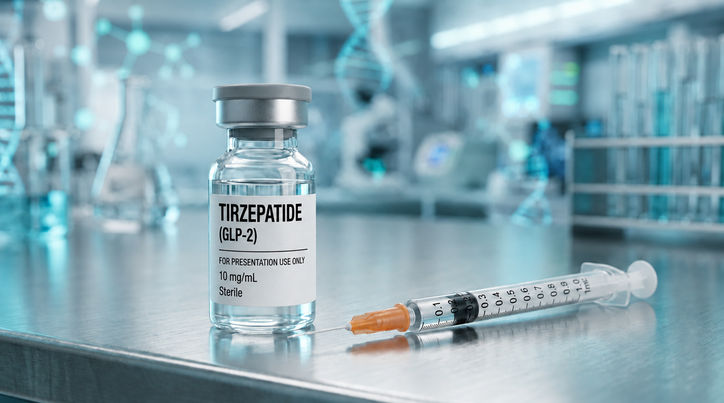
Microdosing tirzepatide (GLP-2) explained: what counts as a microdose, a dose chart in mg and units, 3-phase protocol, schedules, side effects, and costs.
A peptide dosage calculator is a free tool that converts your vial size, bacteriostatic water volume, and target dose into an exact syringe draw volume. Instead of doing the reconstitution math by hand, you enter three inputs and instantly get the concentration of your solution and how many milliliters or syringe units to draw. This calculator works for single peptide compounds and multi-peptide blends.
To calculate your peptide dose, divide the total peptide content of your vial in micrograms by the volume of bacteriostatic water you added in milliliters. This gives you your solution concentration in mcg/mL. Then divide your target dose by that concentration to get your draw volume. For example, a 5mg (5,000 mcg) vial reconstituted with 2mL of BAC water gives a concentration of 2,500 mcg/mL. A 250 mcg dose would require drawing 0.1mL. This calculator automates all of those steps instantly.
Most people add 2mL to 3mL of bacteriostatic water per vial, but the right amount depends on the dose you want to draw and the syringe size you are using. Adding 1mL to a 5mg vial gives you a concentration of 5,000 mcg/mL, making each dose very small in volume. Adding 2mL gives you 2,500 mcg/mL, which is easier to measure on a standard insulin syringe. A general guideline is to choose a volume that puts your typical dose somewhere between 10 and 30 units on a U-100 syringe. Use the calculator above to test different water volumes and find what works for your dose.
Both are made of amino acids, but peptides are much smaller than proteins. Because of their tiny size, peptides can act like tiny messengers in the body, sending specific signals to your cells to tell them exactly what to do.
BPC-157 is a synthetic peptide derived from a protein found in gastric juice. It is commonly referenced in discussions around tissue repair, inflammation modulation, and gastrointestinal protection.
The peptide consists of 15 amino acids and is notable for its stability and activity in both localized and systemic contexts. Research and observational reports often focus on its interactions with growth factors, collagen-related processes, and vascular signaling pathway
Empty
Glu
Glutamic acid
Empty
Leu
Leucine
Empty
Pgl
pGlu
Empty
Glu
pGlu