GHK-Cu Peptide: Complete Guide (Benefits & Dosage)
GHK-Cu is a copper peptide studied for skin, hair, and healing. A beginner's guide to benefits, topical vs injectable dosage, side effects, and before & after.

GHK-Cu is a small copper-bound peptide your body makes naturally, and it is studied for stimulating collagen, supporting hair follicles, and speeding skin and wound repair. It comes in two main forms: topical serums you rub on your skin and injectable solutions used in research settings. Your natural levels fall sharply with age, which is why it has become one of the most talked-about peptides in skincare and longevity.
This guide explains what GHK-Cu is in plain language, what the research actually shows, how the topical and injectable forms differ, typical dosage ranges, realistic before-and-after timelines, and the side effects worth knowing about before you start.
One-line summary: GHK-Cu is a copper peptide with strong evidence for skin and wound repair, growing evidence for hair, and a good safety record at studied doses. Topical is the easy starting point; injectable use belongs in a research context.
What is GHK-Cu?
GHK-Cu is the tripeptide glycyl-L-histidyl-L-lysine bound to a single copper ion. "Tripeptide" just means it is a chain of three amino acids, which makes it one of the smallest signaling peptides studied. The "Cu" is the chemical symbol for copper, and that copper is the active partner: GHK grabs copper from your blood and carries it into cells, which is why it is often called a copper peptide or copper tripeptide-1.
It is not a synthetic invention. GHK occurs naturally in human blood, saliva, and urine. The detail that drives most of the interest is how it changes with age. Blood levels average around 200 ng/mL at age 20 and drop to roughly 80 ng/mL by age 60, according to the foundational work by Loren Pickart. That decline lines up with the period when skin thins, wounds heal slower, and hair density falls, which is the core reason researchers ask whether restoring GHK-Cu can push some of those processes back the other way.
GHK-Cu was first discovered in the 1970s as the factor in human plasma that helped older tissue behave more like younger tissue in the lab. Decades later it shows up in dermatology serums, longevity protocols, and recovery research, all built on the same molecule.
How GHK-Cu works
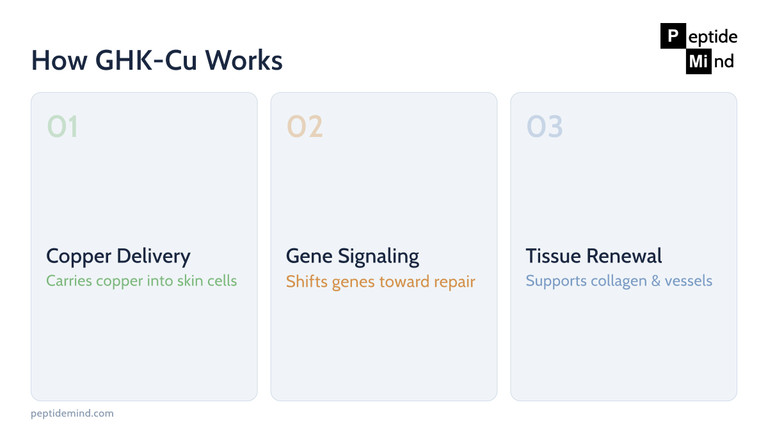
GHK-Cu acts as a signal, not a drug. It tells cells to produce repair proteins and switches large groups of genes toward a "younger," more regenerative pattern. Three mechanisms come up again and again in the research.
First, it is a copper delivery system. Copper is a required cofactor for enzymes that build and cross-link collagen and elastin, the proteins that give skin its firmness and bounce. By carrying copper into skin cells, GHK-Cu feeds the machinery that rebuilds the skin's support structure.
Second, it changes gene expression on a broad scale. A widely cited analysis by Pickart and Margolina found that GHK influences the activity of thousands of human genes, nudging many of them toward tissue repair, antioxidant defense, and anti-inflammatory activity while turning down genes tied to inflammation and tissue breakdown. That "reset" effect is why a single molecule shows up across so many different benefit claims.
Third, it supports wound healing and blood vessel growth. In the regenerative literature, GHK-Cu has been shown to attract repair cells, stimulate the growth of new small blood vessels (angiogenesis), and improve the skin barrier, which is the practical reason it has been used on wounds and damaged skin for years.
GHK-Cu benefits: what the research shows
The evidence is strongest for skin, solid for wound healing, and promising but earlier for hair and systemic anti-aging. Here is what each benefit rests on.
Skin: collagen, firmness, and fewer fine lines
This is GHK-Cu's best-supported use. Multiple studies report that it boosts collagen and elastin production, improves skin firmness and elasticity, and reduces the look of fine lines. A review of GHK-Cu's regenerative actions summarizes findings that topical copper peptide tightened aging skin, improved elasticity, reduced photodamage, and increased skin density in human trials.
In laboratory studies, GHK-Cu increased type I and III collagen production by up to 70% in human dermal fibroblasts, and one randomized human trial measured a 28% average increase in dermal collagen density after three months of topical use.
Dermatologists generally frame it as a supporting ingredient for skin resilience rather than an instant wrinkle eraser, which is the honest way to set expectations. If you are mapping out a routine, our guide to the best skincare peptides shows where GHK-Cu fits alongside other options.
Hair: thicker, denser growth
Shop research peptides
Live pricing from our top-rated vendor. Prices update as vendor listings change.
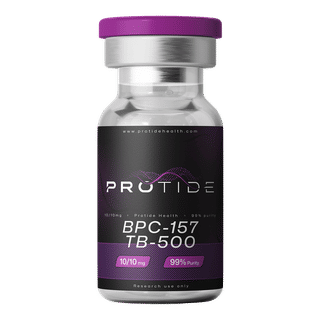
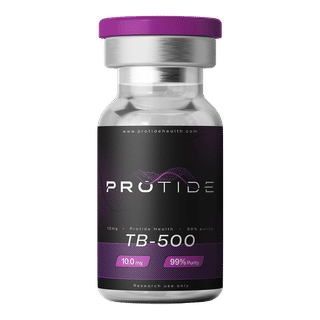
GHK-Cu is studied for stimulating hair follicles and supporting thicker, fuller hair, partly through the same blood-vessel and repair signaling it uses in skin. Copper peptides have a long history in hair products, and the early evidence is encouraging, though the human hair trials are smaller than the skin data. In research, GHK-Cu is studied for enlarging the hair follicle, extending the active growth phase, and improving scalp circulation.
Wound healing and recovery
Helping skin and tissue repair is the oldest and most established use of GHK-Cu. It modulates the genes involved in tissue repair, recruits healing cells, and reduces oxidative stress, which is why it appears in wound-care research and in recovery protocols. It is one of the peptides discussed in our roundup of the best peptides for injury recovery, often alongside BPC-157 and TB-500.
Anti-aging and longevity
Because GHK-Cu shifts gene activity toward repair and antioxidant defense, it is studied as a general anti-aging signal, not only a skin treatment. Its broad effect on gene expression is the reason longevity researchers pay attention to it. It features in our overview of peptides for longevity. This systemic angle is also the main reason some people move from topical use to injectable research.
Topical vs injectable GHK-Cu
The single most important decision for a beginner is which form to use. Topical serums are the accessible, low-risk entry point; injectable GHK-Cu is used in a research context for systemic effects and carries more responsibility. Here is how they compare.
Factor | Topical (serum/cream) | Injectable (subcutaneous) |
|---|---|---|
Main use | Skin tone, firmness, fine lines, scalp | Systemic anti-aging, tissue recovery |
Access | Over the counter | Research compound, requires reconstitution |
Typical strength | 1% to 2% copper peptide | Measured in mg per dose |
Effort | Apply to clean skin daily | Mix, measure, and inject |
Risk level | Low (mild irritation possible) | Higher (sterility, dosing, injection-site effects) |
Best for | Most people starting out | Experienced researchers |
For skin and scalp goals, a topical serum does most of what people want with almost none of the complexity. The injectable form is where the longevity and recovery research lives, but it asks you to handle reconstitution, sterile technique, and accurate dosing. If you are new to peptides entirely, our how to use peptides for the first time guide is the right place to build the basics first.
One visual cue worth knowing: genuine copper peptide solutions and serums carry a natural faint blue tint from the copper. That blue color is normal and expected, not a sign of contamination.
GHK-Cu dosage
There is no single official dose, because GHK-Cu is sold as a cosmetic ingredient topically and used as a research compound when injected. The figures below reflect commonly studied and commonly used ranges, not medical instructions. Always anchor decisions to credible sources and, for any systemic use, professional guidance.
Form | Common range | Frequency | Notes |
|---|---|---|---|
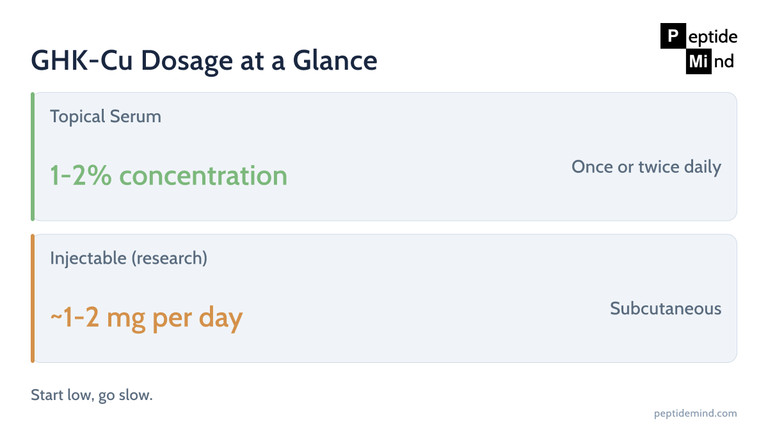
Topical serum | 1% to 2% concentration | Once or twice daily | Apply to clean skin; introduce slowly |
Injectable (research) | ~1 to 2 mg per day | Daily or on a cycle | Subcutaneous; reconstituted from powder |
For topical use, the practical rule is to start low and slow. Apply a 1% serum once a day, see how your skin responds over a week or two, then build up. Copper peptides do not need to be layered with everything at once.
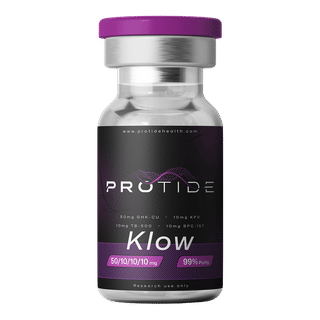
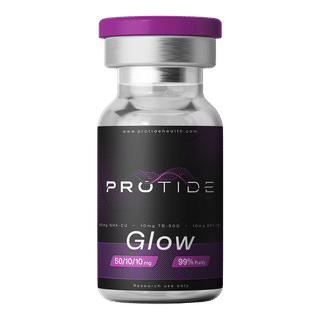
For injectable research use, the dose is measured in milligrams and the peptide arrives as a freeze-dried powder that has to be mixed with bacteriostatic water before use. Getting the concentration and the injection volume right is the whole game. Our peptide dosage calculator handles that math for you, and the bacteriostatic water guide covers what to mix it with. GHK-Cu also appears inside popular research blends such as GLOW and KLOW, where it is paired with healing peptides. GHK-Cu makes up the largest fraction of both, and the KLOW vs GLOW comparison shows exactly how much of each blend it accounts for. In KLOW it accounts for 62.5% of the vial, which is why the KLOW peptide benefits guide treats it as the component doing most of the work.
GHK-Cu before and after: realistic timeline
Copper peptide results build gradually. Skin texture and hydration often shift first, within a few weeks, while firmness and fine-line changes take a couple of months of consistent use. Anyone promising overnight transformation is overselling it.
Timeframe | What people typically notice |
|---|---|
Weeks 1 to 2 | Smoother texture, better hydration, calmer skin |
Weeks 3 to 6 | More even tone, early firmness, less redness |
Weeks 8 to 12 | Improved elasticity, softened fine lines, denser-looking skin |
3 months and beyond | Cumulative firmness and tone; maintenance phase |
Two honest caveats. Photos labeled "before and after" online are easy to stage with lighting and angles, so treat dramatic single-photo claims with skepticism. And results depend on consistency far more than on dose. A modest serum used every day beats a strong one used occasionally.
Shop research peptides
Live pricing from our top-rated vendor. Prices update as vendor listings change.
GHK-Cu side effects and safety
GHK-Cu has a good safety record at studied doses, and most side effects are mild and local. That said, "well tolerated" is not "risk free," and the two forms have different profiles.
For topical use, the most common issue is mild irritation, redness, or sensitivity, especially in people who react to copper. A small number of users experience temporary breakouts when starting, sometimes called "copper uglies," as skin adjusts.
For injectable use, reported effects include temporary redness or tenderness at the injection site, and occasionally mild headache or fatigue. Because injecting bypasses the skin barrier, sterility and correct dosing matter much more, and contaminated or over-concentrated solutions are the real risks rather than the peptide itself.
A few general safety points:
Patch test any new topical product on a small area first.
Introduce one new active at a time so you can tell what your skin is reacting to.
Do not combine high-strength copper peptides with strong exfoliating acids in the same routine without easing in.
Treat injectable peptides as research compounds: source carefully, look for third-party purity testing, and store them correctly.
GHK-Cu is generally not recommended during pregnancy or breastfeeding simply because it has not been studied in those groups, which is the standard cautious position rather than evidence of harm.
Is GHK-Cu worth the hype?
For skin and scalp goals, GHK-Cu is one of the better-supported peptides you can buy, and a topical serum is a low-risk way to try it. For systemic anti-aging, the science is promising but the injectable route asks for real diligence. It is best understood as a steady, repair-focused ingredient rather than a miracle. Set realistic expectations, stay consistent, and it has a genuine evidence base behind it, which is more than many trending ingredients can claim.
Frequently asked questions
What is GHK-Cu peptide used for?
GHK-Cu is used mainly for skin (collagen, firmness, fine lines), hair (follicle support and density), and wound or tissue repair. It is also studied as a broader anti-aging signal because it shifts gene activity toward repair and antioxidant defense.
How much GHK-Cu should I use daily?
For topical serums, a 1% to 2% product applied once or twice daily to clean skin is the common range, starting once a day and building up. For injectable research use, commonly cited ranges sit around 1 to 2 mg per day, measured from reconstituted powder. There is no official medical dose, so anchor any systemic use to credible sources and professional guidance.
What are the side effects of GHK-Cu?
Topical side effects are usually mild: irritation, redness, sensitivity, and occasionally temporary breakouts as skin adjusts. Injectable use can cause temporary redness or tenderness at the injection site and sometimes mild headache or fatigue. Serious reactions are uncommon at studied doses.
Is GHK-Cu better as a serum or an injection?
For most people, a serum is the better starting point: it targets skin and scalp directly, needs no mixing or needles, and carries low risk. Injections are used for systemic, whole-body effects in a research context and require sterile technique and accurate dosing.
Why is GHK-Cu blue?
The faint blue color comes from the copper ion bound to the peptide. A light blue tint in a serum or reconstituted solution is normal and expected, not a sign that anything is wrong.
Shop research peptides
Live pricing from our top-rated vendor. Prices update as vendor listings change.
How long does GHK-Cu take to work?
Most people notice texture and hydration changes within the first two weeks of topical use, with firmness and fine-line improvements building over eight to twelve weeks. Results depend heavily on consistent daily use.
The bottom line
GHK-Cu is a naturally occurring copper peptide with one of the more credible evidence bases in the peptide world, strongest for skin repair and firmness, solid for wound healing, and growing for hair and longevity. Topical serums make it easy and low-risk to try; injectable use moves into research territory that rewards careful sourcing and accurate dosing. Start with clear goals, give it the weeks it needs, and judge it on consistent results rather than a single dramatic photo.
References
Pickart L, Margolina A. Regenerative and Protective Actions of the GHK-Cu Peptide in the Light of the New Gene Data. International Journal of Molecular Sciences. 2018. https://pmc.ncbi.nlm.nih.gov/articles/PMC6073405/
Pickart L, Vasquez-Soltero JM, Margolina A. GHK Peptide as a Natural Modulator of Multiple Cellular Pathways in Skin Regeneration. BioMed Research International. 2015. https://pmc.ncbi.nlm.nih.gov/articles/PMC4508379/
Pickart L, Margolina A. The potential of GHK as an anti-aging peptide. Aging Pathobiology and Therapeutics. https://pmc.ncbi.nlm.nih.gov/articles/PMC8789089/
Disclaimer: This article is for educational and informational purposes only and describes research findings. It is not medical advice and is not intended to diagnose, treat, cure, or prevent any disease. Products described may be intended for laboratory and research use only. Consult a qualified healthcare professional before starting any new compound.
Add a comment
This will be publicly visible.
Your email address will not be published.
Your comment will be reviewed by an admin before it is published.