TB-500: A Beginner's Research Guide (Benefits & Dosage)
TB-500 is a synthetic peptide studied for tissue repair and wound healing. A beginner's research guide to its mechanism, benefits, dosage, and safety.

TB-500 is a synthetic peptide built around the actin-binding region of Thymosin Beta-4, a naturally occurring protein studied for tissue repair, cell migration, and wound healing. It is sold as a research chemical, is not approved by the FDA for human use, and is prohibited in competitive sport. This guide explains what the peptide is, how it works, what the published research shows, the dosages used in studies, and the safety and legal points anyone new to it should understand first.
What Is TB-500?
TB-500 is a synthetic peptide based on the active region of Thymosin Beta-4 (Tβ4), a 43-amino acid protein found in nearly every cell type in the body. In the scientific literature, TB-500 most precisely refers to the acetylated seven-amino acid sequence Ac-LKKTETQ, which corresponds to residues 17 to 23 of the parent protein. That short stretch is the part of Tβ4 that binds actin, and it is the reason the fragment exists.
Here is the catch that trips up most newcomers. Many vials sold as "TB-500" do not contain the seven-residue fragment at all; they contain full-length synthetic Thymosin Beta-4. The two names get used interchangeably in the research-chemical market even though they describe different molecules in the literature. The distinction matters because the full protein has a wider documented range of activity than the isolated fragment. If you want the deeper structural breakdown, the TB-500 vs Thymosin Beta-4 guide walks through it.
TB-500 at a glance | Detail |
|---|---|
Parent molecule | Thymosin Beta-4 (43 amino acids) |
Marketed forms | Ac-LKKTETQ fragment (7 residues) or full-length synthetic Tβ4 |
Main mechanism studied | Actin sequestration and cell migration |
Research stage | Preclinical (animal and cell-culture) |
Regulatory status | Not FDA approved; WADA prohibited |
A short primer helps before going further. A peptide is a chain of amino acids, shorter than a full protein, and peptides act as signaling molecules throughout the body. If that idea is new, start with the beginner's guide to peptides, then come back here.
How TB-500 Works: Mechanism of Action
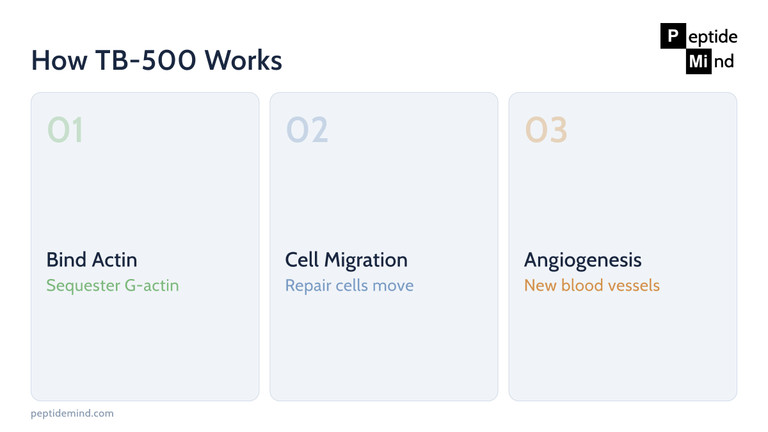
The mechanism comes down to one job: managing actin. Actin is the protein that builds the internal scaffolding of a cell, and cells constantly assemble and disassemble it to change shape and crawl toward a wound. Thymosin Beta-4 is the major actin-sequestering molecule in mammalian cells, meaning it binds free actin monomers and holds them in reserve until the cell needs them. A foundational 2005 review in Trends in Molecular Medicine described this role and its link to dermal and corneal wound healing.
Because TB-500 is built around the LKKTETQ actin-binding motif, it reproduces that binding behavior. In research models, regulating actin this way is associated with faster cell migration, the movement of repair cells into damaged tissue. A second strand of the mechanism is angiogenesis, the growth of new blood vessels that feed a healing site. A 2003 study in the FASEB Journal reported that the seven-amino acid actin-binding motif is itself essential for the peptide's pro-angiogenic activity. If the term is unfamiliar, here is a simple explainer on what angiogenesis is.
So the research picture is two complementary actions: move repair cells into place, and help build the blood supply that supports them. Both observations come from laboratory and animal systems, not human clinical trials.
What the Research Says TB-500 Does
Most of the evidence behind TB-500 is drawn from research on Thymosin Beta-4, the parent molecule, since the fragment was designed to isolate its actin-binding function. The findings below describe preclinical outcomes and should be read as research signals, not promises of human benefit.
Wound healing is the most cited area. In a frequently referenced 1999 rat study in the Journal of Investigative Dermatology, topical or injected Thymosin Beta-4 increased reepithelialization, the regrowth of skin over a wound, by a sizable margin compared with saline controls. Wounds also contracted faster and showed more collagen deposition and new blood vessels.
In a rat full-thickness wound model, Thymosin Beta-4 increased reepithelialization by 42% at four days and by as much as 61% at seven days versus saline controls, with wounds contracting at least 11% more by day 7, according to research in the Journal of Investigative Dermatology.
Soft-tissue repair is the second theme, and it is what drives the peptide's popularity around muscle, tendon, and ligament injuries. The mechanistic logic is the same migration-and-angiogenesis story applied to connective tissue. This is why TB-500 is so often paired with BPC-157 in the recovery-focused injury recovery research guide, which covers the wider evidence base.
The parent protein also has a striking cardiac record. In a 2004 study published in Nature, Thymosin Beta-4 promoted heart-muscle cell migration and survival and, after experimental coronary artery ligation in mice, was associated with improved early cardiomyocyte survival and better cardiac function through the ILK and Akt survival pathway. A more recent 2021 review in Cells examined Tβ4's potential to reactivate embryonic repair programs in adult organs, particularly the heart. Eye research adds another layer: Thymosin Beta-4 has been described as a corneal wound-healing and anti-inflammatory agent in ophthalmology research. Across all of these, the work sits in animal and cell models, and what holds in a mouse heart or a rat wound may not hold in a person.
TB-500 Half-Life: How Long It Stays Active
Marketing pages and forums commonly quote a half-life of roughly four to seven days, and that is the figure most often repeated about the compound. The reasoning is that the small fragment distributes widely and clears slowly, which is why dosing schemes built around it tend to space injections days apart rather than dosing daily.
Treat that number with some caution. Rigorous human pharmacokinetic data for TB-500 is thin, and the commonly cited range comes more from community consensus than from a controlled clinical study. What does exist is anti-doping research: the World Anti-Doping Agency has studied TB-500 metabolism to develop detection methods, which tells you the compound and its breakdown products persist long enough to be testable. For research purposes, the honest summary is that the peptide appears long-acting, but the exact half-life in humans is not well established.
Shop research peptides
Live pricing from our top-rated vendor. Prices update as vendor listings change.
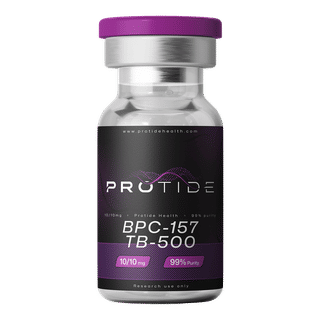
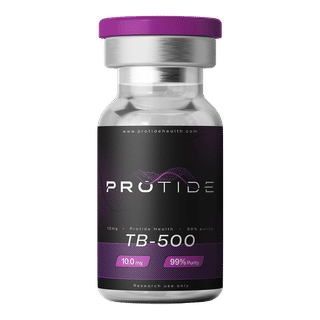
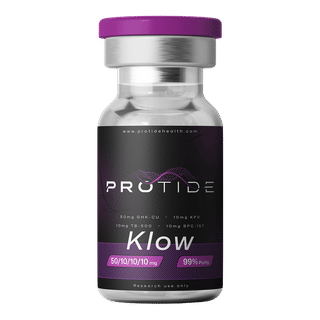
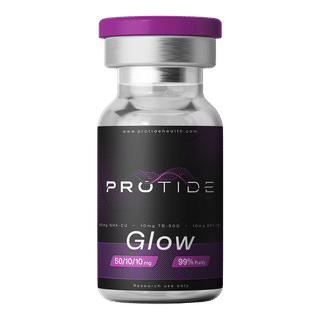
TB-500 Dosage in Research: What the Studies Used
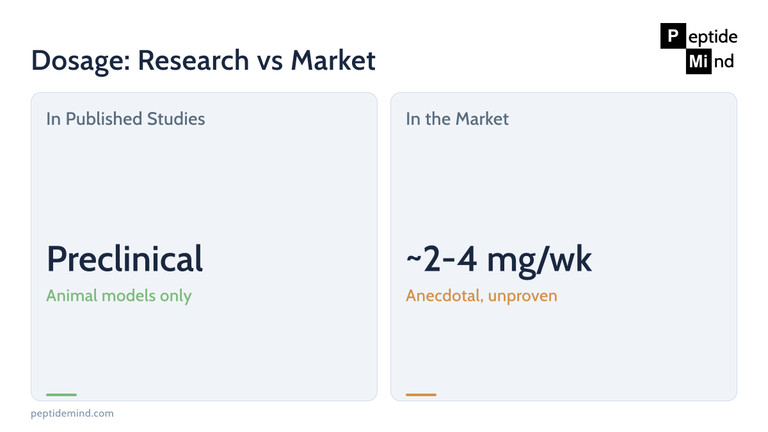
Two very different sets of numbers float around for TB-500, and confusing them is a common beginner mistake. The first set comes from published preclinical studies. The second comes from market and community "protocols." Only the first is evidence, and even that describes what specific animal studies did rather than any recommendation.
Source of figures | What it describes | Status |
|---|---|---|
Published preclinical studies | Tβ4 applied topically or by injection in rats and mice, dosed over several days | Research data, animal models |
Market "cycling" claims | A loading phase (often quoted near 2 to 4 mg per week) then a lower maintenance phase | Anecdotal, not clinically validated |
The market "loading and maintenance" framing you will see widely is not drawn from human trials, and no standardized human dosing has been established for this peptide. Two technical points matter if you are reconstituting research material. First, the seven-residue fragment and full-length Tβ4 differ a lot in molecular weight, so the same milligram amount is a very different molar dose depending on which molecule the vial holds. Always check that against the certificate of analysis. Second, getting concentration right is its own step: the peptide dosage calculator converts vial size and diluent volume into a working concentration.
TB-500 ships as a freeze-dried powder and is reconstituted with bacteriostatic water before use. The mechanics of mixing, drawing, and storing are identical to other injectable peptides, and the step-by-step in the BPC-157 reconstitution guide transfers directly. New to handling vials at all? The walkthrough on how to use peptides for the first time covers the basics.
TB-500 vs BPC-157: How They Compare
If you have read anything about TB-500, you have seen it paired with BPC-157, a combination nicknamed the "Wolverine stack." The two are studied together because their mechanisms look complementary rather than overlapping, but they are structurally unrelated compounds with separate research stories.
Characteristic | TB-500 | BPC-157 |
|---|---|---|
Built from | Thymosin Beta-4 | A protein in gastric juice |
Size | 7-residue fragment or 43-residue Tβ4 | 15 amino acids |
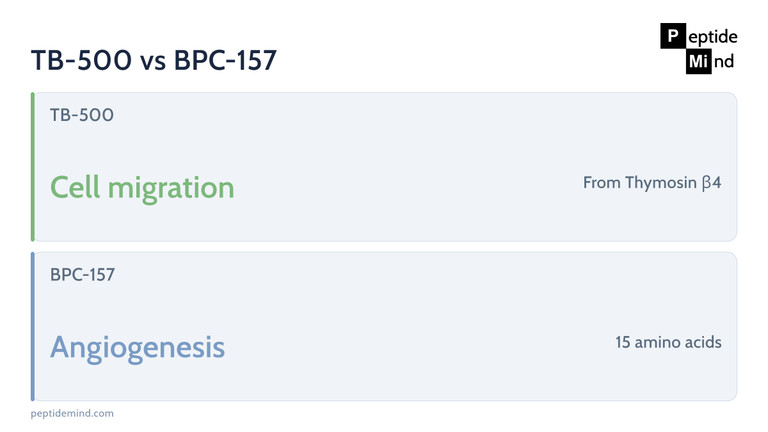
Main mechanism studied | Actin regulation, cell migration | Angiogenesis via VEGF and nitric oxide |
Oral stability | Low (studied by injection) | High (acid-stable) |
Research stage | Preclinical | Preclinical, plus three human pilots |
The short version: BPC-157 research leans toward building blood supply and protecting the gut and tendons, while TB-500 research leans toward moving repair cells and closing wounds. Neither is "better" because they are studied for different questions. The full pairing, including the important caveat that the two have rarely been tested together in the same study, is covered in the BPC-157 and TB-500 Wolverine stack guide. For BPC-157 on its own, see the dedicated BPC-157 peptide guide.
Reported Side Effects and Safety Considerations
The candid answer is that the human safety profile of TB-500 is not well characterized, because there are no large controlled human trials behind it. What gets reported is mostly anecdotal: injection-site reactions such as redness or irritation, temporary fatigue or head-rush sensations after dosing, and occasional flu-like feelings. None of these has been quantified in rigorous human research.
There are also reasonable theoretical concerns worth knowing. Because the peptide influences cell migration and new blood vessel growth, researchers have raised questions about how such pathways could behave in the presence of existing tumors, where promoting angiogenesis is undesirable. That concern comes from mechanism, not from documented human harm, but it is a real reason the compound stays in the research-only category. Purity is a separate safety issue entirely: material sold outside a regulated supply chain can be mislabeled or contaminated, which introduces risks that have nothing to do with the peptide itself.
Is TB-500 Legal? FDA and WADA Status
TB-500 is legal to possess and sell only as a research chemical labeled for laboratory use, not as a drug or supplement. It has not been approved by the FDA or any major regulatory body for human use, and it cannot be marketed or sold for human consumption. Like its companion BPC-157, it sits outside the approved-medicine system entirely.
For anyone connected to competitive sport, the bigger issue is doping rules. The World Anti-Doping Agency prohibits TB-500, and athletes can face sanctions for testing positive, which is exactly why WADA has invested in detection methods for it. Tested military personnel face comparable restrictions. None of this is a comment on the science; it reflects the compound's unapproved, performance-adjacent status.
What to Check Before Buying TB-500
Because no regulator polices purity here, quality assurance falls entirely on the buyer. A short checklist covers most of it:
Certificate of analysis (COA). Insist on recent third-party testing, ideally with HPLC for purity and mass spectrometry to confirm identity.
Which molecule is in the vial. Confirm whether you are getting the Ac-LKKTETQ fragment or full-length Tβ4, since the label often says "TB-500" for either.
Stated quantity and molecular weight. Cross-check the milligram amount against the COA so your concentration math is right.
Storage and shipping. Lyophilized peptide should arrive dry and be kept cold; sloppy handling degrades it.
Shop research peptides
Live pricing from our top-rated vendor. Prices update as vendor listings change.
TB-500 is also supplied pre-mixed inside multi-peptide vials, where the label alone rarely tells you what else is in the blend; the KLOW vs GLOW comparison shows how two near-identical blends containing TB-500 differ. For a broader look at sourcing and how researchers structure multi-compound work, the overview of peptide stacks is a useful next read.
Frequently Asked Questions
How soon does TB-500 start working?
There is no validated human timeline. In animal wound studies, measurable effects on reepithelialization appeared within days, but those are controlled lab models, not people. Anecdotal reports vary widely from days to several weeks, and because the data is not from clinical trials, no reliable onset window can be stated.
Is TB-500 good for your heart?
The most cited cardiac evidence is a 2004 Nature study in which Thymosin Beta-4 improved heart-muscle cell survival and function after experimental injury in mice. That is promising preclinical science about the parent protein, not proof of a benefit in humans. No controlled human cardiac trials support taking TB-500 for heart health.
Is TB-500 safe?
Its safety in humans has not been established through controlled trials. Reported issues are mostly minor and anecdotal, such as injection-site irritation and temporary fatigue, but theoretical concerns around angiogenesis and the real risk of impure research-grade material mean it cannot be called safe in any clinical sense.
What does TB-500 do?
In research, it binds actin and is associated with faster cell migration and new blood vessel growth, the two processes most relevant to tissue repair and wound closure. Those findings come from animal and cell studies of Thymosin Beta-4 and its active fragment.
Is TB-500 the same as BPC-157?
No. They are different molecules with different origins and mechanisms that happen to be studied together for recovery. BPC-157 derives from a gastric protein and is linked to angiogenesis and gut protection; TB-500 derives from Thymosin Beta-4 and is linked to actin regulation and cell migration.
Is TB-500 banned in sports?
Yes. The World Anti-Doping Agency lists TB-500 as a prohibited substance, and a positive test can carry serious sanctions. Anyone subject to drug testing in sport or the military should treat it as off-limits.
The Bottom Line on TB-500
For someone new to the topic, the honest framing is this: TB-500 is a research peptide with a real and interesting preclinical record, built almost entirely on studies of Thymosin Beta-4 in animals, and a popular reputation that runs well ahead of the human evidence. The mechanism, regulating actin to support cell migration and angiogenesis, is well described. The wound-healing and cardiac findings are striking but come from rats and mice. There are no large human trials, no FDA approval, and a firm WADA ban.
If you are evaluating it, separate the science from the sales copy. Verify the exact molecule and its purity on a certificate of analysis, understand that "loading and maintenance" dosing charts are market conventions rather than clinical guidance, and read the related research before drawing conclusions. TB-500 is best understood as a compound to study carefully, not a finished therapy.
References
Goldstein AL, Hannappel E, Kleinman HK. "Thymosin β4: actin-sequestering protein moonlights to repair injured tissues." Trends in Molecular Medicine, 2005;11(9):421-9. https://pubmed.ncbi.nlm.nih.gov/16099219/
Malinda KM, Sidhu GS, Mani H, et al. "Thymosin beta4 accelerates wound healing." Journal of Investigative Dermatology, 1999;113(3):364-8. https://pubmed.ncbi.nlm.nih.gov/10469335/
Philp D, Huff T, Gho YS, Hannappel E, Kleinman HK. "The actin binding site on thymosin beta4 promotes angiogenesis." FASEB Journal, 2003;17(14):2103-5. https://pubmed.ncbi.nlm.nih.gov/14500546/
Bock-Marquette I, Saxena A, White MD, Dimaio JM, Srivastava D. "Thymosin beta4 activates integrin-linked kinase and promotes cardiac cell migration, survival and cardiac repair." Nature, 2004;432:466-472. https://pubmed.ncbi.nlm.nih.gov/15565145/
Sosne G, Qiu P, Kurpakus-Wheater M. "Thymosin beta 4: a novel corneal wound healing and anti-inflammatory agent." Clinical Ophthalmology, 2007. https://pubmed.ncbi.nlm.nih.gov/19668473/
Bednarczyk M, et al. "Utilizing Developmentally Essential Secreted Peptides Such as Thymosin Beta-4 to Remind the Adult Organs of Their Embryonic State." Cells, 2021;10(6):1343. https://pmc.ncbi.nlm.nih.gov/articles/PMC8228050/
World Anti-Doping Agency. "Investigation of in vitro/ex vivo TB-500 metabolism." https://www.wada-ama.org/en/resources/scientific-research/investigation-vitroex-vivo-tb-500-metabolism-synthesis-relevant
Disclaimer: The information provided on Peptide Mind is for educational purposes only and is not a substitute for professional medical advice. Many peptides discussed on this site are unapproved research chemicals intended strictly for laboratory and preclinical use. The FDA has not evaluated these statements, and nothing on this site is intended to diagnose, treat, cure, or prevent any disease. By accessing this site, you confirm you are over the age of 21, waive any claims or liability arising from the use of the content portrayed, and fully indemnify Peptide Mind against any unauthorized usage, claims, or liability in accordance with our Terms of Service.
Add a comment
This will be publicly visible.
Your email address will not be published.
Your comment will be reviewed by an admin before it is published.