BPC-157 and TB-500: The Wolverine Stack Guide (2026)
BPC-157 and TB-500 is the research pairing nicknamed the Wolverine stack. A beginner's research guide to each peptide, how they compare, and study dosages, with PubMed citations.

BPC-157 and TB-500 are the two most studied tissue-repair peptides in preclinical research, and the pairing is popularly nicknamed the "Wolverine stack" after the comic-book character known for rapid healing. This beginner's guide explains what each peptide is, what the published research actually shows, how BPC-157 and TB-500 differ, and the dosages used in animal studies, all grounded in peer-reviewed evidence as of 2026. It also covers an important point most pages skip: the two compounds have been studied separately far more than they have been studied together.
What Is the BPC-157 and TB-500 Stack?
The BPC-157 and TB-500 stack is the combined study of two separate research peptides, BPC-157 and TB-500, that have each been investigated in animal models of tissue repair. In peptide research, a "stack" simply means two or more compounds used together rather than alone. This particular pairing earned the "Wolverine stack" nickname in online communities because both peptides have been associated with faster tissue repair markers in preclinical work, echoing the fictional character's healing ability.

It helps to define the two compounds up front. BPC-157 (Body Protection Compound-157) is a synthetic 15-amino acid peptide originally derived from a protein found in human gastric juice. TB-500 is a synthetic peptide built around the actin-binding region of Thymosin Beta-4, a naturally occurring 43-amino acid protein. The two are structurally unrelated and act through different biological pathways, which is the main reason researchers became interested in studying them in combination.
Quick Comparison | BPC-157 | TB-500 |
|---|---|---|
Amino acid count | 15 | 43 (or 7-residue fragment) |
Origin | Gastric juice protein | Thymosin Beta-4 |
Main mechanism studied | Angiogenesis via VEGF and nitric oxide | Actin regulation and cell migration |
Research stage | Preclinical (plus 3 human pilots) | Preclinical |
Both BPC-157 and TB-500 are classified as research chemicals. Neither is approved for human use by the FDA or any other major regulatory body, and the findings below come from laboratory and animal studies. For a broader primer on how peptides work before going deeper, Peptide Mind's beginner's guide to peptides covers the fundamentals.
BPC-157: What the Research Shows
BPC-157 is a pentadecapeptide, meaning a 15-amino acid chain, that has accumulated more preclinical tissue-repair data than almost any other research peptide. It was first characterized by Predrag Sikiric and colleagues at the University of Zagreb in the early 1990s, and a 2025 literature and patent review cataloged its effects across gastrointestinal, musculoskeletal, and neural models. These findings are from preclinical research and have not been confirmed in human clinical trials.
Most BPC-157 research centers on connective tissue. A 2024 systematic review in HSS Journal examined 36 studies published between 1993 and 2024 and reported improved functional, structural, and biomechanical outcomes across muscle, tendon, ligament, and bone injury models in animals. In one rat study, BPC-157 administration promoted tendon fibroblast outgrowth, cell survival under stress, and cell migration through the FAK-paxillin signaling pathway. These results were observed under controlled laboratory conditions and should be interpreted with caution.
The mechanism researchers find most interesting is angiogenesis, the growth of new blood vessels. A 2020 study in the Journal of Molecular Medicine demonstrated that BPC-157 activates both VEGF-dependent and VEGF-independent pathways to nitric oxide production, supporting blood vessel formation and vascular stability in damaged tissue. If the term is new to you, Peptide Mind's explainer on what angiogenesis is breaks it down in simple language. For the full research record, see the dedicated BPC-157 peptide guide.
TB-500: What the Research Shows
TB-500 is a synthetic peptide centered on the LKKTETQ actin-binding motif of Thymosin Beta-4 (Tβ4), the major actin-sequestering protein in mammalian cells. Where BPC-157 research focuses on blood vessel and growth-factor pathways, TB-500 research focuses on actin dynamics, the cytoskeletal machinery that lets cells change shape and migrate into a wound. This mechanistic difference is central to why the two are studied as a pair.
Thymosin Beta-4 was characterized in a foundational 2005 review in Trends in Molecular Medicine as a regulatory protein involved in cell migration and tissue repair signaling. In a frequently cited 1999 rat wound study in the Journal of Investigative Dermatology, topical Thymosin Beta-4 was associated with a 42% increase in reepithelialization at four days and as much as 61% at seven days compared with saline controls, alongside increased angiogenesis. This data comes from animal models and may not translate directly to human physiology.
In a controlled rat study, Thymosin Beta-4 application was associated with a 42% increase in reepithelialization at day 4 and up to 61% at day 7 versus controls, according to research published in the Journal of Investigative Dermatology.
The actin-binding region itself has been linked to vascular activity: a 2003 study in the FASEB Journal reported that the site promoting actin interaction is also associated with angiogenic activity in experimental models. A common point of confusion is that many vials labeled "TB-500" actually contain full-length synthetic Tβ4, so the precise molecule matters more than the trade name. Peptide Mind's TB-500 vs Thymosin Beta-4 guide explains that distinction in detail.
Why Researchers Combine BPC-157 and TB-500
Researchers study BPC-157 and TB-500 together because their mechanisms appear complementary rather than overlapping. BPC-157 has been associated with angiogenesis and growth-factor signaling, the pathways that build new blood supply and set up the repair environment, while TB-500 has been associated with actin regulation and cell migration, the machinery that moves repair cells into damaged tissue. In theory, the two address different stages of the same biological process. These are mechanistic observations from separate preclinical studies, not outcomes confirmed in combination trials.
This is the most important caveat for beginners, and the one most vendor pages omit. The "synergy" of the Wolverine stack is largely a hypothesis built from the two peptides' individual research records. To date, there are no controlled human studies and very few dedicated animal studies that test BPC-157 and TB-500 together against each peptide alone. Claims that the combination is "proven" to outperform either compound are not supported by the published literature. Further research, including controlled studies with proper single-compound comparison groups, is needed to validate any combined effect.

Shop research peptides
Live pricing from our top-rated vendor. Prices update as vendor listings change.
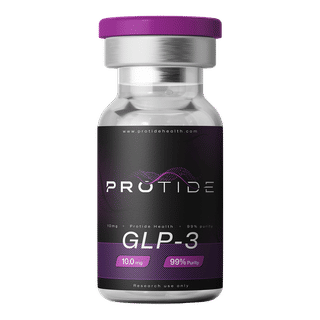
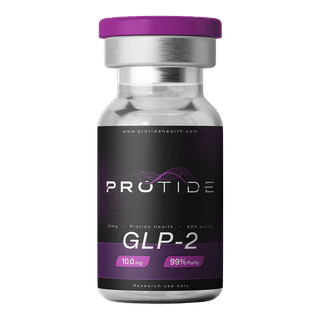
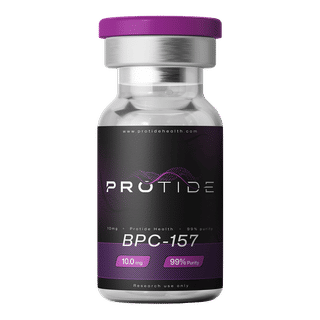
Both peptides also show overlapping anti-inflammatory signals in separate studies, with each associated with reduced pro-inflammatory cytokines such as IL-6 and TNF-alpha in animal models. Whether these effects add together, overlap, or interfere when the compounds are combined has not been characterized. Researchers interested in how this pairing sits alongside other recovery-focused compounds can review Peptide Mind's injury recovery research guide.
BPC-157 vs TB-500: How They Differ
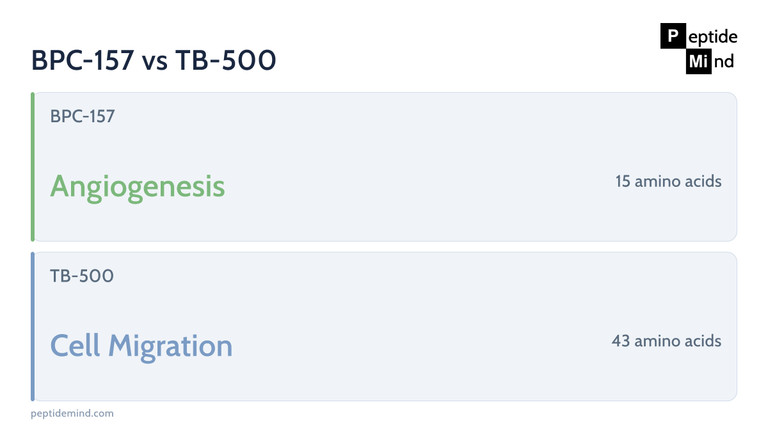
BPC-157 and TB-500 differ in size, origin, mechanism, and stability, even though both are studied for tissue repair. The clearest way to see the contrast is side by side, which also explains why neither peptide simply replaces the other in research.
Characteristic | BPC-157 | TB-500 |
|---|---|---|
Amino acid count | 15 | 43 (full Tβ4) or 7 (fragment) |
Origin | Human gastric juice protein | Thymosin Beta-4 (thymus) |
Primary mechanism studied | VEGF and nitric oxide angiogenesis | Actin sequestration, cell migration |
Key research focus | GI protection, tendon, neuroprotection | Wound closure, cardiac, neural tissue |
Oral stability | High (acid-stable) | Low (studied via injection) |
Research stage | Preclinical plus 3 human pilots | Preclinical |
The practical takeaway for a beginner is that these are two distinct compounds with two distinct research stories. BPC-157 stands out for its stability in stomach acid and its broad gastrointestinal record, while TB-500 stands out for its actin-regulation mechanism and wound-closure data. The "bpc 157 vs tb 500" question rarely has a single answer in research terms, because the two are typically studied for different mechanistic questions.
Research Dosages Used in Published Studies
Dosages in BPC-157 and TB-500 research vary by animal model, route, and study design, and the figures below describe what specific studies used rather than recommendations for any use. Most BPC-157 preclinical work uses dosages around 10 mcg/kg administered intraperitoneally or subcutaneously in rodents, with study durations ranging from single administration to 14-day periods. Published Thymosin Beta-4 research has applied the compound topically and intraperitoneally in rat wound models, repeated over several days.
Because the BPC-157 (15 amino acids) and TB-500 fragment (7 amino acids) or full Tβ4 (43 amino acids) differ substantially in molecular weight, the same milligram quantity represents very different molar amounts, a detail worth confirming against a product's certificate of analysis. For researchers calculating working concentrations, the peptide dosage calculator converts vial size and diluent volume into concentration, and the blend calculator handles combinations like this one. Step-by-step preparation is covered in the BPC-157 reconstitution guide.
On the limited human side, only three pilot studies have examined BPC-157 in people. A 2025 intravenous safety study involving two healthy adults found infusions up to 20 mg well tolerated, with no adverse events or clinically meaningful changes in vital signs or laboratory biomarkers. No comparable human dosing data exists for the BPC-157 and TB-500 combination, and these isolated findings do not establish safety for any combined use.
What to Know Before Studying the Wolverine Stack
Before sourcing BPC-157 and TB-500 for research, the most important considerations are regulatory status and product quality. In 2023, the FDA designated BPC-157 as a Category 2 bulk drug substance, meaning it cannot be compounded by licensed pharmacies due to insufficient human safety data. Both BPC-157 and TB-500 are also classified by the World Anti-Doping Agency as prohibited substances, which is relevant for any researcher working with tested athletes.
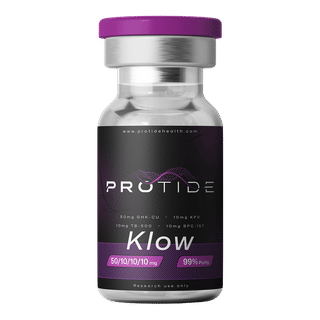
Because these compounds sit outside regulated supply chains, purity and accurate labeling are not guaranteed by any oversight body. Third-party testing certificates of analysis (COAs), ideally with HPLC and mass spectrometry data, are the main quality-assurance tool available. Both peptides also appear in larger pre-mixed blends that add GHK-Cu and, in one case, KPV, and the KLOW vs GLOW comparison covers how those two formulations differ. For the four-component version, our KLOW guide grades what the added GHK-Cu and KPV actually contribute and where the evidence for each runs out. For a wider look at how researchers structure multi-compound studies, see Peptide Mind's overview of peptide stacks.
Frequently Asked Questions
What is the BPC-157 and TB-500 stack?
The BPC-157 and TB-500 stack is the combined research use of two tissue-repair peptides that have each been studied separately in animal models. It is nicknamed the "Wolverine stack" in online communities because both compounds have been associated with faster tissue-repair markers in preclinical work. The combination itself has not been validated in controlled human trials.
Is BPC-157 or TB-500 better?
Neither is "better" in a research sense, because the two are studied for different mechanistic questions. BPC-157 research focuses on angiogenesis and growth-factor pathways and includes a broad gastrointestinal record, while TB-500 research focuses on actin regulation and cell migration. Both remain preclinical compounds, and findings have not been confirmed in human trials.
What is the BPC-157 TB-500 blend?
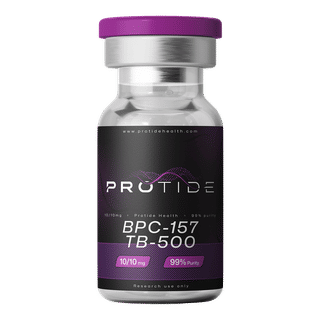
A BPC-157 TB-500 blend is a single research vial containing both peptides, sometimes sold under the "Wolverine" name. That's the core distinction Peptide Mind's peptide blend glossary entry draws out: a blend locks components into one fixed-ratio vial, while a stack can also mean separate vials dosed independently. Blends are used in research to study the two compounds together rather than reconstituting and combining them separately. Because the peptides differ in molecular weight, researchers confirm the stated quantity of each against the product's certificate of analysis.
Shop research peptides
Live pricing from our top-rated vendor. Prices update as vendor listings change.
Do BPC-157 and TB-500 work synergistically?
The idea that BPC-157 and TB-500 work synergistically is a hypothesis based on their complementary mechanisms in separate studies, not a finding from controlled combination research. BPC-157 has been associated with blood vessel formation and TB-500 with cell migration, which in theory address different repair stages. Dedicated studies comparing the combination to each peptide alone are still needed to confirm any added effect.
Are BPC-157 and TB-500 approved for human use?
No. Both BPC-157 and TB-500 are research chemicals intended for laboratory and preclinical investigation only, and neither is approved by the FDA or any major regulatory agency. BPC-157 carries a 2023 FDA Category 2 designation, and both are on the World Anti-Doping Agency prohibited list. The research discussed here was conducted in animal and cell-culture models.
References
Józwiak M, et al. "Multifunctionality and Possible Medical Application of the BPC 157 Peptide: Literature and Patent Review." Pharmaceuticals, 18(2):185, 2025. https://pmc.ncbi.nlm.nih.gov/articles/PMC11859134/
"Emerging Use of BPC-157 in Orthopaedic Sports Medicine: A Systematic Review." HSS Journal, 2024. https://pmc.ncbi.nlm.nih.gov/articles/PMC12313605/
Hsieh MJ, et al. "The promoting effect of pentadecapeptide BPC 157 on tendon healing involves tendon outgrowth, cell survival, and cell migration." J Orthop Res, 29(6):862-8, 2011. https://pubmed.ncbi.nlm.nih.gov/21030672/
Hsieh MJ, et al. "Modulatory effects of BPC 157 on the activation of the Src-Caveolin-1-endothelial nitric oxide synthase pathway." J Mol Med, 98:1361-1373, 2020. https://pmc.ncbi.nlm.nih.gov/articles/PMC7555539/
Lee E, Burgess DJ. "Safety of Intravenous Infusion of BPC157 in Humans: A Pilot Study." 2025. https://pubmed.ncbi.nlm.nih.gov/40131143/
Goldstein AL, Hannappel E, Kleinman HK. "Thymosin β4: actin-sequestering protein moonlights to repair injured tissues." Trends in Molecular Medicine, 2005. https://pubmed.ncbi.nlm.nih.gov/16099219/
Malinda KM, Sidhu GS, Mani H, et al. "Thymosin beta4 accelerates wound healing." Journal of Investigative Dermatology, 1999. https://pubmed.ncbi.nlm.nih.gov/10469335/
Philp D, Huff T, Gho YS, Hannappel E, Kleinman HK. "The actin binding site on thymosin beta4 promotes angiogenesis." FASEB Journal, 2003. https://pubmed.ncbi.nlm.nih.gov/14500546/
The Current State of Wolverine Stack Research
The research on BPC-157 and TB-500 is genuinely substantial for two preclinical peptides, but it is overwhelmingly research on each compound individually rather than on the Wolverine stack as a combination. BPC-157 brings a deep tendon, gastrointestinal, and angiogenesis record, and TB-500 brings a distinct actin-regulation and wound-closure record, which is what makes the pairing scientifically interesting. The critical gap is the absence of controlled studies testing the two together, so any conclusion about combined effects remains speculative as of 2026.
For beginners, the honest summary is that BPC-157 and TB-500 are two well-studied research peptides with complementary mechanisms and a popular nickname, not a clinically validated combination. Researchers sourcing either compound should prioritize third-party tested material and verify each peptide's identity and purity on a certificate of analysis. Lab-tested options, including the BPC-157 and TB-500 Wolverine blend, are available through research suppliers like Protide Health.
Disclaimer: The information provided on Peptide Mind is for educational purposes only and is not a substitute for professional medical advice. Many peptides discussed on this site are unapproved research chemicals intended strictly for laboratory and preclinical use. The FDA has not evaluated these statements, and nothing on this site is intended to diagnose, treat, cure, or prevent any disease. By accessing this site, you confirm you are over the age of 21, waive any claims or liability arising from the use of the content portrayed, and fully indemnify Peptide Mind against any unauthorized usage, claims, or liability in accordance with our Terms of Service.
Add a comment
This will be publicly visible.
Your email address will not be published.
Your comment will be reviewed by an admin before it is published.