Sleep Peptide Cheat Sheet
Quick reference for sleep-supporting peptides including DSIP, Ipamorelin, and Pinealon. Includes dosage, timing, mechanisms, and benefits for improving sleep quality and recovery.
For research purposes only.
This cheat sheet is a research reference only — not for human consumption or therapeutic use.
| Peptide | Purpose | Vial Size | BAC Water | Dosing | Frequency | Cycle |
|---|---|---|---|---|---|---|
pin PinealonCognitive | Cognitive Enhancement | 10 mg | 2 mL | 1–2 mg | Daily | 10–20 consecutive days |
ipa IpamorelinGrowth | Fat Loss / Muscle | 10 mg | 3 mL | 200–300 mcg | 5 days on / 2 off | 12 weeks on / 4 weeks off |
dsi DSIPSleep | Sleep & Anti-Aging | 5 mg | 3 mL | 100–300 mcg | Daily | 4–8 weeks |
pin
Cognitive
- Purpose
- Cognitive Enhancement
- Vial Size
- 10 mg
- BAC Water
- 2 mL
- Dosing
- 1–2 mg
- Frequency
- Daily
- Cycle
- 10–20 consecutive days
ipa
Growth
- Purpose
- Fat Loss / Muscle
- Vial Size
- 10 mg
- BAC Water
- 3 mL
- Dosing
- 200–300 mcg
- Frequency
- 5 days on / 2 off
- Cycle
- 12 weeks on / 4 weeks off
dsi
Sleep
- Purpose
- Sleep & Anti-Aging
- Vial Size
- 5 mg
- BAC Water
- 3 mL
- Dosing
- 100–300 mcg
- Frequency
- Daily
- Cycle
- 4–8 weeks
Download the Sleep Peptide Cheat Sheet PDF
Save a free printable PDF of this peptide dosage cheat sheet — vial sizes, BAC water ratios, dosing amounts, and cycle lengths in one quick-reference chart.
Sleep Peptide Cheat Sheet — Research Notes
Key considerations and protocol notes for each peptide in this cheat sheet.
Cognitive
pin
Longevity
Pinealon is a very short peptide studied for protecting brain cells and supporting memory. It may also help reduce stress-related damage in the brain and support your body's natural sleep-wake cycle, and it's usually taken in short cycles.
Growth
ipa
Growth
Ipamorelin encourages your body to release its own growth hormone and tends to cause fewer side effects than similar peptides. It's usually injected at night on an empty stomach, since that's when the body's own growth hormone surge happens. Doses above 300 mcg don't produce proportionally more growth hormone, so 300 mcg per injection is the practical ceiling.
Build your own protocol
Create a custom peptide stack tailored to your goals. Add peptides, set dosages, and share it with the community.
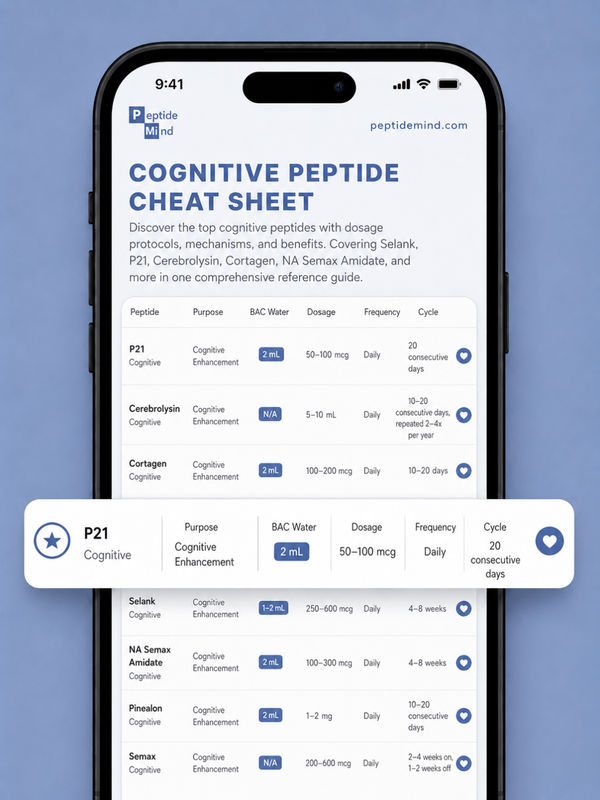
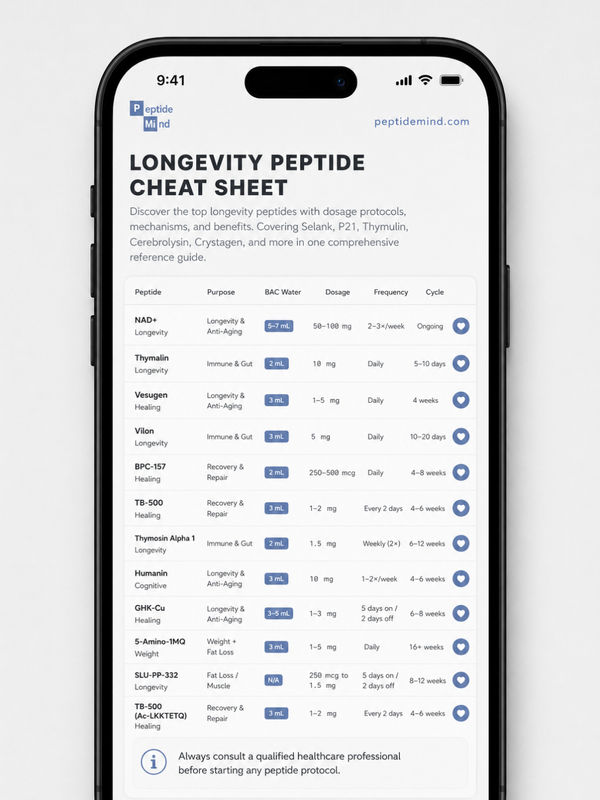
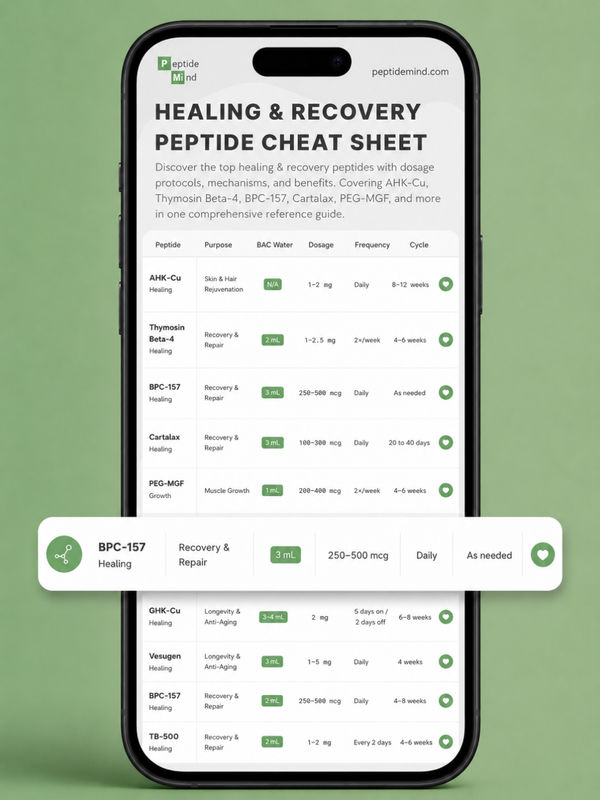
More Cheat Sheets
Explore other peptide reference sheets from PeptideMind.


Frequently asked questions
What is a peptide dosage calculator?
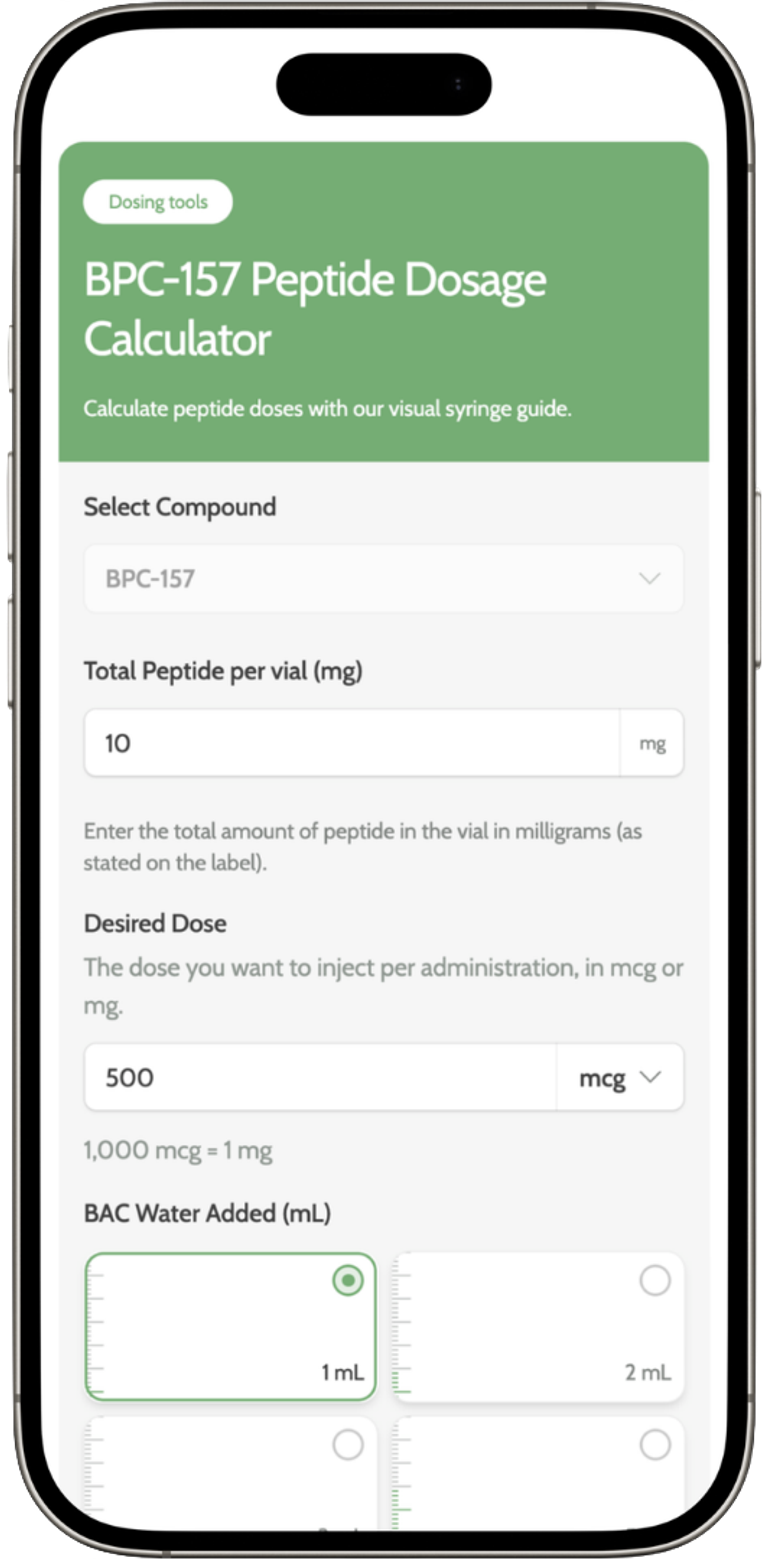
A peptide dosage calculator is a free tool that converts your vial size, bacteriostatic water volume, and target dose into an exact syringe draw volume. Instead of doing the reconstitution math by hand, you enter three inputs and instantly get the concentration of your solution and how many milliliters or syringe units to draw. This calculator works for single peptide compounds and multi-peptide blends.
How do I calculate peptide dosage from a vial?
To calculate your peptide dose, divide the total peptide content of your vial in micrograms by the volume of bacteriostatic water you added in milliliters. This gives you your solution concentration in mcg/mL. Then divide your target dose by that concentration to get your draw volume. For example, a 5mg (5,000 mcg) vial reconstituted with 2mL of BAC water gives a concentration of 2,500 mcg/mL. A 250 mcg dose would require drawing 0.1mL. This calculator automates all of those steps instantly.
How much Bacteriostatic water should I add to a peptide vial?
Most people add 2mL to 3mL of bacteriostatic water per vial, but the right amount depends on the dose you want to draw and the syringe size you are using. Adding 1mL to a 5mg vial gives you a concentration of 5,000 mcg/mL, making each dose very small in volume. Adding 2mL gives you 2,500 mcg/mL, which is easier to measure on a standard insulin syringe. A general guideline is to choose a volume that puts your typical dose somewhere between 10 and 30 units on a U-100 syringe. Use the calculator above to test different water volumes and find what works for your dose.
How are peptides different from proteins?
Both are made of amino acids, but peptides are much smaller than proteins. Because of their tiny size, peptides can act like tiny messengers in the body, sending specific signals to your cells to tell them exactly what to do.
Calculate peptide research quantities
Reference our peptide dosage, blend, and accumulation calculators for research purposes. Enter vial size, reconstitution volume, and target research quantity to calculate draw volumes instantly. For research use only — not administration or dosing guidance of any kind.