Illumineuro Peptide: A Beginner's Guide to the Blend
What is the Illumineuro peptide? A beginner's guide to the four-peptide blend: its components, the research, dosage basics, and what to check before buying.


The Illumineuro peptide is a research blend that combines four different peptides in a single vial. It was put together to study the brain and nervous system from several angles at once. If you have searched for it and found confusing technical jargon, this guide is for you. Below you will learn what is inside the Illumineuro blend, what each part is being researched for, how research amounts are measured, and what to look for before buying.
One thing to know up front: Illumineuro is sold strictly as a research chemical. It is not a medicine, it is not approved by the FDA, and nothing here is medical advice. This article explains the science in beginner-friendly terms so you can understand what people are talking about.
What Is the Illumineuro Peptide Blend?
Illumineuro is a four-peptide research blend that contains N-Acetyl Semax (20 mg), N-Acetyl Selank (10 mg), Pinealon (10 mg), and PE-22-28 (10 mg) in a single 50 mg freeze-dried vial. Each of those four peptides has been studied on its own for effects on the brain in laboratory and animal research. Illumineuro simply packages them together so they can be researched as one combination.
A peptide is a short chain of amino acids, which are the same building blocks that make up proteins. Because peptides are very small, researchers describe them as tiny messengers that can carry specific signals to cells. New to peptides in general? Start with our beginner's guide to peptides for the basics, then come back here.
Here is what is inside the blend:
Component | Amount in a 50 mg vial | What it is, in plain terms |
|---|---|---|
N-Acetyl Semax | 20 mg | A more stable form of Semax, a Russian nootropic (focus-related) peptide. |
N-Acetyl Selank | 10 mg | A more stable form of Selank, a peptide researched for calming, anti-anxiety effects. |
Pinealon | 10 mg | A small three-amino-acid peptide (EDR) from the pineal bioregulator family. |
PE-22-28 | 10 mg | A shortened version of spadin, studied for new neuron growth. |

Note: formulations vary by supplier. Most vials are labeled as a 50 mg blend, but some list slightly different amounts (for example, an 8 mg or 6 mg Selank portion, or a 48 mg total). Always read the exact label and Certificate of Analysis (a lab report, often shortened to COA) for the specific vial you are looking at.
What Is Inside the Illumineuro Blend? The Four Peptides Explained
The idea behind Illumineuro is that four peptides working on different pathways may be more interesting to study together than any single one alone. Here is a simple breakdown of each, along with one research finding for each. Remember that these findings come from studies on the individual peptides, not on the finished blend.
1. N-Acetyl Semax (20 mg)
Semax is a peptide first developed in Russia, where the standard form is used as a registered medicine. In research, it is best known for its effect on BDNF (brain-derived neurotrophic factor), a protein involved in the growth and survival of nerve cells. The "N-Acetyl" version is a slightly modified form designed to last longer.
In one study, a single intranasal application of Semax (50 mcg per kg of body weight) was associated with a 1.4-fold increase in BDNF protein and roughly a 3-fold increase in BDNF gene activity in the rat hippocampus, the brain's main memory area (Dolotov et al., 2006).
That is a notable result, but it was measured in rodent models, not in people taking the Illumineuro blend. Human data on this exact combination does not exist.
2. N-Acetyl Selank (10 mg)
Selank is a peptide based on a natural body compound called tuftsin. It is most studied as an anxiolytic, a term that simply means "anti-anxiety," and is investigated for calming effects without the sedation linked to some other compounds.
In rodent research, Selank influenced the activity of GABA-A receptor genes, one of the brain's main calming systems, which researchers proposed as a basis for its anti-anxiety effects (Volkov et al., Frontiers in Pharmacology, 2017).
These findings are early and come from cultured cells and animal models. They describe what researchers are examining, not a proven effect in humans using the blend.
3. Pinealon (10 mg)
Shop research peptides
Live pricing from our top-rated vendor. Prices update as vendor listings change.
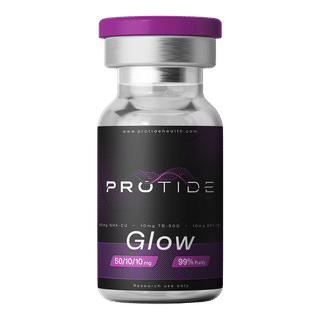
Pinealon is a very short peptide made of just three amino acids (Glu-Asp-Arg, abbreviated EDR). It comes from a family of Russian "bioregulator" peptides and is studied for neuroprotection, meaning the protection of nerve cells from stress and damage. That family is organized by target organ rather than by a shared receptor, a distinction covered in our bioregulator peptide overview.
When rat brain cells were exposed to oxidative stress (chemical damage), Pinealon was associated with lower levels of a cell-death marker called caspase-3 and reduced reactive oxygen species compared with untreated cells (Khavinson et al., 2012).
This was a cell-culture study. It shows a possible protective signal in the lab, but it does not establish any benefit for people.
4. PE-22-28 (10 mg)
PE-22-28 is a shortened version of a peptide called spadin. It is studied for its effect on a brain channel named TREK-1, which is linked to mood and to the growth of new neurons (a process called neurogenesis).
In one study, PE-22-28 blocked the TREK-1 channel very strongly (an IC50 of 0.12 nanomolar) and was associated with the formation of new neurons after only four days of administration in mice (Djillani et al., 2017).
As with the others, this is preclinical animal research. The result is promising for scientists, but it is not evidence of what the Illumineuro blend does in humans.

Illumineuro Peptide Benefits: What Researchers Are Studying
When people search for Illumineuro peptide benefits, they usually want to know what it is being researched for. Because the blend has not been tested as a single product in humans, there are no proven benefits to report. What we can do is summarize the areas researchers study for the individual components, always in laboratory and animal settings:
Memory and learning, based on Semax's effect on BDNF in rodent models.
Focus and mental clarity, an area examined for the Semax component in preclinical research.
Calmness and anxiety, studied for the Selank component through the GABA system in animal models.
Neuroprotection, investigated for the Pinealon component in cultured nerve cells under stress.
New neuron growth (neurogenesis), associated with the PE-22-28 component in mice.
It is important to read that list carefully. Each item describes what scientists are investigating, not a guaranteed outcome.
Illumineuro Peptide Dosage: How Research Amounts Are Measured
In published research and supplier listings, Illumineuro amounts are described in micrograms (mcg), where 1,000 mcg equals 1 mg. Reported research quantities for the total blend generally fall in the range of about 100 to 500 mcg per day, used once daily in study settings. These are figures from the research literature, not dosing instructions for any person.
Before it can be measured, a freeze-dried (lyophilized) vial has to be reconstituted, which means mixing the powder with bacteriostatic water to create a liquid. The math is straightforward once you see it:
A 50 mg vial contains 50,000 mcg of total blend.
Add 2 mL of bacteriostatic water, and the concentration becomes 25,000 mcg per mL.
That math is what tells researchers how much liquid corresponds to a given microgram amount.

Doing this by hand is easy to get wrong, especially with a blend where four peptides share one vial. Our free peptide blend dosage calculator handles the conversions for you. Enter the vial size, the water volume, and a target amount, and it shows the result instantly. Treat it as a math visualization tool, not medical guidance.
Illumineuro Blend vs. Single Peptides: Why Combine Them?
A fair question for beginners is why anyone would research four peptides together instead of one at a time. The blend approach lets researchers look at several brain pathways in a single sample: Semax for BDNF, Selank for the calming GABA system, Pinealon for cell protection, and PE-22-28 for new neuron growth. Convenience is another factor, since all four come in one vial.
Shop research peptides
Live pricing from our top-rated vendor. Prices update as vendor listings change.
The trade-off is complexity. With four active peptides at fixed ratios, it is harder to know which component is responsible for any observed effect, and batch quality can vary more than with a single peptide. That fixed-ratio format is what defines a peptide blend in the first place: a single vial that combines multiple compounds at a set proportion, rather than one peptide alone. Illumineuro is one of several research blends on the market; you can compare it with options like the KLOW protocol or the Glow protocol to see how multi-peptide formulas differ.
Storage and Handling in Research Settings
Peptides are delicate, and the Illumineuro blend is no exception. In research settings the general handling notes are:
Freeze-dried powder: kept cool and dry, often refrigerated or frozen for longer storage.
After mixing with bacteriostatic water: kept refrigerated at roughly 2 to 8 degrees Celsius and used within about four weeks.
Always avoid: shaking the vial hard, freezing the liquid form, or leaving it in direct light or heat.
For a fuller walkthrough of mixing and storing peptides correctly, see our reconstitution guide.
Illumineuro Peptide Reviews: What to Check Before You Buy
Searches for Illumineuro peptide review usually come down to one real question: how do I know a vial is legitimate? Since this is a research compound, quality varies a lot. Use this simple checklist:
Certificate of Analysis (COA): a recent third-party lab report confirming all four peptides and their amounts.
Purity testing: look for HPLC and mass spectrometry results, two standard lab tests for identity and purity.
Clear labeling: the exact components and milligram amounts should be printed, not vague.
Reasonable pricing: a price far below everyone else is a warning sign, not a deal.
Proper shipping: reputable suppliers protect peptides during transit.

You can review the full component breakdown and references on our Illumineuro blend page before comparing suppliers.
Frequently Asked Questions
What is the Illumineuro peptide?
Illumineuro is a four-peptide research blend in a single 50 mg vial, containing N-Acetyl Semax (20 mg), N-Acetyl Selank (10 mg), Pinealon (10 mg), and PE-22-28 (10 mg). Each component has been studied on its own for effects on the brain and nervous system in laboratory and animal research. It is sold for research only and is not approved for human use.
What is in the Illumineuro blend?
The blend contains four peptides: N-Acetyl Semax (studied for BDNF and focus), N-Acetyl Selank (studied for calming, anti-anxiety effects), Pinealon (studied for nerve-cell protection), and PE-22-28 (studied for new neuron growth). Exact amounts can vary slightly by supplier, so always check the label and Certificate of Analysis.
Which peptide in Illumineuro is best for the brain?
There is no single best one, because each is researched for a different pathway. Semax is the most studied for memory-related BDNF activity, Selank for calming the GABA system, PE-22-28 for new neuron growth, and Pinealon for protecting nerve cells. The blend combines all four so they can be studied together.
Is Illumineuro the same as Semax?
No. Semax is one of the four peptides inside Illumineuro, not the whole blend. Illumineuro pairs Semax with Selank, Pinealon, and PE-22-28. If you only want to research Semax, you would buy it on its own rather than as part of the blend.
Who should avoid using peptides like Illumineuro?
Shop research peptides
Live pricing from our top-rated vendor. Prices update as vendor listings change.
Because Illumineuro is an unapproved research chemical, it is not intended for use by anyone as a supplement or medicine. In the research literature, cognitive peptides are generally flagged as unsuitable for people who are pregnant or breastfeeding, or who have conditions such as seizure disorders. This is general information, not medical advice; speak with a qualified professional about your own situation.
What is the typical Illumineuro dosage in research?
Research and supplier figures usually describe a total blend amount of roughly 100 to 500 mcg per day, measured in micrograms. These are reported research quantities, not dosing instructions. A blend calculator is the easiest way to convert a vial size and water volume into the matching amount.
Does Illumineuro actually work?
No clinical trial has tested the four-peptide Illumineuro combination in humans, so its real-world effects are unknown. The interest comes from preclinical studies on each individual peptide. Online reviews are anecdotal and should be treated with caution.
Disclaimer
The information provided on Peptide Mind is for educational purposes only and is not a substitute for professional medical advice. Many peptides discussed on this site are unapproved research chemicals intended strictly for laboratory and preclinical use. Any dosage calculator provided is a theoretical tool for math visualization and does not represent medical dosing instructions. The FDA has not evaluated these statements, and nothing on this site is intended to diagnose, treat, cure, or prevent any disease.
References
Dolotov O. V., et al. (2006). Semax, an analog of ACTH(4-10) with cognitive effects, regulates BDNF and trkB expression in the rat hippocampus. Brain Research. https://pubmed.ncbi.nlm.nih.gov/16996037/
Volkova A., et al. (2017). GABA, Selank, and Olanzapine Affect the Expression of Genes Involved in GABAergic Neurotransmission. Frontiers in Pharmacology. https://www.frontiersin.org/journals/pharmacology/articles/10.3389/fphar.2017.00089/full
Kao T. K., et al. (2019). Selank protects against ethanol-induced memory impairment by regulating BDNF content in the hippocampus and prefrontal cortex in rats. https://pubmed.ncbi.nlm.nih.gov/31625062/
Khavinson V. K., et al. (2012). Short peptides and oxidative stress: neuroprotective effects of the EDR (Pinealon) tripeptide in neuronal cultures. https://pubmed.ncbi.nlm.nih.gov/23199282/
Djillani A., et al. (2017). Shortened Spadin Analogs Display Better TREK-1 Inhibition, In Vivo Stability and Antidepressant Activity. Frontiers in Pharmacology. https://pmc.ncbi.nlm.nih.gov/articles/PMC5601071/
Add a comment
This will be publicly visible.
Your email address will not be published.
Your comment will be reviewed by an admin before it is published.