Where to Buy KPV: Best Vendors (2026)
Where to buy KPV peptide in 2026: eight vendors ranked on batch COA purity, certificate age and scope, and price, every certificate pulled and read.

Deciding where to buy KPV in 2026 comes down to a certificate, not a price tag. Every vendor tracked below publishes a third-party certificate of analysis for its KPV, but the purity figures, the testing labs, and the certificate dates vary far more than the sticker prices do. This where to buy KPV peptide guide ranks eight 10mg vendors on that documentation and shows what each certificate does and does not establish.
Where to Buy KPV Peptide: 2026 Vendor Comparison

Eight vendors currently list a 10mg KPV vial on the Peptide Mind KPV comparison, out of 12 vendors and 15 in-stock offers tracked across all four vial sizes. All ship from within the United States, and prices were last re-verified on August 15, 2026. Every purity figure below comes from that vendor's currently published KPV certificate, retrieved and read in full on August 24, 2026.
Vendor | 10mg COA purity | 10mg price |
|---|---|---|
Protide Health | 99.79%, Aug 9, 2026 | $70.00 |
Oath Research | 99.84%, Jul 22, 2026 | $65.00 |
Ascension Peptides | 99.938%, May 9, 2026 | $79.99 |
Ameano Peptides | 99.18%, May 29, 2026 | $44.00 |
Modern Aminos | 99.55%, Jul 18, 2026 | $46.00 |
Amino USA | 99.73%, Jun 22, 2026 | $55.00 |
Eternal Peptides | 98.97%, Jun 16, 2026 | $59.99 |
BioLongevity Labs | 99.71%, Jan 28, 2026 | $99.97 |
Two things fall out of that table. Purity is close to a solved problem for this compound: the spread from best to worst is 0.97 percentage points, and seven of the eight sit above 99%. KPV is a three-amino-acid peptide, which is about as simple as synthesis gets, so a vendor that cannot clear 99% is telling you something about its manufacturing rather than about the molecule.
The second thing is that purity does not track price at all. The highest purity in the comparison belongs to the second most expensive vial, the lowest purity belongs to a mid-priced vial, and the most expensive vial in the group is neither the purest nor the most recent certificate. Price and documentation are independent variables here, which is exactly why a certificate is worth reading rather than glancing at.
How Peptide Mind Ranks KPV Vendors

KPV vendor rankings are only as good as the gates behind them. Peptide Mind applies four before a vendor's price appears in any comparison table, and vendors cannot pay to move up.
A third-party COA is required. A vendor's price is not listed without an independent certificate of analysis. Self-tested-only results are flagged rather than hidden, so you can see which vendors grade their own work.
Community standing gates the table. Vendors with unresolved community warnings or inactive status are excluded from every price table on the site. Vendors already listed that later pick up a warning are flagged in place.
Scoring uses price per milligram, not sticker price. A 10mg vial and a 0.5mg vial are never compared on headline price. Each offer is scored against other offers of the same dose size, then weighted alongside vendor rating, COA purity, and whether an account is required to see pricing.
Trust caps the score. A vendor rated below 4.0 cannot earn a "Great value" label, and missing third-party purity data caps an offer out of "Good" or "Great" no matter how cheap it is. Of the 15 tracked KPV offers, only two clear the "Good" threshold.
Across the full KPV set, the average vendor rating is 4.4, eight of 12 vendors are third-party tested with per-batch certificates, and published COA purity spans 99.4% to 100%.
KPV Vendor Rankings for 2026
1. Protide Health: Newest Certificate, Highest Vendor Rating
Protide Health ranks first on documentation currency and independent standing rather than on price. Its KPV 10mg certificate, issued by Freedom Diagnostics under COA 2608070002 for lot PH-KV10-0305, was reported on August 9, 2026, making it 15 days old at the time of writing and the newest in the comparison. Average purity across two vials was 99.79%, with individual results of 99.72% and 99.85%, and net peptide content averaged 10.85mg.
The company operates from Las Vegas, Nevada, sources from ISO 9001:2015 certified, GMP-compliant facilities, and confirms identity by mass spectrometry alongside HPLC purity. It is the only vendor in the KPV set that rates 5.0 out of 5 across 149 reviews.
2. Oath Research: Second Highest Purity, Second Newest Certificate
Shop research peptides
Live pricing from our top-rated vendor. Prices update as vendor listings change.
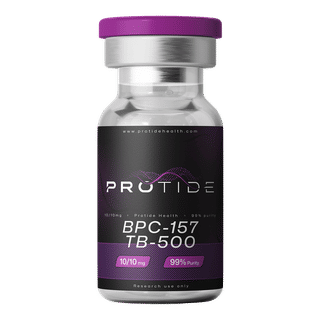
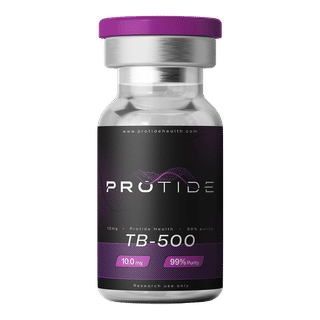
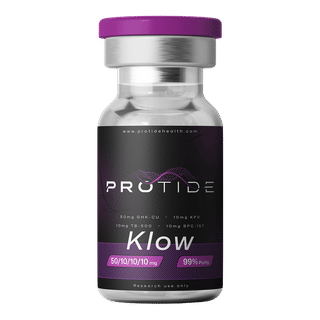
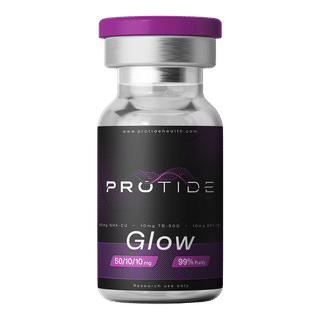
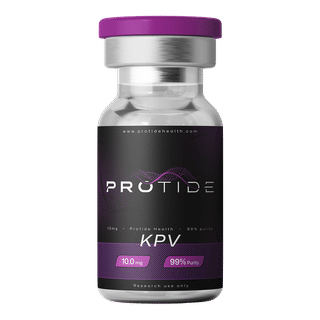
Oath Research posts the second highest purity in the comparison on the second newest certificate. The KPV certificate from Freedom Diagnostics, accession 2607221033 for batch B2826041, tested July 22, 2026, reports 99.84% purity by HPLC-UV with identity confirmed by LC-MS, and net peptide content of 11.84mg in a 10mg vial.
The company, formerly Oath Peptides, ships from Gilbert, Arizona, synthesizes in-house under ISO-certified protocols, and verifies batches through triple-pass HPLC, mass spectrometry, and endotoxin screening at a CLIA-certified US laboratory. Card only, account required, $65.00 for the 10mg vial.
3. Ascension Peptides: Highest Purity in the Comparison
Ascension Peptides publishes the highest KPV purity figure of any vendor tracked, 99.938% on a Kovera Labs certificate, report KVR-2026-90573D, batch 20-05260628, certified May 9, 2026. The document is unusually complete: purity by RP-HPLC with DAD detection at 214nm, identity by LC-MS, an endotoxin screen at 0.5 EU/mL or below, a sterility screen showing no growth, and a heavy metal panel negative for arsenic, cadmium, lead, and mercury.
It ranks third rather than first because it carries the highest sticker price in the tier at $79.99. Ascension rates 4.8 out of 5, requires no account to view pricing, and was running a promotional $50.00 on the same vial in late August 2026, a 37% swing from the tracked price.
4. Ameano Peptides: Cheapest Vial, Lowest Purity of the Top Half
Ameano Peptides is the cheapest 10mg KPV offer tracked at $44.00 and posts the lowest purity of the four vendors above it. Its Janoshik Analytical certificate, task 166065 for batch AMP-KPV1005152026-12, analyzed May 29, 2026, tested three separate vials and reported purity of 99.181%, 99.175%, and 99.188%, an average of 99.18%.
Testing three vials from one batch is better practice than testing one, and the tight clustering of those results is a consistency signal single-vial certificates cannot provide. Ameano maintains a rolling archive of four KPV certificates going back to February 2026, each linked to a live Janoshik verification page rather than a PDF hosted on its own server.
5. Modern Aminos: Complete Testing Panel, Thin Product Page
Modern Aminos publishes one of the more thorough KPV certificates in the set and almost nothing on the product page itself. The Freedom Diagnostics document, accession 2607150950 for lot BX-P-U5G4, received July 15 and reported July 18, 2026, tested three vials: purity of 99.53%, 99.56%, and 99.55%, average 99.55%, with content of 11.27mg, 11.11mg, and 10.95mg. It adds a PCR-based microbial panel returning no detectable microbial DNA and two passing endotoxin replicates by LAL assay under USP <85>.
The product page carrying that certificate says nothing specific. It describes KPV as "manufactured for laboratory research applications," lists "third-party testing where applicable," and gives no purity figure, sequence, molecular weight, or CAS number. That gap, between a three-vial certificate with a full contamination panel and a page that avoids stating a single number, is why the purity figure never surfaces in price comparisons.
6. Amino USA: Good Purity, Fill Below Label on Both Sizes
Amino USA reports 99.73% purity on a BioRegen certificate, COA 13419 for lot 26KPV10-0003, analyzed June 22, 2026, by ultra high performance liquid chromatography with mass spectrometry. Identity and appearance conformed, and the document carries a named analyst plus a verification key checkable at bioregen.com.
The same certificate reports a measured quantity of 9.2mg against the 10mg specification, the lowest fill in the comparison, and marks it as conforming. The smaller vial's certificate, COA 13418 for lot 26KPV5-0003, same date, reports 99.54% purity and 4.5mg against a 5mg label. Amino USA rates 4.3 out of 5, ships from Houston, Texas, keeps a searchable per-lot COA library, and requires an account to view pricing.
7. Eternal Peptides: Only Sub-99% Result, and a Lab Name That Does Not Match
Eternal Peptides posts the only KPV purity figure below 99% in the entire comparison. Its Kovera Labs certificate, report KVR-2026-5E65FB for batch EP-260520-KP10, certified June 16, 2026, reports 98.973% purity against a stated specification of greater than 98%. Net content came back at 12.14mg, identity was confirmed by LC-MS, and endotoxin, sterility, and heavy metal screens all passed.
Eternal Peptides is operated by Cenvira LLC of Little Neck, New York, on a domain registered around May 2025. It carries no vendor rating and a score of 63% from independent aggregator Finnrick, ranking 237th of 289 vendors assessed. Its 5mg vial tests better than its 10mg, at 99.438%.
8. BioLongevity Labs: Solid Certificate, Twice the Price
BioLongevity Labs ranks last on value rather than on quality. Its KPV certificate from MDx BioAnalytical Laboratory, COA 260399 with QC tracking QC260355 for batch 64-3-46031, was received January 23 and reported January 28, 2026. Determined purity was 99.71%, determined content 10.08mg, appearance white crystals, with an endotoxin threshold of 0.05 EU/mL passing.
Two things drag the ranking. The certificate is 209 days old at the time of writing, by far the oldest active KPV certificate in the 10mg tier and roughly 14 times older than the newest. And the price is $99.97, thirty dollars above the next most expensive vial and more than double the cheapest, for a purity figure that sits mid-pack.
Shop research peptides
Live pricing from our top-rated vendor. Prices update as vendor listings change.
The company operates as F2 Nutrition LLC from Akron, Ohio, and rates 4.0 out of 5. Nothing is wrong with the documentation.
How to Verify a KPV COA Before You Buy

A certificate of analysis is only useful if it describes the vial in your hand. Four checks separate a real KPV COA from a decorative PDF, and the first one is specific to this compound. Peptide Mind's guide to finding a legitimate peptide vendor covers the business-registration and community-standing checks that sit alongside these.
Confirm the compound is KPV and not a derivative. KPV is Lys-Pro-Val, molecular formula C16H30N4O4, molecular weight 342.43 g/mol, CAS 67727-97-3, PubChem CID 125672. N-Acetyl KPV and Acetyl KPV Amidate are modified versions with different stability and absorption characteristics and different PubChem identifiers. One vendor outside this 10mg tier attached a certificate for the acetylated form to a product page describing the plain tripeptide, so check the compound name on the document itself.
Match the lot number on the certificate to the vial. A product-level certificate covering "KPV" generally is not a batch certificate. The lot printed on the label should appear on the document. Vendors doing this properly maintain a searchable per-lot library, as Amino USA, Ameano Peptides, and Eternal Peptides all do.
Check that the lab is named and independently verifiable. The labs appearing on legitimate KPV certificates in 2026 are Janoshik Analytical, Kovera Labs, Freedom Diagnostics, BioRegen, MZ Biolabs, MDx BioAnalytical, and Vanguard Laboratory. Several host portals where a report number and access code can be checked against the lab's own records, which defeats edited PDFs. A certificate you cannot verify at the lab's own domain is a vendor claim.
Read the net content line, not just the purity line. Purity tells you what fraction of the powder is KPV. Net content tells you how much powder is there. A 99.9% pure vial holding 9.2mg delivers less peptide than a 99.2% pure vial holding 12.8mg, and only one of those two numbers reaches most comparison tables.
Red Flags That Should Stop a KPV Order
A purity claim with no document behind it, such as ">99%" or "≥98%" printed on a product page with no certificate, no lab name, and no lot library
A certificate for a different compound, most often the acetylated or amidated analog sold under the plain KPV name
A certificate older than roughly six months, which says progressively less about the batch currently shipping
A quantity-only certificate, which verifies how much powder is in the vial while saying nothing about what fraction of it is KPV
Therapeutic marketing language, including named conditions, dosing instructions, or "for personal use" framing
KPV Legal Status and the July 2026 FDA Vote
KPV is legal to buy in the United States as a research chemical and is not approved by the FDA as a drug, supplement, or cosmetic ingredient. Every vendor in this comparison labels it for laboratory research use only, not for human consumption. That labeling is not a loophole; it is the legal basis the entire category operates under.
That status is in the middle of shifting. In September 2023 the FDA placed KPV in Category 2 of the interim 503A bulk drug substances list, the tier reserved for substances with significant safety concerns for compounding. On July 23 and 24, 2026, the FDA's Pharmacy Compounding Advisory Committee reviewed seven nominated peptides and voted to recommend six of them, including KPV, for addition to the 503A Bulks List, alongside BPC-157, TB-500, MOTS-c, Epitalon, and Semax. Emideltide was the one recommendation against.
Those votes are not binding. FDA staff had recommended against inclusion before the committee reached a different conclusion, and the Secretary of Health and Human Services still has to approve any addition. Nothing about the legal position of KPV changed on July 24, and no pharmacy can compound it today. What changed is the direction of travel, which is why vendor documentation is worth more attention now than a year ago: a compound moving toward a regulated pathway is one whose supply chain is about to be looked at more closely.
What the KPV Research Shows
KPV is a tripeptide of lysine, proline, and valine corresponding to residues 11 to 13 at the C-terminal end of alpha-melanocyte-stimulating hormone (alpha-MSH), a 13-amino-acid neuropeptide produced in the pituitary gland. It carries much of the parent hormone's anti-inflammatory activity while lacking the sequence motif required to bind any known melanocortin receptor, which is what makes its mechanism interesting.
The most cited work on that mechanism comes from Dalmasso and colleagues at Emory University, published in Gastroenterology in 2008. They showed that nanomolar concentrations of KPV inhibit NF-kappaB and MAP kinase signaling in human intestinal epithelial and T cells, and that KPV enters those cells through PepT1, a di- and tripeptide transporter induced in the colon during inflammatory bowel disease.
Nanomolar concentrations of KPV inhibited NF-kappaB and MAP kinase activation and reduced pro-inflammatory cytokine secretion in human intestinal epithelial and T cells, with uptake mediated by the PepT1 transporter. Oral KPV reduced the incidence of DSS- and TNBS-induced colitis in mice. Dalmasso et al., Gastroenterology, 2008.
A parallel study by Kannengiesser and colleagues at the University of Münster, published in Inflammatory Bowel Diseases the same year, assessed KPV across murine models of IBD and reached compatible conclusions. Later work from the same Emory group examined PepT1's role in colitis-associated cancer. Brzoska and colleagues addressed the mechanism question directly in a review of alpha-MSH peptides beyond the pharmacophore, working through how a fragment that cannot bind melanocortin receptors retains nearly the full anti-inflammatory capacity of the intact hormone. Separate work has documented antimicrobial activity of alpha-MSH peptides against Staphylococcus aureus and Candida albicans.
All of this evidence is preclinical: cell culture and rodent models, with no completed human trials. That is the context for the FDA committee's split vote, and it is why the compound sits in a research-chemical market rather than a pharmacy. For dose structure and reconstitution detail, Peptide Mind maintains a KPV dosage and protocol guide, and KPV also appears as one of four components in the KLOW blend alongside GHK-Cu, BPC-157, and TB-500.
Shop research peptides
Live pricing from our top-rated vendor. Prices update as vendor listings change.
Frequently Asked Questions
How much does KPV peptide cost?
KPV runs $39 to $166 per vial across the 12 tracked vendors, or $4.40 to $178.00 per milligram at label weight. The 10mg vial is the best value tier, with all eight offers between $4.40 and $10.00 per mg. Smaller vials cost far more per milligram: 4mg vials run $9.75 to $41.50 per mg, and the single 0.5mg offer works out to $178.00 per mg.
Where can you buy KPV peptide near me?
There is no local option: KPV is not stocked by retail pharmacies, compounding pharmacies, or clinics anywhere in the United States. Where to buy KPV peptide is therefore an online question, and all 12 tracked vendors ship domestically from US-based stock. Compounding pharmacies cannot legally prepare KPV today, though an FDA advisory committee recommended in July 2026 that it become eligible.
Is it legal to buy KPV?
Yes, KPV is legal to buy in the United States as a research chemical, sold labeled for laboratory use only. The FDA has not approved KPV as a drug, supplement, or cosmetic ingredient, so no vendor can legally market it for use in or on the human body. Import rules and enforcement vary by state and carrier, so check local regulations before ordering.
Where can you buy KPV cream or topical KPV?
No vendor in the tracked comparison sells a finished KPV cream, and the compound is sold almost exclusively as lyophilized powder in glass vials. Products marketed as KPV creams or serums generally come from clinics or supplement sellers rather than research suppliers, and most publish no certificate of analysis for the KPV content specifically.
What is the difference between KPV and N-Acetyl KPV?
N-Acetyl KPV adds an acetyl group to the base tripeptide, which changes stability and absorption depending on the administration route. Acetyl KPV Amidate adds a C-terminal amide as well. They are different compounds with different PubChem identifiers, so a certificate for one does not verify the other. Check that the COA names the exact form you are buying.
What do people on Reddit say about buying KPV?
Reddit discussion is heavily concentrated on one vendor. Of the eight vendors listing a 10mg KPV vial, Protide Health carries meaningful Reddit presence at 129 mentions with a positive community signal.
How do you verify a KPV certificate of analysis is legitimate?
Confirm the certificate names KPV rather than an acetylated derivative, match the lot number to the vial, check that the testing lab is named, and verify the report through that lab's own portal where one exists. Janoshik, Kovera Labs, BioRegen, and MDx BioAnalytical all publish verification pages where a report number and access code can be checked directly.
Can KPV be stacked with BPC-157 and TB-500?
Yes, KPV is commonly combined with BPC-157, TB-500, and GHK-Cu in the blend known as KLOW, with each component targeting a different pathway. Blend ratios vary by vendor, so confirm the exact milligrams of KPV per vial on the product label before calculating a dose, since reconstitution volume sets the concentration of every component at once.
Choosing a KPV Vendor
Deciding where to buy KPV peptide is a documentation question rather than a price question, because purity is not the differentiator here: seven of eight vendors clear 99%, and the entire spread is under one percentage point. What separates them is how current the certificate is, whether it names the right compound, and which laboratory issued it. Verify the report at the lab's own domain and check the date before you check the price. Current pricing across all 15 offers is tracked on the KPV vendor comparison.
References
Shop research peptides
Live pricing from our top-rated vendor. Prices update as vendor listings change.
Dalmasso G, Charrier-Hisamuddin L, Nguyen HTT, et al. "PepT1-mediated tripeptide KPV uptake reduces intestinal inflammation." Gastroenterology, 134(1), 2008. PubMed ID: 18061177.
Kannengiesser K, Maaser C, Heidemann J, et al. "Melanocortin-derived tripeptide KPV has anti-inflammatory potential in murine models of inflammatory bowel disease." Inflammatory Bowel Diseases, 14(3), 2008. PubMed ID: 18092346.
Viennois E, Ingersoll SA, Ayyadurai S, et al. "Critical role of PepT1 in promoting colitis-associated cancer and therapeutic benefits of the anti-inflammatory PepT1-mediated tripeptide KPV in a murine model." Cellular and Molecular Gastroenterology and Hepatology, 2(3), 2016. PubMed ID: 27458604.
Brzoska T, Böhm M, Lügering A, et al. "Terminal signal: anti-inflammatory effects of α-melanocyte-stimulating hormone related peptides beyond the pharmacophore." Advances in Experimental Medicine and Biology, 681, 2010. PubMed ID: 21222263.
Cutuli M, Cristiani S, Lipton JM, Catania A. "Antimicrobial effects of alpha-MSH peptides." Journal of Leukocyte Biology, 67(2), 2000. PubMed ID: 10670585.
U.S. Food and Drug Administration. "Bulk Drug Substances Used in Compounding Under Section 503A of the FD&C Act." Accessed August 2026.
Buchanan Ingersoll & Rooney PC. "FDA PCAC Recommends Six Peptides for the 503A Bulks List." August 4, 2026.
Disclaimer: The information on Peptide Mind is for educational purposes only and is not a substitute for professional medical advice, diagnosis, or treatment. The peptides discussed are unapproved research chemicals for laboratory and research use only, not for human consumption. These statements have not been evaluated by the FDA, and nothing on this site is intended to diagnose, treat, cure, or prevent any disease. By accessing this site, you confirm you are 21 or older and agree to our Terms of Service.
Add a comment
This will be publicly visible.
Your email address will not be published.
Your comment will be reviewed by an admin before it is published.