Glow Peptide Benefits: What It Does for Skin, Healing & More
Glow peptide benefits graded against the research: what GHK-Cu, BPC-157 and TB-500 actually do for skin, pain, gut and energy, plus side effects.
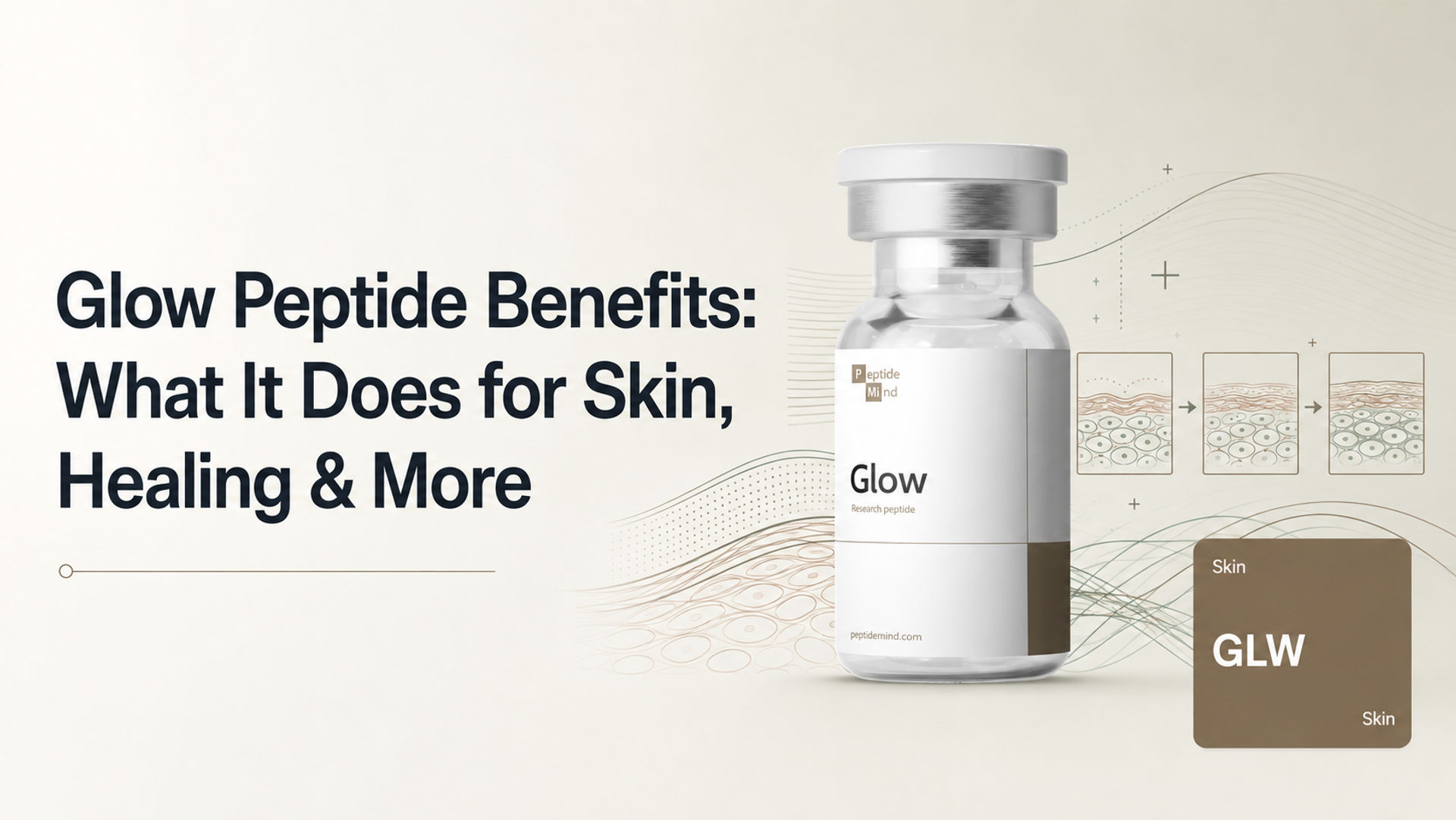

Glow peptide benefits center on skin quality, tissue repair and inflammation, driven by a three-compound blend of GHK-Cu, BPC-157 and TB-500 sold as a single 70 mg vial. The skin claim has real human trial evidence behind it, though of topical creams rather than injections. Every other benefit rests on animal or cell-culture work, and no study has ever tested the blend itself.
Glow Peptide Benefits at a Glance
Glow peptide is marketed for skin rejuvenation, wound and soft-tissue healing, joint comfort, gut health and hair. Skin is the only benefit with controlled human efficacy data behind any component. The rest trace back to rodent and cell-culture research on GHK-Cu, BPC-157 and TB-500 studied separately, never as the blend.
Each benefit carries two grades, because with no human trial behind the blend the second one is not decoration. For several of these claims it is the only observation that exists.
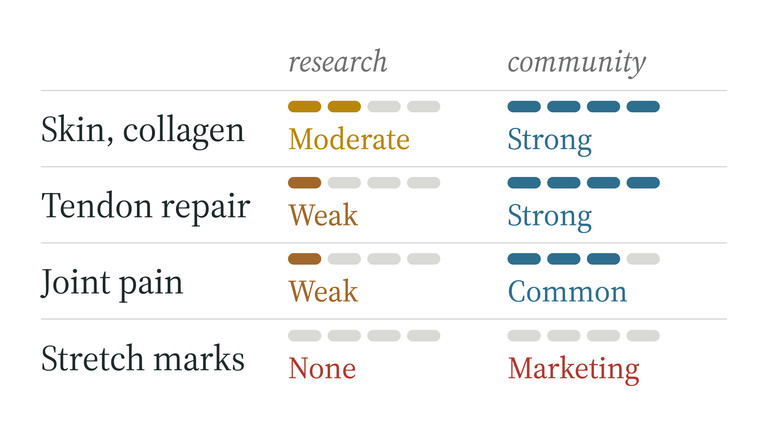
Research grade measures the published evidence. Moderate means human data exists but is uncontrolled, small, or tested a different formulation or route than the blend uses. Weak means animal or cell-culture data only. Unsupported means no data for that specific claim, whether because no mechanism exists or because a plausible mechanism has never been tested on it. No row reaches Strong, because that would require a controlled human trial of Glow itself, and none exists.
Community report measures how consistently people actually running Glow describe the benefit: strong consensus, common, occasional, mixed, or marketing mostly where a claim appears in seller copy far more often than in first-hand accounts. It proves nothing on its own. Consistent independent reporting is still a real observation, and pretending otherwise is its own kind of dishonesty.
Claimed benefit | Driven by | Research grade | Community report |
|---|---|---|---|
Skin firmness, fine lines, collagen | GHK-Cu | Moderate (human data is topical) | Strong consensus |
Wound and post-procedure healing | GHK-Cu, TB-500 | Moderate (human topical, rodent injected) | Common |
Tendon, ligament and soft-tissue repair | BPC-157, TB-500 | Weak (rat and cell culture) | Strong consensus |
Joint and injury pain relief | BPC-157 | Weak (rodent models only) | Common |
Systemic inflammation | GHK-Cu, BPC-157 | Weak (cell culture and rodent) | Common |
Gut comfort and intestinal lining | BPC-157 | Weak (rodent, early safety trials) | Occasional |
Loose skin tightening | GHK-Cu | Weak (facial laxity only, not body) | Occasional |
Hair thickness | GHK-Cu | Weak (topical data only) | Mixed |
Stretch marks | GHK-Cu, in theory only | Unsupported (mechanism only, no striae data) | Marketing mostly |
Energy and mood | None | Unsupported (no mechanism) | Occasional |
Weight loss and muscle growth | None | Unsupported (no pathway) | Marketing mostly |
Two patterns are worth naming. The benefits with the most research behind them are the cosmetic and dermal ones, while the benefits searched for most aggressively (pain, energy, stretch marks) have the least. And the widest split on the page is tendon and soft-tissue repair, where rat studies meet strong consensus from people who say it worked. Skin is the one row where both scales agree, which is the strongest thing this blend has.
Glow Peptide Benefits Reported Online: Reviews, Forums and Before-and-After Claims
The table above is what the research supports. This section is what people say, which is a different thing entirely. Community threads, clinic write-ups, vendor review pages and before-and-after posts describe a consistent set of effects, and none of it counts as clinical evidence.

Ordered by how often each appears across peptide forums, review pages and protocol write-ups:
Reported benefit | How often reported | What people typically describe |
|---|---|---|
Skin texture, tone and "glow" | Most common | Skin feeling firmer or more hydrated around weeks 2 to 3, visible change to face and neck by week 6 |
Faster healing and soft-tissue recovery | Very common | A nagging shoulder or knee easing, shorter soreness after hard sessions |
Reduced joint and tendon pain | Very common | Background achiness dropping, often described as the fastest change |
A general "less inflamed" feeling | Common | Vague but persistent, described as feeling lighter or younger |
Injection-site stinging | Common | Brief sting on injection, attributed to the copper, fading within the first two weeks |
Less bloating, better gut comfort | Occasional | Noticed early, usually inside the first two weeks |
Thicker-feeling hair | Occasional | Noticed in the shower rather than measured |
Improved energy, mood or clarity | Occasional | Usually framed by the person reporting it as downstream of better sleep and less pain |
Skin leads the list, and it is also the best-graded benefit at Moderate. That is the one place anecdote and evidence agree, and the timing agrees too: reports cluster at four to eight weeks, which is where dermal collagen remodeling actually operates. Everything below skin is reported more confidently than the research supports.
One difference from the four-peptide blend is worth noting. Gut comfort is reported far more often on KLOW than on Glow, which tracks with composition rather than coincidence: KPV, the component most associated with intestinal signaling, is the peptide Glow does not contain.
Glow peptide benefits before and after
Before-and-after photos of Glow peptide control for nothing: not lighting, not camera angle, not weight change, not the other skincare and lifestyle changes people typically start at the same time. No peer-reviewed trial has used standardized photography on the blend, so every image circulating on TikTok, Instagram and vendor pages is uncontrolled and not comparable to clinical evidence.
The vendor incentive matters here too. Before-and-after galleries on seller sites are marketing assets with no verification that the subject used the product, used only that product, or is the same person in both frames.
What the literature offers instead is a timescale to sanity-check a claim against. Dermal collagen remodeling operates over weeks to months, which is why the human trial of topical GHK-Cu covered below ran for 12 weeks. Community photos tend to get posted at 8 to 12 weeks, landing where the biology would put them rather than where enthusiasm would. A before-and-after claiming visible dermal change at two weeks is describing something other than collagen.
Shop research peptides
Live pricing from our top-rated vendor. Prices update as vendor listings change.
Why "glow peptide benefits reddit" is a search worth qualifying
Searches for "glow peptide benefits reddit" are looking for unfiltered first-hand accounts rather than vendor copy, and that instinct is sound. Forum threads are the only place negative and null results get written down at all, and they are where sourcing and certificate-of-analysis questions get raised alongside results.
Three structural caveats apply to every account in them. Nobody posting has verified what is actually in their vial, so the reported effect and the labelled contents are two separate claims. People who notice nothing rarely write a post, which pushes any thread toward the positive. And a small number of active posters can make a handful of experiences read as a consensus. None of this makes the reports worthless. It makes them a description of what people experienced, not evidence of what the compound did.
What Is in the Glow Peptide Blend?
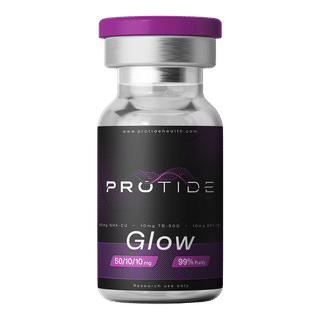
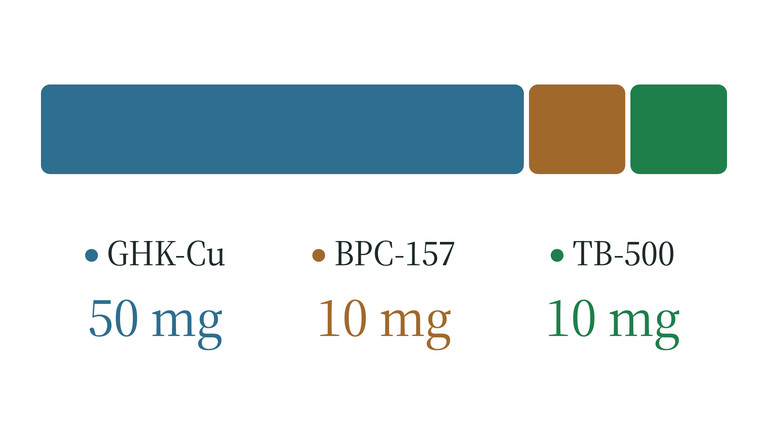
The standard Glow peptide vial is 70 mg total: 50 mg GHK-Cu, 10 mg BPC-157 and 10 mg TB-500. GHK-Cu alone is roughly 71% of the mass, which means most claimed Glow peptide benefits are really GHK-Cu benefits with two supporting compounds attached.
Peptide | Amount in a 70 mg vial | Studied primarily for |
|---|---|---|
GHK-Cu | 50 mg (71%) | Collagen, elastin and extracellular matrix signaling in skin |
BPC-157 | 10 mg (14%) | Soft-tissue and gastrointestinal repair, angiogenesis |
TB-500 | 10 mg (14%) | Actin regulation and cell migration toward injury |
Ratios are conventional rather than standardized, so the split varies by supplier and should be confirmed against the batch certificate of analysis. For the naming history behind "Glow stack" and "Glow blend," see the Peptide Mind guide to what glow peptide is.
GHK-Cu is a naturally occurring copper-binding tripeptide found in human plasma, where concentrations fall from about 200 ng/mL at age 20 to 80 ng/mL by age 60. That age-related decline is the entire rationale for supplementing it, and it is the strongest conceptual argument the blend has.
Glow Peptide Benefits for Skin
Skin is the best-supported Glow peptide benefit, and it comes almost entirely from GHK-Cu's 71% mass share. Controlled human studies of GHK-Cu creams report improvements in skin density, thickness, laxity, clarity and wrinkle depth. The unavoidable caveat is that those studies tested topical products, and Glow is injected.
Collagen, fine lines and skin density
GHK-Cu signals dermal fibroblasts to produce collagen, elastin and glycosaminoglycans, the structural proteins that give skin its thickness and spring. A 2025 review of tripeptides in wound healing in the International Journal of Medical Sciences documents this synthesis in human dermal fibroblasts at concentrations of 0.01, 1 and 100 nM, alongside effects on angiogenesis and matrix remodeling.
The most-cited human evidence is a 12-week trial of a GHK-Cu facial cream in 71 women with photoaged skin, described in Pickart and Margolina's review.
A facial cream containing GHK-Cu applied for 12 weeks to 71 women with mild to advanced photoaging increased skin density and thickness, reduced laxity, improved clarity and reduced both fine lines and wrinkle depth, compared with control. Source: Pickart and Margolina, International Journal of Molecular Sciences, 2018.
Two things keep this at Moderate. The trial was industry-conducted and reported in review rather than as a full peer-reviewed paper with published effect sizes. And it tested a cream: whether 50 mg of subcutaneous GHK-Cu reaches dermal fibroblasts at a comparable concentration has never been measured.
Does glow peptide help with loose skin?
There is no direct evidence that Glow peptide tightens loose skin, and no study has used skin laxity as a measured endpoint for the injected blend. The closest supporting data is the topical GHK-Cu trial above, which reported reduced laxity alongside increased dermal density in photoaged facial skin.
That is a meaningful signal for fine crepey texture on the face. It is not evidence for what most people mean by the question, which is skin left loose after significant weight loss. That kind of laxity is a question of envelope volume relative to the body underneath, and no peptide has been shown to resolve it.
Stretch marks and glow peptide
Shop research peptides
Live pricing from our top-rated vendor. Prices update as vendor listings change.
No published research has tested Glow peptide, GHK-Cu, BPC-157 or TB-500 on stretch marks. Pickart and Margolina's review of GHK-Cu, the most comprehensive available, does not mention striae anywhere.
This is the one place where "skin is the best-supported benefit" does not carry over, and the reason is worth understanding rather than taking on trust. The human GHK-Cu evidence comes from photoaged skin, where the collagen matrix is degraded but its architecture is broadly intact, so stimulating synthesis can restore density. Mature stretch marks are a different lesion. Striae albae present as flattened dermal scars with an atrophic epidermis, lost rete ridges, diminished elastic fibres and collagen bundles realigned parallel to the skin surface. Rebuilding density in thinning skin and rebuilding it inside scar architecture are not the same problem.
That distinction shows up in what actually works. Tretinoin improves early striae rubrae and does little for mature striae albae, and the same 2016 systematic review concludes there is no topical formulation established as effective at improving striae at all. Having a collagen mechanism does not make a compound a stretch mark treatment.
Be sceptical of citations attached to this claim. Copper peptide stretch mark marketing sometimes points to dermatology trials that in fact tested glycolic acid, tretinoin or vitamin C rather than GHK-Cu. Treat the claim as untested rather than disproven.

Glow Peptide 70 mg for Pain, Tendons and Injury Recovery
Glow peptide is widely used for joint and tendon pain, driven by the 10 mg of BPC-157 and 10 mg of TB-500 in a standard 70 mg vial. The mechanistic story is coherent and the rodent data is consistent. There is no human trial of either compound for pain, in any formulation.
BPC-157 is a synthetic 15-amino-acid peptide derived from a protein sequence in human gastric juice, first characterized by Sikiric and colleagues at the University of Zagreb. In the most-cited study of the compound, BPC-157 increased tendon fibroblast migration dose-dependently and improved cell survival under oxidative stress in rat Achilles tendon explants, via the FAK-paxillin pathway.
TB-500 is a synthetic fragment of thymosin beta-4 (Tβ4), a 43-amino-acid actin-sequestering protein that drives cell migration toward injury. In the foundational rat wound study, Tβ4 was associated with a 42% increase in reepithelialization at four days and up to 61% at seven days versus saline controls, alongside increased angiogenesis.
TB-500 is not thymosin beta-4. Vendor copy uses the names interchangeably, but Tβ4 is the full 43-amino-acid protein and TB-500 is a shorter synthetic fragment. Full-length Tβ4 has reached human trials as RGN-259, a topical ophthalmic formulation for neurotrophic keratopathy. Those results belong to a different molecule, delivered a different way.
The practical read on Glow peptide 70 mg for pain is that reported relief is common, fast and unverified. Pain fluctuates on its own, people usually start a protocol when something is flaring, and an injury improving on its natural course is indistinguishable from one being helped. For how each compound compares, see the Peptide Mind guide to peptides studied for injury recovery.
One sport implication: BPC-157 and TB-500 are both prohibited by WADA at all times, in and out of competition, under S0, with BPC-157 also falling under S2.3 covering growth factors affecting tendon, ligament and muscle regeneration.
Glow Peptide for Gut Health
Gut benefits from Glow peptide come entirely from its 10 mg of BPC-157, which was originally isolated from a protein in gastric juice and has the largest gastrointestinal research base of any peptide in the blend. The evidence is rodent-heavy, but unusually deep, and it includes early human safety work.
BPC-157 has been examined across rodent models of gastric ulcer, colitis, anastomotic healing and intestinal barrier disruption. A 2012 review focused on ulcerative colitis documents that record. More notably, Sikiric and colleagues report that the compound was found safe in inflammatory bowel disease trials conducted under the development codes PL-10, PLD-116 and PL 14736, though it never reached full clinical application.
That distinction is worth stating, because most research peptides have no human exposure data at all. What BPC-157 does not have is an efficacy result: safe is not the same as effective, and no controlled trial has shown it improves any gut outcome in people.
Community reports describe reduced bloating and better post-meal comfort as one of the earliest changes noticed on Glow, often inside one to two weeks. That is faster than any collagen-driven effect could plausibly appear, which is either interesting or a sign of how readily digestion responds to expectation.
Does Glow Peptide Give You Energy?
No. None of the three peptides in Glow has a documented mechanism relevant to energy production, alertness or mood. There is no mitochondrial pathway, no central nervous system activity and no metabolic effect in any of the published research on GHK-Cu, BPC-157 or TB-500.
Reports of improved energy have a plausible indirect explanation. Less background joint discomfort tends to improve sleep, and better sleep is experienced as more energy. That chain is downstream of a benefit the blend might genuinely have, not a direct effect of the compounds.
Shop research peptides
Live pricing from our top-rated vendor. Prices update as vendor listings change.
If energy or metabolic research is the goal, the mitochondrial and NAD-adjacent compounds are where the mechanisms live. The Peptide Mind overview of peptide stacks organized by goal covers those separately from the repair-focused blends.
Glow Peptide Benefits for Women and Men
No Glow study has ever reported outcomes by sex, because no Glow study exists. Any source describing distinct Glow peptide benefits for women versus men is describing interest patterns, not measured differences.
What genuinely differs is emphasis. Glow peptide benefits for women are searched overwhelmingly in the context of skin, collagen and visible ageing, which maps onto GHK-Cu, the component with the most human evidence behind it. Interest from men skews toward soft-tissue recovery, training and joint pain, mapping onto BPC-157 and TB-500, the components with the weakest. That asymmetry is worth knowing, because the benefit most associated with female interest happens to be the better-supported one.
Two points apply regardless of sex. Copper handling is an individual variable rather than a sex-linked one, but it matters given the 50 mg GHK-Cu load in every vial. And Glow should not be used during pregnancy or breastfeeding. There is no safety data of any kind in these populations, and all three peptides are angiogenic, which is not a property to introduce into pregnancy on an evidence base of rodent studies.
Glow Peptide Results Timeline
No clinical trial has tracked outcomes on Glow peptide, so there is no verified timeline. The table below maps community reports against what each component's pharmacology would plausibly explain, and should be read as a picture of what people say rather than results to expect.
Window | Commonly reported | Confidence |
|---|---|---|
Days 1 to 7 | Injection-site stinging or redness, occasional headache or flushing | High that it happens; site reactions are well documented |
Weeks 1 to 3 | Reduced joint or soft-tissue discomfort, skin starting to feel firmer | Low, and the most vulnerable to placebo and natural recovery |
Weeks 4 to 8 | Changes in skin texture, tone and fine lines | Moderate, because the timing matches dermal collagen turnover |
Weeks 8 to 12 | Visible skin change, and the point most protocols pause | Convention, matching the 12-week topical trial window |
Only the weeks 4 to 8 row lines up with an independently established biological process. The earlier rows describe outcomes that are subjective, fluctuate naturally and respond strongly to expectation.

Glow Peptide Pros and Cons
The honest summary of Glow peptide is that it is a coherent blend built on real research about the wrong route of administration, sold without any test of the combination itself.
Pros:
The best-evidenced component is also the largest by mass. GHK-Cu is 71% of the vial and has the only human trial data in the blend.
The mechanisms do not overlap. GHK-Cu rebuilds matrix, BPC-157 repairs local tissue, TB-500 mobilizes cells toward injury.
One vial, one reconstitution, one set of syringe math instead of three of each, at a cost well below buying the components separately.
BPC-157 has completed human safety trials, which almost no research peptide can claim.
Cons:
No study has ever tested the Glow combination. Every benefit is inferred from components studied separately, often in a different species and at a different dose.
The route mismatch is decisive for the headline claim. All human GHK-Cu skin evidence is topical, Glow is injected, and nobody has measured whether that reaches the dermis comparably.
The three most-searched benefits (pain, energy, stretch marks) have the weakest support.
Copper load is a real variable at 50 mg of GHK-Cu per vial, so anyone with Wilson's disease or a copper-handling disorder should avoid it outright.
Purity, content versus label and endotoxin levels are unregulated, and a blend means three chances for a discrepancy.
Weighing it against the four-peptide version, the Peptide Mind KLOW vs GLOW comparison covers the component ratios, and KLOW peptide benefits grades the added KPV on the same scale.
Glow Peptide Side Effects and What It Does Not Do
The most commonly reported Glow peptide side effects are local: injection-site stinging, redness and soreness, attributed to GHK-Cu, which also gives reconstituted Glow its blue tint. First-week systemic reports include mild headache, flushing, transient fatigue and occasional nausea. There is no controlled adverse-event data, because the blend has never been studied clinically.
Three cautions are specific enough to state plainly. Copper accumulation is the risk unique to this blend given the 50 mg GHK-Cu load. Angiogenic activity is shared by all three peptides, which is the intended repair mechanism and also why the blend is inadvisable for anyone with an active or recently treated malignancy. And there is no safety data of any kind in pregnancy or breastfeeding.
Shop research peptides
Live pricing from our top-rated vendor. Prices update as vendor listings change.
Three widely circulated claims do not survive contact with the pharmacology:
Weight loss. No component has GLP-1 or GIP receptor activity, a lipolytic pathway, or any effect on satiety signaling.
Muscle growth. Recovery and hypertrophy are different processes. Nothing in the blend touches mTOR signaling or androgen activity.
Detox. GHK's association with proteasome activation is an intracellular protein-turnover process, unrelated to the colloquial meaning of the word.
On regulatory status: none of the three components is an FDA-approved drug, and Glow as a blend has no regulatory standing at all. The picture for two of them moved in 2026. On 23 July 2026 the FDA's Pharmacy Compounding Advisory Committee voted 8 to 6 with one abstention to recommend BPC-157 and TB-500 for the 503A bulks list, which would let compounding pharmacies prepare them on prescription. GHK-Cu was not part of that vote, and the recommendations are non-binding, require formal rulemaking, and are not drug approval. Material sold as Glow today remains labelled for laboratory research use only, a marketing classification that is neither a quality guarantee nor a safety assessment.
For preparation and concentration math, see the Peptide Mind glow protocol page, the peptide reconstitution guide and the peptide dosage calculator. For sourcing checks, the Glow blend vendor comparison covers what to verify before ordering.
Frequently Asked Questions
What are the benefits of glow peptide?
Glow peptide combines GHK-Cu, BPC-157 and TB-500, associated respectively with collagen and skin repair, soft-tissue and gut healing, and cell migration toward injury. Skin quality is the best-supported benefit, resting on human trials of topical GHK-Cu creams. Every other claimed benefit rests on animal or cell-culture research, and no study has tested the blend itself.
Does glow peptide give you energy?
No. None of the three peptides has a documented mechanism for energy production, alertness or mood, and no study reports an energy effect. Reports of improved energy are most plausibly indirect, following reduced discomfort and better sleep rather than any direct action of GHK-Cu, BPC-157 or TB-500.
Does glow peptide help with loose skin?
There is no direct evidence. No study has measured skin laxity as an endpoint for injected Glow. The 12-week topical GHK-Cu trial in 71 women reported reduced laxity and increased dermal density in photoaged facial skin, which is a signal for crepey facial texture, not for the envelope laxity left after significant weight loss.
Do stretch marks and glow peptide have any research behind them?
No. No published study has tested Glow peptide or any of its components on stretch marks. The reasoning is coherent, since striae involve disrupted collagen, but mature stretch marks are flattened dermal scars with lost elastic fibres and realigned collagen, not the thinning matrix that GHK-Cu's human data addresses. Rebuilding density inside scar tissue is a different problem, and no topical formulation is established as effective on striae at all.
How long does glow peptide take to work?
No trial has measured this. Community reports describe injection-site effects within days, subjective gut and joint changes at one to three weeks, and skin changes at four to eight weeks with photos posted at eight to twelve. Only the skin window matches an established biological timescale, dermal collagen turnover.
Is glow peptide good for gut health?
The gut claim comes from the 10 mg of BPC-157, which has the deepest gastrointestinal research base in the blend and completed human safety trials for inflammatory bowel disease under the codes PL-10, PLD-116 and PL 14736. Those trials established safety, not efficacy. No controlled trial has shown BPC-157 improves any gut outcome in people.
What are the benefits of glow peptide injections versus creams?
The uncomfortable answer is that the creams have the better evidence. Every controlled human study of GHK-Cu for skin used a topical formulation. Injection delivers a far larger dose systemically, but whether it reaches dermal fibroblasts at a comparable concentration has never been measured, so the injected route inherits the topical data by assumption.
What is the difference between glow and klow peptide benefits?
Shop research peptides
Live pricing from our top-rated vendor. Prices update as vendor listings change.
KPV. Glow is GHK-Cu, BPC-157 and TB-500 at typically 70 mg total; KLOW adds 10 mg of KPV for 80 mg. That addition weights KLOW slightly toward anti-inflammatory and gut-adjacent research. Both blends are majority GHK-Cu, so the practical difference in benefits is smaller than it is usually presented.
What research peptide companies sell the Glow blend?
Glow is sold by research chemical suppliers rather than pharmacies, and the roster shifts often enough that any list printed in an article dates quickly. Current vendor data and pricing comparisons are tracked on the Peptide Mind Glow protocol page, with a fuller breakdown of purity, COA testing and shipping in the Glow blend vendor comparison. Whoever the supplier is, a batch-specific third-party certificate of analysis is the check that matters.
What the Research Supports and What People Report
Glow is a research blend, so the honest position is that human studies are thin. No trial has tested the combination, and the only controlled human evidence behind any component is GHK-Cu applied as a cream rather than injected. Skin quality is the one Glow peptide benefit where the research and the reported experience point the same way.
Everything else rests on what people running it consistently describe: firmer skin texture inside two months, faster soft-tissue recovery, easier joints, and a general drop in background inflammation, with gut comfort, hair and energy reported far less often. Those accounts are observations rather than evidence, and holding that distinction is the most useful thing a reader can take from this page. For the full component breakdown and study dosages, see the Peptide Mind glow peptide research guide.
References
Pickart L, Margolina A. "Regenerative and Protective Actions of the GHK-Cu Peptide in the Light of the New Gene Data." International Journal of Molecular Sciences, 19(7), 2018. PMC6073405.
Adnan SB, Maarof M, Fauzi MB, Md Fadilah NI. "Exploring the Role of Tripeptides in Wound Healing and Skin Regeneration: A Comprehensive Review." International Journal of Medical Sciences, 22(16):4175-4200, 2025. DOI 10.7150/ijms.118118.
Chang CH, Tsai WC, Lin MS, Hsu YH, Pang JHS. "The promoting effect of pentadecapeptide BPC 157 on tendon healing involves tendon outgrowth, cell survival, and cell migration." Journal of Applied Physiology, 110(3):774-780, 2011. PMID 21030672.
Malinda KM, Sidhu GS, Mani H, et al. "Thymosin beta4 accelerates wound healing." Journal of Investigative Dermatology, 113:364-368, 1999. PMID 10469335.
Sikiric P, Seiwerth S, Rucman R, et al. "Brain-gut Axis and Pentadecapeptide BPC 157: Theoretical and Practical Implications." Current Neuropharmacology, 14(8):857-865, 2016. PMC5333585.
Sikiric P, Seiwerth S, Brcic L, et al. "Focus on ulcerative colitis: stable gastric pentadecapeptide BPC 157." Current Medicinal Chemistry, 19(1):126-132, 2012. PMID 22300085.
Sosne G, Kleinman HK, Springs C, Gross RH, Sung J, Kang S. "0.1% RGN-259 (Thymosin β4) Ophthalmic Solution Promotes Healing and Improves Comfort in Neurotrophic Keratopathy Patients in a Randomized, Placebo-Controlled, Double-Masked Phase III Clinical Trial." International Journal of Molecular Sciences, 24(1):554, 2022. PMC9820614.
Ud-Din S, McGeorge D, Bayat A. "Topical management of striae distensae (stretch marks): prevention and therapy of striae rubrae and albae." Journal of the European Academy of Dermatology and Venereology, 30(2):211-222, 2016. DOI 10.1111/jdv.13223.
US Food and Drug Administration. "Meeting of the Pharmacy Compounding Advisory Committee, 23-24 July 2026." Committee recommended BPC-157, KPV, TB-500, MOTS-c, Epitalon and Semax for the 503A bulks list; recommendations are non-binding.
Disclaimer: The information on Peptide Mind is for educational purposes only and is not a substitute for professional medical advice, diagnosis, or treatment. The peptides discussed are unapproved research chemicals for laboratory and research use only, not for human consumption. These statements have not been evaluated by the FDA, and nothing on this site is intended to diagnose, treat, cure, or prevent any disease. By accessing this site, you confirm you are 21 or older and agree to our Terms of Service.
Add a comment
This will be publicly visible.
Your email address will not be published.
Your comment will be reviewed by an admin before it is published.