SARMs vs Peptides: What's the Difference?
SARMs vs peptides compared on structure, mechanism, trial data, safety, and legal status. Plus the labeling problem that makes the comparison harder than it looks.
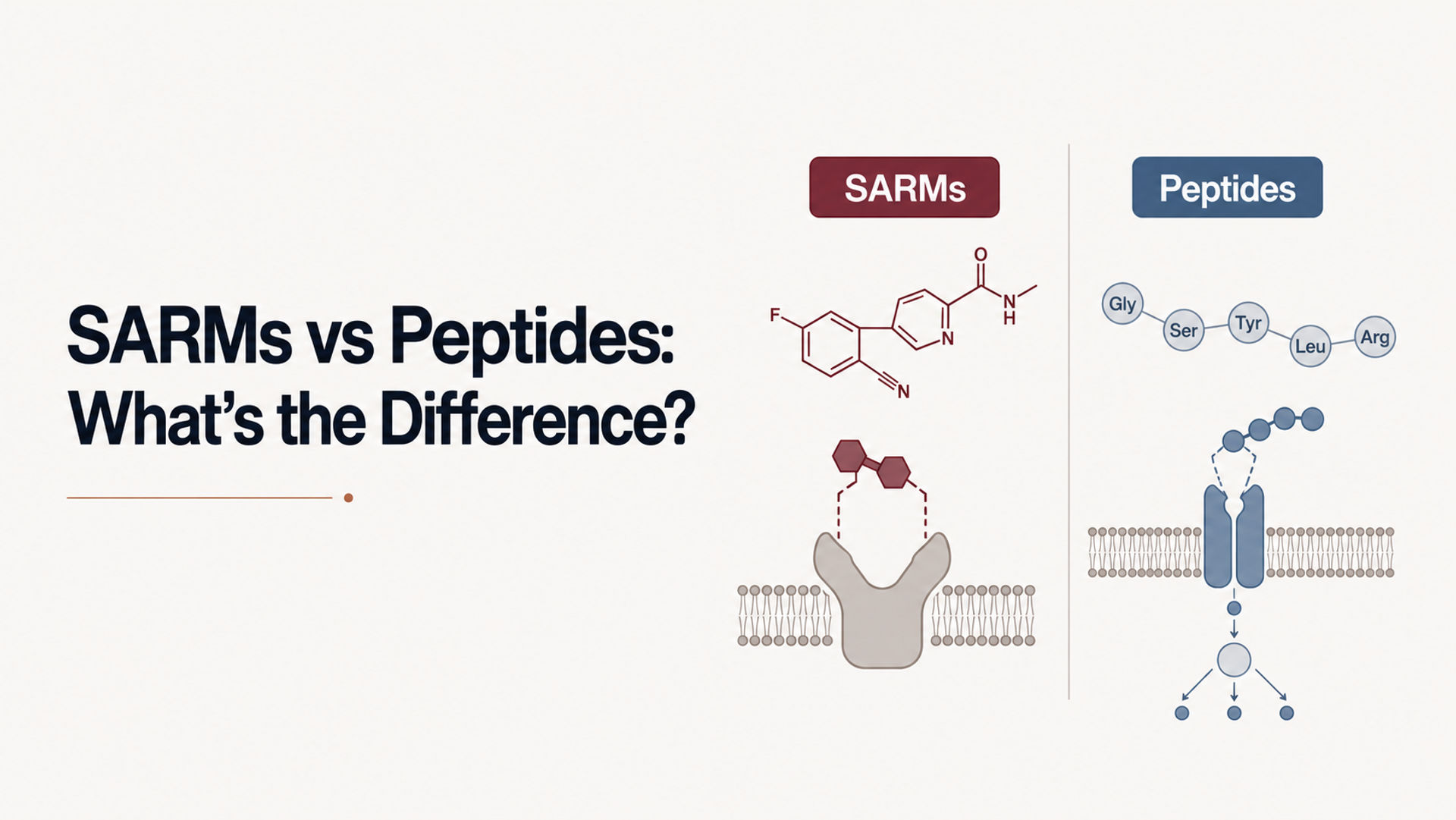

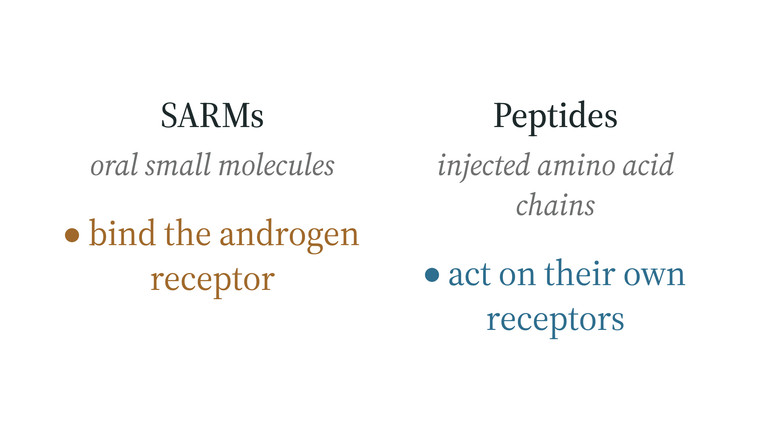
SARMs vs peptides is a comparison between two structurally unrelated classes of compounds: SARMs are non-steroidal small molecules that bind androgen receptors directly, while peptides are short chains of amino acids that signal through their own dedicated receptors. This guide covers what separates them chemically, what the human trials actually measured, how their safety and legal status differ, and why the labels on both are less reliable than most comparisons assume.
SARMs vs Peptides: Quick Comparison
SARMs and peptides differ at every level that matters: chemical structure, receptor target, delivery route, regulatory status, and the quality of evidence behind them. The table below summarizes the differences covered in detail throughout this guide.
Factor | SARMs | Peptides |
|---|---|---|
Chemical class | Non-steroidal small molecules | Chains of amino acids joined by peptide bonds |
Receptor target | Androgen receptor, directly | Varies by peptide (GHRH, ghrelin, GLP-1 and others) |
Typical route | Oral | Subcutaneous injection, since digestion destroys most peptides |
Hormonal effect | Suppresses endogenous testosterone | Most do not affect testosterone |
FDA-approved members | None | More than 60, including semaglutide and tesamorelin |
Evidence quality | Phase II and III trial data exists, no approvals | Ranges from Phase III trials to rodent-only |
WADA status | Banned, class S1.2 | GH secretagogues and GHRH analogues banned, class S2.2.4 |
Documented product mislabeling | 48% of tested products contained no SARM | Purity varies by vendor and compound |
The rest of this guide explains where each of those rows comes from, and where the comparison itself starts to break down.
What Are SARMs?
SARMs, or selective androgen receptor modulators, are synthetic non-steroidal compounds that bind to the androgen receptor and produce tissue-selective anabolic effects. The design goal was to stimulate muscle and bone tissue while sparing the prostate and skin, the tissues responsible for most of the side effects of anabolic steroids. Ostarine (enobosarm), ligandrol (LGD-4033), andarine, RAD-140 and YK-11 are the compounds most often encountered.
Because SARMs are small molecules rather than proteins, they survive digestion and are taken orally. That single property explains much of their popularity: no needles, no reconstitution, no cold storage.
No SARM has ever been approved by the FDA for any medical use, in any country. Enobosarm advanced furthest, reaching Phase III trials for cancer-related muscle wasting, and it remains investigational. The FDA has issued warning letters to companies distributing SARMs and states plainly that these substances cannot legally be marketed as either a dietary supplement or a drug in the United States.
What Are Peptides?
Peptides are short chains of amino acids linked by peptide bonds, generally under 50 amino acids in length. Above that threshold the molecule is usually called a protein. Unlike SARMs, "peptide" is a structural description rather than a functional one, which is why the category contains compounds with almost nothing in common.
That breadth is the single most misunderstood thing about this comparison. Semaglutide, insulin, BPC-157 and GHK-Cu are all peptides, yet they target different receptors, treat different conditions, and sit at wildly different points on the evidence scale. Peptide Mind's guide to what a peptide is covers the structural definition in more depth.
Because peptide bonds are broken down by digestive enzymes, most research peptides are administered subcutaneously. The peptides most often discussed alongside SARMs fall into three groups:
Growth hormone secretagogues and GHRH analogues: CJC-1295, sermorelin, tesamorelin, ipamorelin. These signal the pituitary to release growth hormone rather than supplying hormone directly.
Repair and recovery peptides: BPC-157, TB-500, GHK-Cu. Studied for tissue healing, mostly in animal models.
Metabolic peptides: semaglutide, tirzepatide, retatrutide. The GLP-1 class, which includes the most rigorously tested peptides in existence.
More than 60 peptide drugs hold FDA approval. Tesamorelin, marketed as Egrifta, was approved in 2010 and remains the only therapy approved to reduce excess visceral abdominal fat in people with HIV, with the FDA label reporting visceral fat reductions of 18% and 14% at week 26 across its two pivotal trials, against a 2% increase and a 2% decrease on placebo. That approval record has no equivalent on the SARM side.
Are SARMs Peptides? No, and Here Is the Structural Difference
SARMs are not peptides, and the two categories do not overlap at all. A peptide is defined by its backbone: amino acids joined by peptide bonds, which is a specific chemical linkage. SARMs contain no amino acids and no peptide bonds. They are built on aryl-propionamide, quinolinone, or similar small-molecule scaffolds.
The practical consequences of that structural difference are what most readers are actually asking about:
Route of administration. Peptide bonds are cleaved by digestive proteases, so most peptides must be injected. SARMs are stable in the gut and work orally.
Receptor target. SARMs bind the androgen receptor, the same receptor testosterone uses. Peptides bind their own specific receptors, so a GLP-1 peptide and a GHRH peptide do entirely different things.
Hormonal feedback. Occupying the androgen receptor signals the hypothalamic-pituitary-gonadal axis to reduce its own testosterone output. Most peptides do not touch that axis.
Detection window. SARMs and their metabolites are detectable in urine for extended periods. Peptide detection is more compound-dependent.
Shop research peptides
Live pricing from our top-rated vendor. Prices update as vendor listings change.
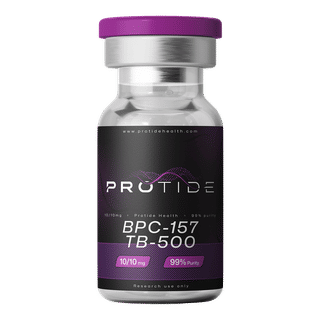
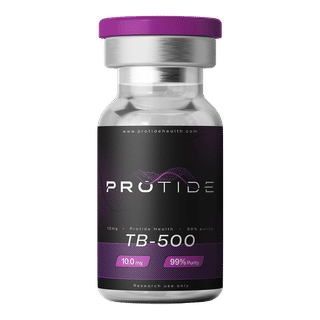
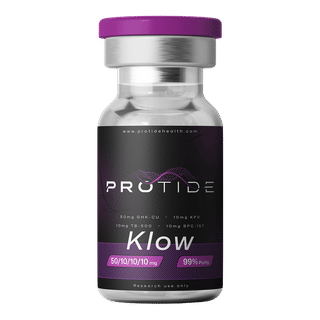
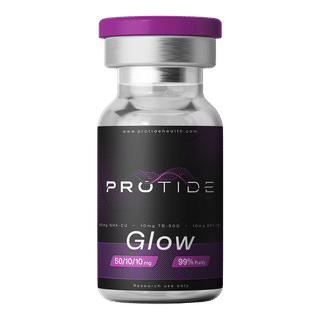
Confusion between chemical classes is common in this space, and it is not limited to SARMs. NAD is routinely marketed as a peptide when it is actually a coenzyme, and 5-Amino-1MQ is sold as a peptide despite being a small-molecule enzyme inhibitor. The label on the vial is not a reliable guide to what class a compound belongs to.
The Classification Problem: Much of What Is Sold as a SARM Is Not a SARM
This is the part of the SARMs vs peptides comparison that most guides skip, and it undermines every other row in the table. When researchers actually tested what was inside products sold online as SARMs, roughly half of them were something else.
Van Wagoner and colleagues purchased 44 products marketed as SARMs and analyzed them using World Anti-Doping Agency-approved procedures. The results, published in JAMA in 2017, are the most-cited data on the question.
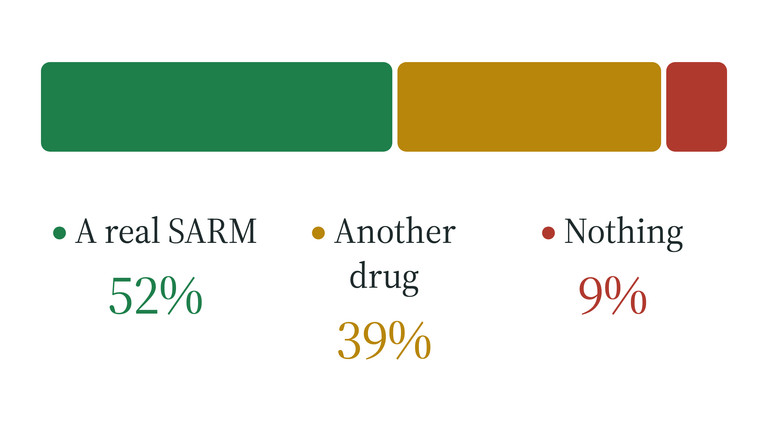
Of 44 products sold online as SARMs, only 23 (52%) contained a SARM. Another 17 products (39%) contained a different unapproved drug entirely, 4 (9%) contained no active compound at all, and only 18 (41%) contained the amount stated on the label. Van Wagoner et al., JAMA, 2017.
The 39% figure is the most instructive. The substances found in place of SARMs were ibutamoren (MK-677), a growth hormone secretagogue; GW501516 (cardarine), a PPARδ agonist; and SR9009 (stenabolic), a Rev-ErbA agonist. None of those three is a SARM. They do not bind the androgen receptor, and they do not work by the mechanism the buyer expected.
Is MK-677 a SARM or a Peptide?
MK-677, also called ibutamoren, is neither a SARM nor a peptide. It is a spiropiperidine, a synthetic small molecule that mimics ghrelin and activates the GHS-R1a receptor to trigger growth hormone release. It is misfiled in both directions constantly: SARM vendors sell it alongside ostarine, and peptide clinics list it beside ipamorelin because both act on the same receptor.
The receptor overlap is real, which is why the confusion persists. Ipamorelin is a five-amino-acid peptide that activates GHS-R1a. MK-677 activates the identical receptor with no amino acids anywhere in its structure. Same target, different chemical class. Peptide Mind's ranking of the best peptides for sleep covers MK-677 alongside true peptides for the same reason: the mechanism is comparable even though the classification is not.
For anyone actually comparing these compounds, the implication is uncomfortable. A meaningful share of SARM-versus-peptide experience reports are describing a growth hormone secretagogue that the user believed was a SARM.
SARMs vs Peptides for Muscle Growth: What the Trials Measured
For muscle growth, SARMs have the more direct anabolic mechanism, but the size of the effect measured in controlled human trials is smaller than the reputation suggests, and it is not far ahead of what growth hormone secretagogues produced in comparable trials.
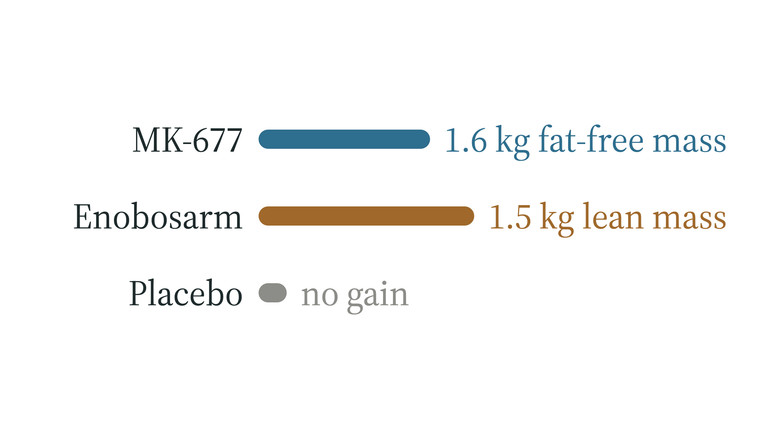
The best human data on a SARM comes from a Phase II trial of enobosarm. Dalton and colleagues randomized 120 healthy elderly men and postmenopausal women and found that enobosarm significantly increased lean body mass, with a median increase of 1.5 kg at the 1 mg dose over 12 weeks compared with no gain on placebo. Stair-climbing power also improved.
Now compare that with the best trial on the growth hormone secretagogue side. Nass and colleagues ran a two-year, double-blind, placebo-controlled trial of MK-677 in 65 healthy adults aged 60 to 81. The compound increased fat-free mass by 1.6 kg relative to placebo, published in Annals of Internal Medicine in 2008.
Two different mechanisms, in similar older populations, producing 1.5 kg and 1.6 kg. That is the head-to-head comparison the "SARMs are simply stronger" framing tends to leave out. Two caveats keep it honest: the Nass trial found no accompanying improvement in strength or physical function, and much of MK-677's gain is attributable to water retention rather than contractile tissue. Neither trial was conducted in trained young men at the doses actually used recreationally, so neither predicts that outcome.
True peptides, as opposed to secretagogues, perform differently again. CJC-1295, a long-acting GHRH analogue, produced dose-dependent growth hormone increases of 2- to 10-fold and IGF-1 increases of 1.5- to 3-fold in healthy adults, according to Teichman and colleagues in the Journal of Clinical Endocrinology & Metabolism. That is a clear pharmacological effect on the GH axis, but no body composition endpoint was measured, which is a distinction worth holding onto. A rise in IGF-1 is a biomarker, not a hypertrophy result.
Repair peptides such as BPC-157 and TB-500 are not muscle-building compounds at all, despite frequently appearing in bodybuilding comparisons. They are studied for tissue healing, which is why Peptide Mind covers them under peptides for injury recovery rather than in the bodybuilding peptide rankings.
SARMs vs Peptides: Safety and Side Effects
Shop research peptides
Live pricing from our top-rated vendor. Prices update as vendor listings change.
SARMs carry a documented pattern of liver injury and testosterone suppression that the peptide category, taken as a whole, does not. That said, the peptide side of this comparison is frequently oversold as "safe and non-toxic," and the evidence does not support that framing either.
Documented SARM Risks
Hepatotoxicity is the most consistently reported serious adverse effect. The NCBI LiverTox database maintained by the National Institute of Diabetes and Digestive and Kidney Diseases now includes a dedicated monograph on SARM-associated liver injury, and an analysis of suspected cases in the European Journal of Clinical Pharmacology reviewed 20 documented adverse event reports linked to SARM use, most of them drug-induced liver injury. That analysis concluded that promoting SARMs as a safe alternative to other anabolic compounds poses a risk to public health.
Beyond the liver, the FDA has linked SARM-containing bodybuilding products to increased risk of heart attack and stroke, psychosis, sexual dysfunction, infertility, and testicular shrinkage. Testosterone suppression is expected rather than incidental: it is the predictable consequence of occupying the androgen receptor.
The Honest Version of Peptide Safety
Peptides are not a uniformly safe category, and the marketing claim that they are "non-toxic" is not something the literature establishes. What is accurate is that the risk profile is different, not universally lower.
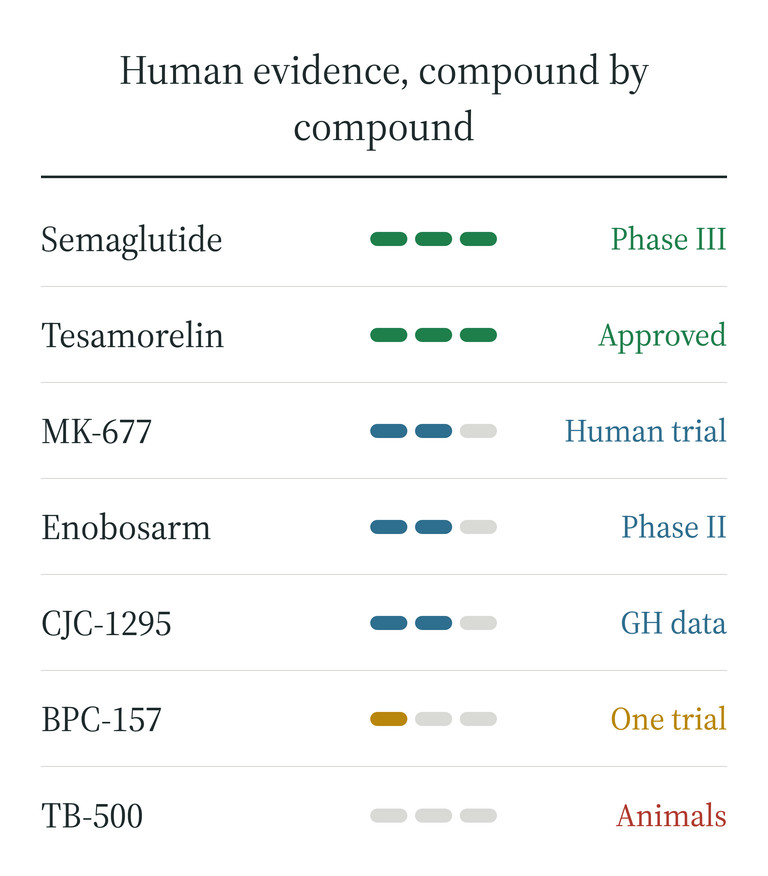
The clearest example is the evidence gap on the most popular repair peptide. A 2025 systematic review in HSS Journal screened 544 articles on BPC-157 in orthopaedic sports medicine and included just 36 studies, of which 35 were preclinical animal models and only one was clinical. The authors found no clinical safety data. A compound with essentially no human safety record is not demonstrated to be safe; it is untested, which is a different claim.
The evidence range within the peptide category is enormous. Semaglutide has been through multiple Phase III trials with tens of thousands of participants. BPC-157 has one clinical study. Both are peptides. Averaging them into a single safety verdict produces a meaningless number, and this is precisely where competing comparisons go wrong.
Product quality is the shared risk. The mislabeling documented for SARMs has a parallel in unregulated peptide sourcing, which is why verifying certificates of analysis and third-party HPLC testing matters before assessing any compound. Peptide Mind's guide to verifying a peptide supplier covers what to check.
Legal Status, FDA Approval, and Anti-Doping Rules
Neither SARMs nor research peptides can be legally sold for human consumption in the United States, and for competitive athletes both classes are banned. The widespread framing of peptides as the "legal alternative" to SARMs is wrong on both counts.
On FDA status, the categories genuinely differ. Zero SARMs are approved for any indication. More than 60 peptide drugs are approved, including semaglutide, tirzepatide, tesamorelin and insulin. But that approval applies to specific pharmaceutical products with a prescription, not to research-grade vials of the same or similar compounds, which are sold for laboratory use only and are not approved for human use.
On anti-doping, both classes are prohibited at all times, in and out of competition:
SARMs appear under WADA class S1.2, Other Anabolic Agents, naming andarine, enobosarm, LGD-4033, RAD140, S-23 and YK-11. They are non-specified substances, which carries the standard sanction.
GHRH analogues and GH secretagogues appear under class S2.2.4, explicitly naming CJC-1295, sermorelin, tesamorelin, ipamorelin, ibutamoren (MK-677), hexarelin and the GHRP series.
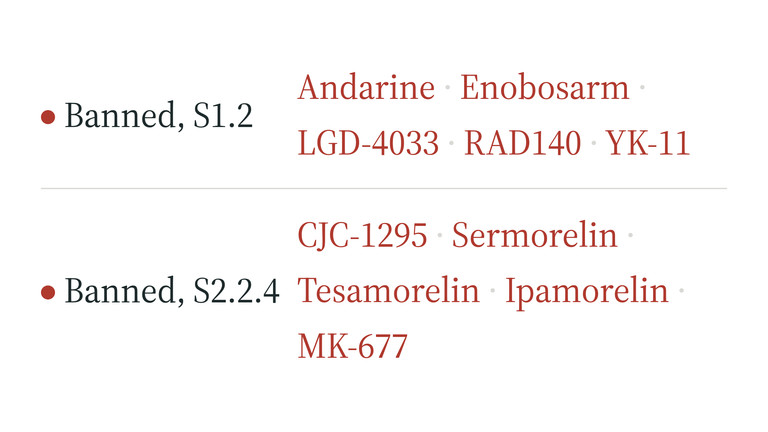
Both entries sit on the same WADA Prohibited List. A tested athlete who switches from ostarine to ipamorelin has changed the class of the violation, not avoided one.
Key Considerations
The most useful reframing of SARMs vs peptides is that the meaningful dividing line is not SARM versus peptide at all. It is approved pharmaceutical versus unapproved research chemical, and that line cuts straight through the middle of the peptide category.
A few points worth carrying forward:
Shop research peptides
Live pricing from our top-rated vendor. Prices update as vendor listings change.
Compare compounds, not categories. Semaglutide and BPC-157 have less in common than BPC-157 and a SARM do in terms of evidence maturity. "Are peptides better than SARMs" is not answerable until the specific peptide is named.
Verify what is actually in the vial. Given that 48% of tested SARM products contained no SARM, a certificate of analysis from third-party HPLC testing is the minimum standard for either class.
The oral convenience of SARMs is a real difference. It is also the reason SARMs pass through the liver in a way injected peptides do not, which is consistent with where the hepatotoxicity reports cluster.
Dosing precision matters more for peptides. Reconstitution introduces a math step that oral compounds do not have. Peptide Mind's peptide dosage calculator handles the concentration conversions.
Neither class has long-term human safety data at recreational doses. The longest controlled trial in this entire comparison is the two-year MK-677 study, in adults over 60.
Frequently Asked Questions
Are SARMs the same as peptides?
No. SARMs and peptides are chemically unrelated. Peptides are chains of amino acids linked by peptide bonds; SARMs contain no amino acids and are non-steroidal small molecules built on scaffolds such as aryl-propionamide. They also differ in target: SARMs bind the androgen receptor, while peptides act on their own specific receptors.
Are peptides safer than SARMs?
For the specific risks SARMs are documented to cause, liver injury and testosterone suppression, most peptides carry lower risk because they do not act on the androgen receptor or pass through the liver in the same way. But "peptides are safe" overstates it. BPC-157, the most popular research peptide, has no clinical safety data at all, which means untested rather than proven safe.
Is MK-677 a SARM or a peptide?
Neither. MK-677 (ibutamoren) is a spiropiperidine, a non-peptide small molecule that mimics ghrelin and activates the GHS-R1a receptor to stimulate growth hormone release. It contains no amino acids and does not bind the androgen receptor. It is commonly misfiled in both categories because it is marketed alongside SARMs and shares a receptor with peptide secretagogues such as ipamorelin.
Which is better for muscle growth, SARMs or peptides?
On SARMs vs peptides for muscle growth, SARMs have the more direct anabolic mechanism because they bind the androgen receptor. In controlled trials the measured gap is narrower than expected: enobosarm produced a median 1.5 kg lean body mass increase, while the secretagogue MK-677 produced 1.6 kg fat-free mass. Most true peptides, including BPC-157 and TB-500, are not muscle-building compounds.
Can you take peptides and SARMs together?
Combined use is discussed frequently in community protocols, but no controlled trial has evaluated any SARM and peptide combination for safety or efficacy in humans. The interaction data does not exist. Both would also constitute separate anti-doping violations, under WADA classes S1.2 and S2.2.4 respectively.
Are SARMs or peptides legal?
Neither can be legally sold for human consumption in the United States. The FDA states SARMs cannot be marketed as a supplement or drug. Research peptides are sold for laboratory use only. The distinction is that more than 60 peptide drugs hold FDA approval as prescription medicines, including semaglutide and tesamorelin, while no SARM has ever been approved.
Do SARMs or peptides suppress testosterone?
SARMs suppress endogenous testosterone by design. Binding the androgen receptor signals the hypothalamic-pituitary-gonadal axis to reduce its own output, so suppression is an expected pharmacological consequence rather than a side effect. Most peptides, including GHRH analogues and repair peptides, act on separate pathways and do not suppress testosterone.
What the Comparison Actually Comes Down To
SARMs vs peptides is less a contest between two categories than a question about a single compound at a time, because "peptide" spans everything from Phase III-tested semaglutide to BPC-157 with one clinical study to its name. SARMs are structurally distinct, orally active, androgen-receptor-binding small molecules with documented liver and hormonal risks and zero approvals; peptides are a structural class whose evidence quality varies more within itself than it does against SARMs. Before comparing anything, confirm what class the compound actually belongs to and what is verifiably inside the vial. Explore Peptide Mind's peptide research profiles to see how individual compounds are graded by evidence.
References
Van Wagoner RM, Eichner A, Bhasin S, Deuster PA, Eichner D. "Chemical Composition and Labeling of Substances Marketed as Selective Androgen Receptor Modulators and Sold via the Internet." JAMA, 318(20), 2017. PubMed ID: 29183075.
Dalton JT, Barnette KG, Bohl CE, Hancock ML, et al. "The selective androgen receptor modulator GTx-024 (enobosarm) improves lean body mass and physical function in healthy elderly men and postmenopausal women: results of a double-blind, placebo-controlled phase II trial." Journal of Cachexia, Sarcopenia and Muscle, 2(3), 153-161, 2011. PubMed ID: 22031847.
Nass R, Pezzoli SS, Oliveri MC, Patrie JT, et al. "Effects of an oral ghrelin mimetic on body composition and clinical outcomes in healthy older adults: a randomized trial." Annals of Internal Medicine, 149(9), 601-611, 2008. PubMed ID: 18981485.
Teichman SL, Neale A, Lawrence B, et al. "Prolonged stimulation of growth hormone (GH) and insulin-like growth factor I secretion by CJC-1295, a long-acting analog of GH-releasing hormone, in healthy adults." Journal of Clinical Endocrinology & Metabolism, 91(3), 2006. PubMed ID: 16352683.
Vasireddi N, Hahamyan H, Salata MJ, et al. "Emerging Use of BPC-157 in Orthopaedic Sports Medicine: A Systematic Review." HSS Journal, 2025. PubMed ID: 40756949.
National Institute of Diabetes and Digestive and Kidney Diseases. "Selective Androgen Receptor Modulators." LiverTox: Clinical and Research Information on Drug-Induced Liver Injury, 2024.
Leciejewska N, Jedrejko K, Gomez-Renaud VM, Manriquez-Nunez J, Muszynska B, Pokrywka A. "Selective androgen receptor modulator use and related adverse events including drug-induced liver injury: Analysis of suspected cases." European Journal of Clinical Pharmacology, 2023. PMC ID: PMC10847181.
U.S. Food and Drug Administration. "Certain Bodybuilding Products Put Consumers at Risk for Heart Attack, Stroke, Serious Liver Damage and More." FDA Fraudulent Products, 2024.
World Anti-Doping Agency. "The Prohibited List." WADA International Standard, 2025.
U.S. Food and Drug Administration. "EGRIFTA SV (tesamorelin for injection) Prescribing Information." FDA Drugs@FDA, 2019.
Shop research peptides
Live pricing from our top-rated vendor. Prices update as vendor listings change.
Disclaimer: The information on Peptide Mind is for educational purposes only and is not a substitute for professional medical advice, diagnosis, or treatment. The peptides discussed are unapproved research chemicals for laboratory and research use only, not for human consumption. These statements have not been evaluated by the FDA, and nothing on this site is intended to diagnose, treat, cure, or prevent any disease. By accessing this site, you confirm you are 21 or older and agree to our Terms of Service.
Add a comment
This will be publicly visible.
Your email address will not be published.
Your comment will be reviewed by an admin before it is published.