Best Peptides for Bodybuilding: 9 Top Options Ranked for 2026
Best peptides for bodybuilding, compared for mechanism, legal status, and safety, including BPC-157, CJC-1295, and TB-500.
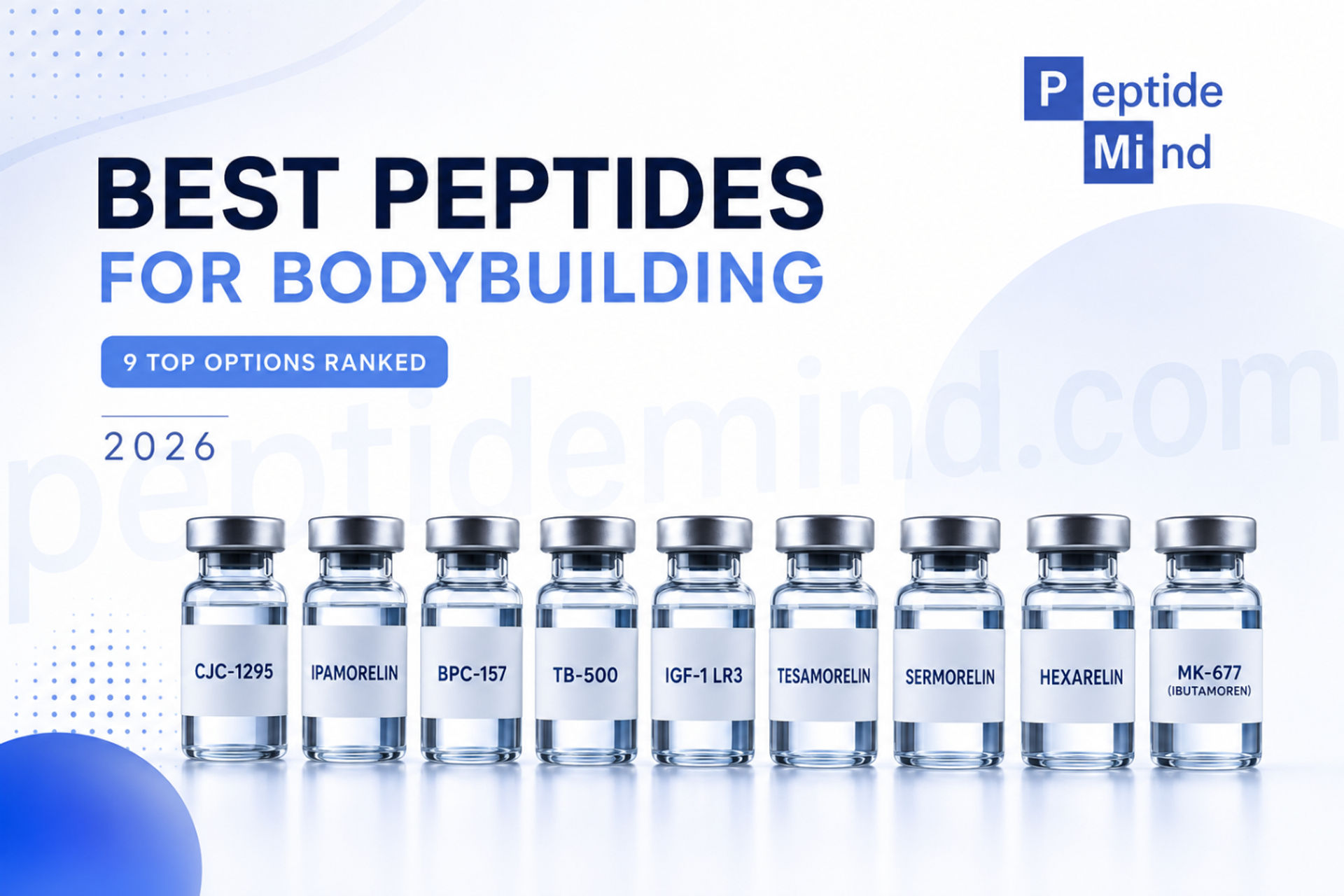

Best Peptides for Bodybuilding: 9 Top Options Ranked for 2026
Last updated: July 13, 2026
Choosing the best peptides for bodybuilding means weighing unregulated research chemicals against FDA-approved prescription therapeutics, since no single compound in this category is an over-the-counter supplement. CJC-1295 ranks first on this list because it appears more consistently across bodybuilding and clinical peptide sources than any other compound covered here, while Tesamorelin stands out as the most clinically established option, backed by full FDA approval as Egrifta for visceral fat reduction.
Our team researched and evaluated 9 peptides commonly discussed for bodybuilding to compile this list of the top 9. Rankings are based on:
We evaluated the strength and consistency of available research evidence for each compound.
We reviewed the legal and regulatory status of each compound in the United States, including FDA approval status and WADA's prohibited list.
We compared each compound's primary mechanism and reported use case for muscle growth, recovery, or body composition.
We cross-referenced reported side effects and safety considerations across clinical literature and hormone-clinic resources.
We prioritized compounds most frequently discussed across bodybuilding and sports-medicine sources.
We reviewed more than 20 peptides and growth-hormone secretagogues discussed for bodybuilding, drawing on PubMed-indexed clinical research and published guidance from licensed hormone-therapy and telehealth clinics.
Best Peptides for Bodybuilding at a Glance
The comparison table below gives a quick-reference look at the 9 compounds covered in this guide to the best peptides for building muscle, summarizing each one's most-cited use case, its peptide class or mechanism, and its current legal status in the United States. It is built strictly as an informational comparison, not a shopping guide or a ranking by price, since none of these compounds are FDA-approved consumer products sold at a fixed retail cost.
Peptide | Best For | Category/Mechanism | Legal Status (US) |
|---|---|---|---|
Sustained GH-axis stimulation for lean mass and recovery | GHRH analog | Not FDA-approved; barred from compounding (Category 2); sold as unregulated research chemical; WADA-banned | |
GH-axis stimulation for lean mass and recovery | GH secretagogue (GHRP) | Not FDA-approved; compounding status unsettled/under review; sold as research chemical; WADA-banned | |
Soft-tissue, tendon, and gut-lining recovery (preclinical) | Tissue-repair peptide | Not FDA-approved; barred from compounding (Category 2); sold as research chemical; WADA-banned | |
Soft-tissue repair and wound-healing recovery | Tissue-repair peptide | Not FDA-approved; removed from Category 2 in 2026, PCAC review pending on possible 503A bulks list inclusion; sold as research chemical; WADA-banned | |
Muscle hyperplasia and lean-mass gain | IGF-1 analog | Not FDA-approved; sold as unregulated research chemical; WADA-banned | |
Visceral fat reduction (off-label lean-mass use) | GHRH analog | FDA-approved (Egrifta) for HIV-associated lipodystrophy; off-label use elsewhere by prescription; WADA-banned | |
Age-related GH decline and body-composition support | GHRH analog | Formerly FDA-approved (Geref, discontinued 2008); now compounded prescription-only; WADA-banned | |
GH-axis stimulation for lean mass, recovery, and cardiac research | GH secretagogue (GHRP) | Not FDA-approved; sold as unregulated research chemical; WADA-banned | |
GH-axis stimulation for lean mass and recovery | GH secretagogue (non-peptide) | Not FDA-approved; no recognized compounding pathway; sold as research chemical; WADA-banned |
This table is provided for informational comparison only and is not a substitute for guidance from a licensed medical provider.
Top 9 Peptides for Bodybuilding
1. CJC-1295
Best for: Sustained growth-hormone-axis stimulation for lean mass and recovery support
CJC-1295 is a synthetic growth-hormone-releasing hormone (GHRH) analog, a modified 29-amino-acid peptide originally developed by ConjuChem Biotechnologies. It is designed to bind GHRH receptors on pituitary somatotroph cells, prompting the body's own pituitary gland to release growth hormone (GH), which in turn raises downstream IGF-1 levels. One version incorporates a "drug affinity complex" (DAC) that binds to blood albumin and extends the peptide's activity for days, while a separate non-DAC version (also sold as "Mod GRF 1-29") clears the body much faster and produces shorter, more pulsatile GH spikes. It is a research compound and unapproved investigational drug that never reached market, not an over-the-counter bodybuilding supplement.
Legal status (US): Not FDA-approved for any human indication; no new drug application for CJC-1295 has ever been completed. A Phase 2 trial for HIV-associated lipodystrophy was discontinued in 2006-2007 after a participant death, and development was never resumed. In 2023 the FDA placed CJC-1295 in "Category 2" of its interim 503A bulks list, meaning it identified significant safety concerns and did not permit its use in traditional pharmacy compounding; in December 2024 the FDA's Pharmacy Compounding Advisory Committee voted against adding it to the final 503A bulks list, citing nonclinical toxicity, an unresolved cardiac signal, and immunogenicity risk. It is not on the 503B outsourcing-facility list and has no USP/NF monograph, so it cannot legally be compounded by US pharmacies for human use. In practice it is sold in the US almost exclusively as an unregulated "research use only" chemical explicitly not intended for human consumption. It is also listed under Section S2 of the WADA Prohibited List as a growth hormone-releasing factor, banned at all times, both in and out of competition, for athletes subject to anti-doping codes.

Reported benefits (per available research):
Studied for its ability to produce sustained, dose-dependent increases in growth hormone and IGF-1 secretion in a Phase 1 human trial in healthy adults, published by Teichman et al. in the Journal of Clinical Endocrinology & Metabolism (2006).
Proposed by GH-axis researchers to support lean body mass and body-composition changes, though this claim rests on GH and IGF-1's known physiological roles rather than on direct body-composition trials of CJC-1295 itself.
Anecdotally reported by users to improve sleep quality and recovery, consistent with growth hormone's established role in promoting slow-wave sleep, though this specific outcome has not been directly tested in CJC-1295 clinical trials.
Known risks and side effects:
Shop research peptides
Live pricing from our top-rated vendor. Prices update as vendor listings change.
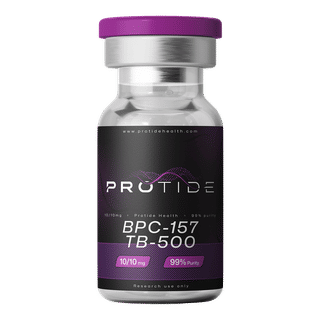
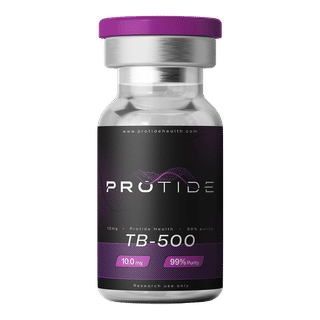
Injection-site reactions (pain, redness, swelling, and induration) are the most consistently reported adverse effects across CJC-1295's human research and compounded/gray-market use.
The 2006-2007 Phase 2 lipodystrophy trial was halted after a participant died; the study physician attributed the death to pre-existing coronary artery disease unrelated to the drug, but the FDA's Pharmacy Compounding Advisory Committee cited this "unresolved cardiac signal" in December 2024 as a reason to keep the compound off the approved compounding list.
FDA nonclinical toxicology review (2023-2024) flagged DNA damage in pituitary cells and injection-site necrosis in animal studies, plus immunogenicity and impurity risks from compounded material, alongside GH/IGF-1-axis effects such as fluid retention, joint discomfort, flushing, and headache reported by users.
Evidence snapshot: The strongest available evidence is a small Phase 1 human trial (Teichman et al., 2006) showing dose-dependent, sustained elevation of GH and IGF-1 in healthy adults; beyond that trial and the halted Phase 2 lipodystrophy study, there are no completed human trials measuring body composition, strength, or long-term safety outcomes, so evidence for bodybuilding-related benefit claims remains preliminary and largely extrapolated from the hormone's known biology rather than from direct testing of CJC-1295.
2. Ipamorelin
Best for: growth-hormone axis stimulation for lean mass and recovery support

Ipamorelin is a synthetic pentapeptide (amino acid sequence Aib-His-D-2-Nal-D-Phe-Lys-NH2) that belongs to the growth hormone secretagogue class, acting as a selective agonist at the ghrelin receptor (GHS-R1a) in the pituitary gland to stimulate pulsatile growth hormone release. Although it is a peptide chemically, in bodybuilding and longevity content it is grouped with other "GH-boosting" compounds; researchers note it is more selective than older growth-hormone-releasing peptides (GHRPs) like GHRP-6 because it does not meaningfully raise cortisol or prolactin alongside GH. It is a research compound and, where sold through compounding pharmacies, an off-label/unapproved preparation, not an over-the-counter bodybuilding supplement. This entry excludes any dosing, injection frequency, or cycle-length information.

Legal status (US): Ipamorelin is not FDA-approved for any human indication; it was studied by Novo Nordisk and later Helsinn Therapeutics, including a Phase II trial for postoperative ileus, but development was discontinued for lack of efficacy. Its compounding status has been unsettled and repeatedly revised: the FDA placed ipamorelin (with CJC-1295) on the Category 2 "do not compound" bulks list in October 2023 citing insufficient safety data; that nomination was withdrawn and ipamorelin was removed from Category 2 effective September 2024; and the Pharmacy Compounding Advisory Committee subsequently voted against adding it to the Category 1/503A bulk drug substances list at its late-2024 meetings, leaving it without a confirmed legal compounding pathway at that time. This remains an actively moving area, however: on February 27, 2026, the HHS Secretary publicly announced an intent to move roughly 14 of the 19 Category 2-listed peptides, reportedly including ipamorelin and CJC-1295, back toward Category 1 status, and multiple industry and legal-news outlets reported further FDA action in the following months easing Category 2-related restrictions on this group of peptides. As of this writing, that reporting could not be independently verified against a primary FDA.gov source, no ipamorelin-specific Pharmacy Compounding Advisory Committee hearing date had been confirmed, and the formal notice-and-comment rulemaking needed to finalize any Category 1 listing has not been confirmed as complete. Given how quickly this status has changed since 2023, readers should treat ipamorelin's compounding legality as unsettled rather than fixed, and verify current status directly with the FDA or a licensed pharmacist before assuming a lawful compounding pathway exists. Outside that pathway, it is commonly sold as an unregulated "research chemical" labeled not for human consumption, with no pharmaceutical oversight of purity or dosing. Ipamorelin is also listed under WADA's S2 category (growth hormone secretagogues and releasing factors) on the Prohibited List, banned both in and out of competition for athletes subject to anti-doping rules.
Reported benefits (per available research):
Reliably studied for its ability to increase circulating growth hormone (and downstream IGF-1) in both animal models and a human Phase II trial, where it was well tolerated but did not significantly outperform placebo on its primary clinical endpoint
Studied in rodent models for effects on bone formation and bone mineral content, including in a glucocorticoid-induced bone-loss model, though this evidence is animal-only and has not been confirmed in controlled human trials
Anecdotally and in early/limited research associated with changes in body composition (lean mass, fat mass) and subjective sleep quality, but these claims rely mostly on user reports and small or non-peer-reviewed data rather than robust human clinical trials
Known risks and side effects:
FDA safety reviewers flagged growth-hormone-secretagogue peptides in this family for potential cardiovascular effects (e.g., increased heart rate, vasodilatory reactions such as flushing and transient hypotension) as part of the rationale for restricting compounding
Commonly reported effects include headache, injection-site reactions, and mild fluid retention or bloating tied to growth-hormone-mediated fluid balance changes
Because it is sold as an unregulated research chemical outside pharmaceutical manufacturing controls, there is added risk from impurities, mislabeled concentration, and lack of quality assurance, and long-term human safety data remain limited or absent
Evidence snapshot: The strongest human evidence is a randomized, double-blind, placebo-controlled Phase II trial (ClinicalTrials.gov NCT00672074) in bowel-resection patients showing ipamorelin was well tolerated but not significantly more effective than placebo for postoperative ileus; most other claimed benefits (bone density, body composition) trace back to animal studies or preliminary/anecdotal reports, not confirmed human efficacy trials.
3. BPC-157
Best for: soft-tissue, tendon, and gut-lining recovery in preclinical research
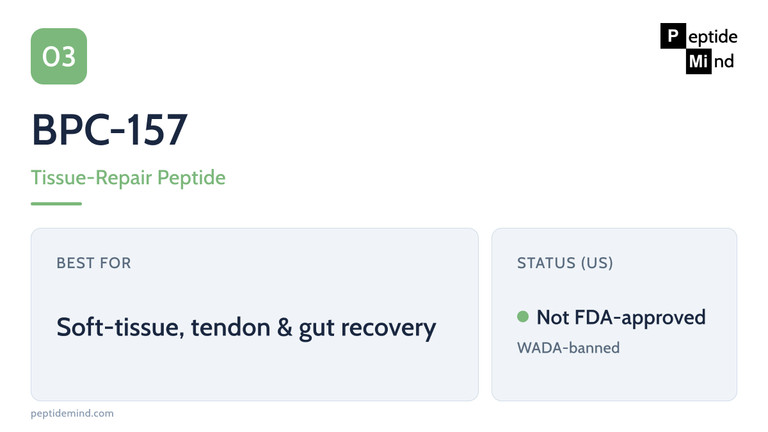
BPC-157 is a synthetic pentadecapeptide, a 15-amino-acid chain (sequence Gly-Glu-Pro-Pro-Pro-Gly-Lys-Pro-Ala-Asp-Asp-Ala-Gly-Leu-Val), derived from a protective protein naturally found in human gastric juice; "BPC" stands for "Body Protection Compound." In preclinical work it is proposed to act through several overlapping pathways, including promotion of new blood-vessel growth (angiogenesis), modulation of nitric-oxide signaling, and anti-inflammatory activity, rather than through one well-defined receptor mechanism the way a conventional small-molecule drug does. It is a research compound and unapproved substance, not an over-the-counter bodybuilding supplement; where it appears in clinical or off-label use, it does so through compounding channels that federal regulators have since restricted (see legal status below).
Legal status (US): BPC-157 has no FDA-approved indication; it is not an approved drug for any human use. It is sold almost exclusively online as an unregulated "research chemical" labeled "not for human consumption," a designation sellers use to avoid marketing it as an illegal supplement or drug. That labeling practice is formally known as Research Use Only (RUO), a marketing and legal category that says nothing on its own about a given vial's purity or safety. In September 2023, the FDA added BPC-157 to its Category 2 list of bulk drug substances under its Interim Policy on Compounding, meaning 503A compounding pharmacies and 503B outsourcing facilities are barred from using it in compounded preparations; the agency cited concerns over potential immune reactions, manufacturing impurities, and a lack of human safety data. As of a January 2026 legal analysis, BPC-157 remained listed in Category 2, and the compound cannot legally be compounded under sections 503A or 503B of the Food, Drug and Cosmetic Act; some peptide-industry sources report a Pharmacy Compounding Advisory Committee review was scheduled for July 2026 that could revisit this status, but that outcome had not been independently confirmed as of this writing. BPC-157 is also named on WADA's Prohibited List under section S0 (Non-Approved Substances), the first time WADA named a specific substance by name as an example within that category (added for the 2022 List); it is banned at all times, in and out of competition, for athletes subject to anti-doping codes, and is not classified under S2 (Peptide Hormones, Growth Factors, and Related Substances), which is reserved for specifically defined peptide hormones and growth factors such as hGH and EPO.
Shop research peptides
Live pricing from our top-rated vendor. Prices update as vendor listings change.
Reported benefits (per available research):
Studied in animal (rodent) models for tendon, ligament, and muscle healing, with researchers attributing effects to promotion of angiogenesis and fibroblast activity (preclinical studies from a Croatian research group at the University of Zagreb, spanning several decades)
Originally investigated for gastroprotective properties; animal studies suggest it may support healing of gastric ulcers and damaged intestinal lining
Preclinical models suggest it may help modulate inflammation, though this has not been established in controlled human trials
Known risks and side effects:
Because it is sold as an unregulated research chemical rather than a manufactured pharmaceutical, product purity and dosing accuracy cannot be verified, and the FDA has flagged potential impurities and manufacturing-quality concerns
FDA's Category 2 determination specifically cited potential immune reactions and hypersensitivity as a safety concern
User-reported (non-clinical-trial) effects include injection-site irritation, redness, or swelling, along with occasional headache, nausea, or lightheadedness, based on anecdotal reporting rather than controlled studies
No long-term human safety data exists; the FDA has stated it lacks sufficient information to know whether the substance would cause harm when administered to humans
Evidence snapshot: The evidence base is almost entirely preclinical, decades of animal (largely rat) studies, mostly from one Croatian research group (Sikiric et al., University of Zagreb), with a single small human trial under the brand name "Bepecin" (around 2015) that did not lead to any FDA-approved use; no large-scale controlled human clinical trials establishing safety or efficacy currently exist.
4. TB-500
Best for: soft-tissue repair and wound-healing recovery

TB-500 is the trade name for a synthetic peptide fragment (Ac-LKKTETQ, corresponding to amino acids 17-23 of the naturally occurring 43-amino-acid protein thymosin beta-4) marketed as an actin-regulating tissue-repair research compound. It is proposed to work by binding actin and promoting cell migration, blood-vessel formation (angiogenesis), and collagen deposition, mechanisms studied mainly in cell cultures and animal models of wound and tendon repair. It is not an approved medication or a lawful dietary supplement ingredient; it is sold almost exclusively as an unregulated "research chemical" labeled not for human consumption. Notably, most published human trial data involves a different, full-length recombinant version of thymosin beta-4 developed by a pharmaceutical sponsor, not the short synthetic fragment sold online as TB-500.
Legal status (US): Neither TB-500 nor thymosin beta-4 is FDA-approved for any human indication. In September 2023, FDA placed "Thymosin Beta-4, Fragment (LKKTETQ)," the substance sold as TB-500, on Category 2 of its interim 503A bulk drug substances list, meaning FDA identified significant safety concerns and would not permit licensed compounding pharmacies to use it. FDA procedurally removed it from Category 2 in April 2026 after nominators withdrew their submissions and referred it to the Pharmacy Compounding Advisory Committee, which is scheduled to review it on July 23-24, 2026 for possible inclusion on the approved 503A bulks list. As of this writing (July 2026), that meeting has not yet taken place. FDA staff's own briefing document, posted publicly ahead of the meeting as part of the docket, proposes that TB-500 (free base) and TB-500 acetate not be added to the list, citing incomplete physicochemical characterization, a lack of evidence of effectiveness for wound healing (including an in-vitro fibroblast study in which TB-500 reportedly did not induce wound healing), and insufficient nonclinical and clinical safety data; however, this is FDA staff's proposed position going into the meeting, not a final action, and the committee's discussion, any vote, and FDA's ultimate decision are still pending, so the outcome of the review is not yet known. In practice, TB-500 remains outside FDA-sanctioned compounding and is sold only as an unregulated research chemical. It is also explicitly named on the World Anti-Doping Agency's Prohibited List ("Thymosin-ß4 and its derivatives e.g. TB-500") under section S2.3, Growth Factors and Growth Factor Modulators, banned at all times, in and out of competition, for athletes subject to the WADA Code; a Canadian collegiate athlete received a four-year sanction in 2025 for use of TB-500 and BPC-157.
Reported benefits (per available research):
Studied in rat full-thickness wound models for accelerating skin repair, with one study reporting reepithelialization increased by up to 61% over controls by day 7, along with greater wound contraction and collagen deposition (Malinda et al., animal study, 1999)
Studied in rodent models of ischemic myocardial injury for reducing post-infarct scarring and supporting cardiac tissue repair; related full-length recombinant thymosin beta-4 (a different formulation than the marketed TB-500 fragment) has also been examined in small human studies for cardiac and dermatologic indications
Examined in preclinical models, including diabetic rat Achilles tendon and rat ligament-injury studies, for actin-binding, cell-migration, and angiogenic activity that researchers have proposed as a mechanism for tendon and ligament repair, though this literature remains comparatively sparse for musculoskeletal applications specifically
Known risks and side effects:
Because TB-500 is manufactured and sold without FDA oversight as a "research chemical," independent testing and industry reporting describe wide variability in purity (with some products measured well below labeled potency) and contamination with heavy metals or bacterial byproducts, unlike pharmaceutical-grade recombinant thymosin beta-4 used in registered clinical trials
Thymosin beta-4's core mechanisms, angiogenesis and cell migration, are also pathways exploited by tumors; in vitro and animal studies have linked thymosin beta-4 overexpression to increased tumor size and metastasis in several cancer types (including colorectal and pancreatic cancer), leading researchers to flag a theoretical cancer-promotion risk, particularly for anyone with an active malignancy or recent cancer history
Self-reported effects compiled from user and case reports, not controlled trials, include injection-site redness or itching, transient fatigue, and headache; because rigorously controlled human safety data specific to the TB-500 fragment does not exist, its longer-term risk profile, including possible immune reactions, remains unknown
Evidence snapshot: Evidence for TB-500 itself is preclinical, drawn mainly from cell-culture and animal studies (a 1999 rat wound-healing study and later rodent cardiac- and tendon-injury models), with a 2026 scoping review describing the musculoskeletal literature on thymosin beta-4 and TB-500 as sparse and largely preclinical. Human clinical-trial data (Phase 1/2 studies in wound healing, cardiac injury, and dry eye) exist only for a different, full-length recombinant thymosin beta-4 product, not for the short synthetic fragment marketed as TB-500, so no completed published human trial has evaluated TB-500 specifically for muscle, tendon, or joint recovery.
5. IGF-1 LR3
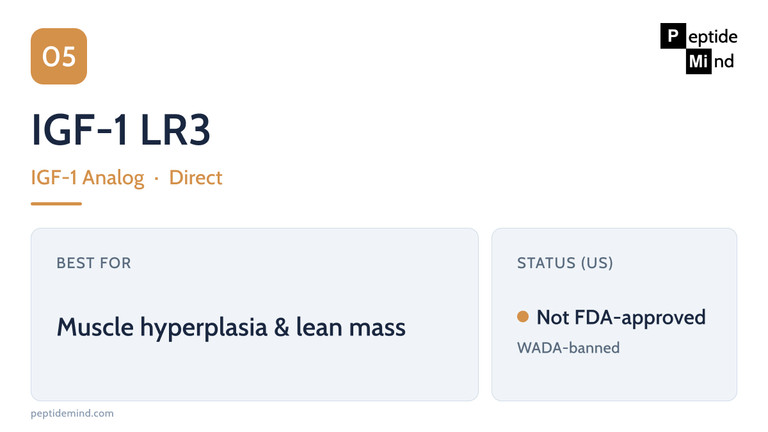
Best for: muscle hyperplasia and lean-mass gain in bodybuilding-oriented peptide research

Shop research peptides
Live pricing from our top-rated vendor. Prices update as vendor listings change.
IGF-1 LR3 is a synthetic, long-acting analog of insulin-like growth factor 1 (IGF-1), the peptide hormone that mediates most of growth hormone's tissue-building effects. It is an 83-amino-acid peptide bearing an arginine substitution at position 3 and a 13-amino-acid extension at the N-terminus; these changes do not make it a growth-hormone secretagogue, instead they sharply reduce its binding to IGF-binding proteins (IGFBPs), which is what extends its circulating half-life and potency relative to native IGF-1. It works by binding directly to the IGF-1 receptor (IGF-1R) on muscle and other tissue, activating the PI3K/Akt and MAPK signaling cascades that drive cell growth and proliferation. It is a research compound, not an approved drug or an over-the-counter bodybuilding supplement; any human use for muscle growth occurs off-label and outside FDA-reviewed clinical protocols.
Legal status (US): IGF-1 LR3 itself has never been approved by the FDA for any human indication. (Native, unmodified recombinant human IGF-1, sold as mecasermin/Increlex, is FDA-approved only for a narrow pediatric growth-failure indication and is chemically distinct from the LR3 analog.) In the US it is manufactured and sold almost exclusively as an unregulated "research chemical" labeled "not for human consumption," a labeling practice peptide vendors use to avoid marketing it as an unapproved drug; using it in people, or selling it while implying a therapeutic or muscle-building benefit, can trigger FDA enforcement action against the seller. It is not scheduled as a controlled substance by the DEA and is not explicitly named in the Designer Anabolic Steroid Control Act of 2014, though federal prosecutors have pursued unapproved-new-drug and misbranding cases against vendors marketing peptides for human performance use. For competitive athletes, IGF-1 and its analogs, including LR3, are banned at all times, in and out of competition, under Section S2 of WADA's Prohibited List (Peptide Hormones, Growth Factors, Related Substances and Mimetics).
Reported benefits (per available research):
Studied in cell-culture and animal muscle models for activating satellite cells and stimulating both muscle-fiber hypertrophy and hyperplasia (an increase in fiber number), effects attributed to sustained IGF-1 receptor activation rather than direct human testing
Explored in preclinical rodent studies of tendon, ligament, and other connective-tissue injury, where researchers report IGF-1 pathway activation appeared to support markers of tissue repair and collagen synthesis
Proposed by some peptide researchers to support faster recovery from training-induced muscle stress, based on IGF-1's known role in protein synthesis and cell-survival signaling (PI3K/Akt pathway), though this has not been confirmed in controlled human trials of IGF-1 LR3 itself
Known risks and side effects:
Hypoglycemia: because the IGF-1 receptor pathway overlaps with insulin signaling, activation can lower blood glucose, with reported effects ranging from shakiness and confusion to, in severe cases, seizure or loss of consciousness
Organomegaly and acromegaly-like changes: sustained elevation of IGF-1 signaling has been linked in the broader IGF-1/growth-hormone literature to enlargement of the jaw, hands, feet, heart, and other organs with prolonged exposure
Theoretical tumor-growth risk: IGF-1 receptor signaling promotes cell proliferation and inhibits programmed cell death, so researchers have raised concern that elevated IGF-1 activity could theoretically support growth of existing malignant or precancerous cells, though this risk has not been directly established for IGF-1 LR3 in humans
Injection-site reactions and an absence of human safety data: no controlled human trials have evaluated IGF-1 LR3's safety, purity, or contamination risk, so dosing accuracy, product quality, and long-term effects in bodybuilding-style use remain unverified
Evidence snapshot: No published human clinical trials of IGF-1 LR3 exist; the compound's evidence base is limited to preclinical in vitro and animal (largely rodent) studies of IGF-1 receptor activation, muscle-cell signaling, and tissue repair, with human safety and efficacy data for this specific analog effectively absent.
6. Tesamorelin
Best for: growth-hormone axis stimulation for visceral fat reduction (off-label extended to lean-mass and body-composition goals)

Tesamorelin is a synthetic analog of growth hormone-releasing hormone (GHRH), a 44-amino-acid peptide modified with a trans-3-hexenoic acid group that resists enzymatic breakdown. It works by binding to GHRH receptors on the pituitary gland, stimulating the body's own pulsatile release of growth hormone, which in turn raises IGF-1 levels. Tesamorelin is an FDA-approved prescription therapeutic (brand name Egrifta) for a specific clinical indication, and its use for general bodybuilding, fat loss, or anti-aging purposes in people without that diagnosis is an off-label application, not an over-the-counter supplement use.
Legal status (US): Tesamorelin is FDA-approved under the brand names Egrifta and Egrifta WR, manufactured by Theratechnologies, specifically to reduce excess visceral abdominal fat in HIV-infected patients with lipodystrophy. It is available only by prescription, and outside that approved indication it is prescribed off-label and often dispensed as a compounded preparation through 503A/503B compounding pharmacies for bodybuilding, fat-loss, or anti-aging purposes, uses the FDA has not evaluated or approved. Tesamorelin and other GHRH analogs are also included in the World Anti-Doping Agency's (WADA) S2 category of prohibited peptide hormones and growth factors, making it banned for athletes in competitions that follow WADA rules.

Reported benefits (per available research):
FDA-approved, clinical-trial-supported reduction of excess visceral abdominal fat in HIV-associated lipodystrophy, the only indication with robust human RCT evidence behind it
Studied in a randomized, placebo-controlled trial for possible support of executive function and cognitive performance in healthy older adults and adults with mild cognitive impairment (Baker et al., 2012)
Proposed, but far less rigorously studied in healthy or bodybuilding populations, to support lean body mass and body composition changes through GH/IGF-1 axis stimulation; this off-label use is not backed by the same level of controlled human trial evidence as the lipodystrophy indication
Known risks and side effects:
Injection site reactions, including erythema, pruritus, pain, and bruising at the injection site
Arthralgia (joint pain) and peripheral edema (fluid retention), recognized class effects of GH-axis stimulation
Increases in blood glucose and reduced insulin sensitivity, with clinical trials showing a higher rate of elevated HbA1c and new-onset hyperglycemia versus placebo
Formation of anti-tesamorelin antibodies, reported in a substantial proportion of treated patients, with unclear long-term clinical significance
Contraindicated in people with active malignancy, pituitary or hypothalamic disruption, or pregnancy, per FDA labeling
Evidence snapshot: The strongest evidence is a set of Phase 3 human randomized controlled trials that supported FDA approval of tesamorelin for reducing visceral abdominal fat in HIV-associated lipodystrophy (approved 2010), plus a separate placebo-controlled human RCT (Baker et al., 2012, Archives of Neurology) showing improved executive function in older adults. Evidence for bodybuilding-specific outcomes, such as lean mass gain or fat loss in healthy, non-HIV populations, is comparatively thin and largely extrapolated rather than directly studied in controlled trials.
Shop research peptides
Live pricing from our top-rated vendor. Prices update as vendor listings change.
7. Sermorelin
Best for: growth-hormone axis stimulation for age-related GH decline and body composition support

Sermorelin acetate is a 29-amino acid synthetic fragment (residues 1-29) of human growth hormone-releasing hormone, placing it in the GHRH-analog class of peptides rather than being growth hormone itself. It is proposed to work by binding GHRH receptors on pituitary somatotroph cells, prompting the pituitary to synthesize and release its own growth hormone in a pulsatile pattern, with the body's somatostatin feedback loop still intact so the effect is self-limiting rather than a constant hormone flood. It has a genuine FDA-approval history rather than being a novel "research chemical," but no FDA-approved finished product remains on the market, so it is supplied only through compounding pharmacies and prescribed off-label in adults for growth-hormone-axis support, general wellness, or anti-aging purposes rather than its original pediatric indication. This entry does not include dosing amounts, injection frequency, or cycle length information.
Legal status (US): Sermorelin has a documented, two-part FDA approval history under the brand name Geref, both approvals held by Serono (later EMD Serono). A diagnostic-use formulation (0.05 mg base per ampule, for evaluating the pituitary's capacity to secrete growth hormone) was approved December 28, 1990 under NDA 19-863; a separate treatment-use formulation (0.5 mg and 1.0 mg base per vial, for treating growth hormone deficiency and growth failure in children) was approved September 26, 1997 under NDA 20-443. The manufacturer discontinued both formulations in 2008 for business reasons, and a 2013 Federal Register determination confirmed the withdrawal was not for reasons of safety or effectiveness. No FDA-approved finished sermorelin product is currently marketed in the US. Today it is available only by prescription, compounded by state-licensed 503A pharmacies or FDA-registered 503B outsourcing facilities, neither of which is independently reviewed or approved by the FDA as a finished drug product, most commonly prescribed off-label for adult GH decline or wellness/anti-aging use. Sermorelin is also explicitly named as a growth hormone-releasing hormone analogue under category S2.2.4 of the WADA Prohibited List, making it a substance prohibited both in and out of competition for tested athletes.
Reported benefits (per available research):
Studied for restoring more youthful pulsatile GH and IGF-1 secretion in older adults, based on a small 1997 randomized, placebo-controlled human trial of a closely related GHRH(1-29) analog published in the Journal of Clinical Endocrinology & Metabolism
May support gains in lean body mass in men specifically: that same 16-week trial found a statistically significant increase in lean body mass in men but not in women, alongside a significant increase in skin thickness (a marker of dermal collagen) in both sexes
Proposed to support broader recovery and body-composition goals tied to growth-hormone-axis activity, though sermorelin-specific modern adult trial data remains thin, and much of the anti-aging and muscle-building framing used in commercial marketing outpaces the current clinical evidence base
Known risks and side effects:
Injection-site reactions (pain, swelling, or redness) are the most commonly reported adverse event associated with sermorelin therapy in manufacturer drug-labeling data
Headache, flushing, dizziness, difficulty swallowing, hyperactivity, drowsiness, and hives have also been reported less commonly per that same labeling data; the label also warns that rash, hives, or swelling of the face, mouth, lips, or tongue can signal a hypersensitivity reaction requiring emergency care, though no generalized allergic reactions were documented in the original trials
Because current supply comes only from compounded preparations rather than an FDA-verified finished product, potency, purity, and sterility can vary by pharmacy, and unregulated online sources carry added contamination or mislabeling risk; sustained growth-hormone-axis stimulation also carries a theoretical, class-wide concern for worsened insulin resistance, a recognized effect of excess growth hormone exposure generally
Evidence snapshot: The strongest available evidence is a small 1997 randomized, placebo-controlled human trial (19 adults aged 55-71) testing a closely related GHRH(1-29) analog over 16 weeks, which found increased IGF-1 in both sexes, a significant lean-mass increase in men only, and increased skin thickness in both sexes; sermorelin-specific modern adult research is otherwise limited, so evidence for the anti-aging and body-composition claims common in current marketing should be considered preliminary.
8. Hexarelin
Best for: growth-hormone axis stimulation for lean mass, recovery, and cardiac-research applications
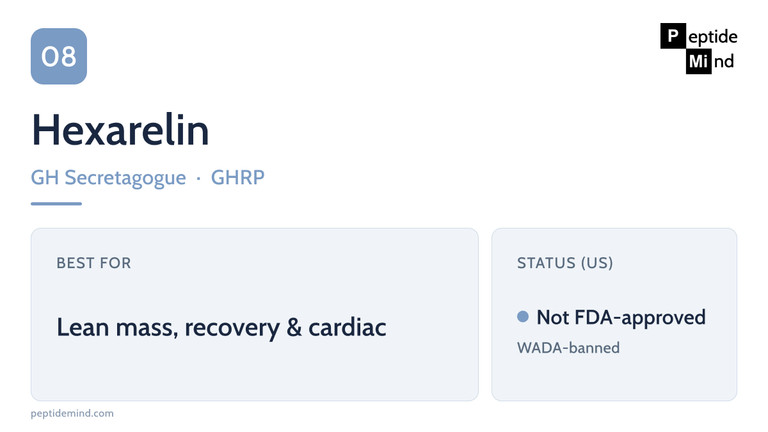
Hexarelin is a synthetic hexapeptide in the growth hormone releasing peptide (GHRP) class, also called a growth hormone secretagogue (GHS). Peptide Mind's dedicated GHS glossary entry covers how this category, GHRH analogs and GHRPs alike, is defined and used in research. It works by binding to the ghrelin receptor (GHS-R1a) in the hypothalamus and pituitary, triggering a calcium/PKC signaling cascade that releases stored growth hormone, while separately blunting somatostatin's inhibitory signal. Hexarelin is a research compound and an unapproved substance in the United States, discussed in some peptide-therapy and anti-aging clinic literature for off-label muscle growth and recovery use, not an over-the-counter bodybuilding supplement. It is chemically a true peptide (six amino acids, including two D-amino acid substitutions for stability), so unlike some non-peptide GH secretagogues it is correctly classified in this category. This entry does not include dosing amounts, injection frequency, or cycle instructions.
Legal status (US): Hexarelin has no FDA approval for any human indication and no approved prescription drug product exists for it in the United States. It is not dispensed through licensed compounding pharmacies for human use here. In practice it is sold domestically only as an unregulated "research chemical" labeled not for human consumption, meaning purity, sterility, and labeled concentration are not verified by any regulatory body. It is not a DEA-scheduled controlled substance. For competitive athletes, hexarelin (also called examorelin) is explicitly named as a prohibited growth-hormone-releasing peptide under WADA's Prohibited List in category S2 (Peptide Hormones, Growth Factors, Related Substances and Mimetics), banned at all times as a non-specified substance carrying a default four-year sanction.
Reported benefits (per available research):
Studied for its ability to trigger strong, dose-dependent endogenous growth hormone release, with some human research indicating it releases more GH than growth hormone releasing hormone (GHRH) alone
Investigated for potential cardioprotective effects through CD36 receptor binding in cardiac tissue, with preclinical and small experimental work describing improved cardiac function after ischemia, though researchers note clinical trials in humans remain limited
May support lean mass, strength, and connective-tissue recovery, a claim attributed to GH/IGF-1-driven protein synthesis rather than to dedicated human bodybuilding trials
Explored in preclinical, cell-based research for neuroprotective and antioxidant activity, evidence that is preliminary and non-human
Known risks and side effects:
Shop research peptides
Live pricing from our top-rated vendor. Prices update as vendor listings change.
Acute elevation of ACTH and cortisol, documented in a small human study, raising theoretical concern about HPA-axis disruption or Cushingoid effects with sustained high-dose exposure
Elevated prolactin reported in human research, which in chronic excess is associated with hyperprolactinemia-related effects such as visual disturbance and reproductive or hormonal disruption
Water retention, joint discomfort, and increased appetite, effects consistent with other GH-elevating secretagogues
Partial, reversible desensitization of the GH response with prolonged daily use in human studies, with sensitivity reported to return after a period off
Because it is distributed only as an unregulated research chemical, actual product purity and dosage are unverified, adding contamination and dosing-error risk on top of any physiological effects
Evidence snapshot: The strongest human data is a small 1999 clinical study (15 healthy male volunteers) confirming hexarelin's stimulatory effect on GH, ACTH, and cortisol via the HPA axis; cardioprotective and neuroprotective findings come mainly from animal and in vitro/cell-based research, and evidence for bodybuilding-specific outcomes like added lean mass or strength in humans is limited or absent.
9. MK-677 (Ibutamoren)
Best for: Growth-hormone axis stimulation for lean mass and recovery support

MK-677 (Ibutamoren) is an orally active growth hormone secretagogue that binds the ghrelin receptor (GHSR-1a) in the pituitary and hypothalamus, prompting the body to release more of its own growth hormone and, downstream, more IGF-1. It is chemically a small-molecule, non-peptide compound rather than a true peptide, even though it is routinely grouped alongside peptides such as ipamorelin or CJC-1295 in bodybuilding content because it acts on the same GH/ghrelin pathway. It is studied and sold strictly as a research compound or off-label growth-hormone-axis agent explored for muscle growth and recovery, not as an approved therapeutic or an over-the-counter supplement.
Legal status (US): MK-677 is not FDA-approved for any human indication. Originator Merck carried it through Phase 2 trials and a Phase 2b hip-fracture study but never filed for approval, so there is no FDA-approved prescription version. It is not scheduled under the Controlled Substances Act, but products marketed as "MK-677" capsules or powders are unapproved drugs under FDA rules, and in practice it is sold almost exclusively online as an unregulated "research chemical" labeled not for human consumption. Its compounding-pathway status is unsettled: ibutamoren mesylate was nominated for inclusion on FDA's Section 503A bulk drug substances list, and the Pharmacy Compounding Advisory Committee reviewed the nomination at its October 29, 2024 meeting and voted against recommending it for the list, citing concerns about the strength of the safety and efficacy evidence. That vote leaves ibutamoren without a recognized 503A compounding pathway for now, though FDA's broader rulemaking on the bulks list is still an ongoing, evolving process, so this status should not be treated as permanently fixed. WADA prohibits ibutamoren at all times under its S2 category (peptide hormones, growth factors, related substances and mimetics), so tested athletes face sanctions for any use.
Reported benefits (per available research):
Studied for its ability to raise GH and IGF-1 toward youthful levels and blunt age-related loss of fat-free mass, based on a 2-year randomized, placebo-controlled trial in 65 healthy older adults (Nass et al., 2008, Annals of Internal Medicine, PMID 18981485).
May support slow-wave and REM sleep architecture, per a placebo-controlled polysomnography study in younger and older adults (Copinschi et al., 1997, Neuroendocrinology, PMID 9349662).
Explored as a possible aid for recovery and lean-mass preservation in frail or catabolic populations, though a Merck-sponsored Phase 2b trial in elderly hip-fracture patients (Adunsky et al., 2011, Archives of Gerontology and Geriatrics, PMID 21067829) was halted early over a cardiac safety signal rather than demonstrating a clear functional benefit.
Known risks and side effects:
Increased appetite, commonly reported and documented at a substantially higher rate on MK-677 than placebo (67% versus 36% of participants) in the Nass et al. 2008 trial, tied to activation of the ghrelin receptor.
Mild, transient fluid retention/edema and joint or muscle pain, each reported more often on MK-677 than placebo in the same trial, linked to elevated GH and IGF-1.
Reduced insulin sensitivity, with increases in fasting blood glucose and HbA1c relative to placebo over 12 months in the same controlled trial, a concern for anyone with existing metabolic risk.
Elevated cortisol observed relative to placebo in the 2008 randomized controlled trial.
A higher rate of congestive heart failure events in the MK-677 group of the Adunsky et al. 2011 hip-fracture trial, which prompted the study's early termination; the published abstract describes this as a safety signal affecting a limited number of patients without a documented breakdown of exact case counts.
Evidence snapshot: The strongest human evidence comes from a 2-year randomized controlled trial in 65 healthy older adults (Nass et al., 2008, Annals of Internal Medicine) showing sustained GH/IGF-1 increases and preserved fat-free mass, plus an earlier short-term human polysomnography study on sleep (Copinschi et al., 1997, Neuroendocrinology, PMID 9349662); a separate Merck Phase 2b trial in hip-fracture patients (Adunsky et al., 2011, PMID 21067829) was stopped early after a cardiac safety signal emerged. Evidence specific to athletic or bodybuilding use in healthy young adults remains limited and largely anecdotal rather than drawn from controlled human trials.
How Peptides Work for Muscle Growth
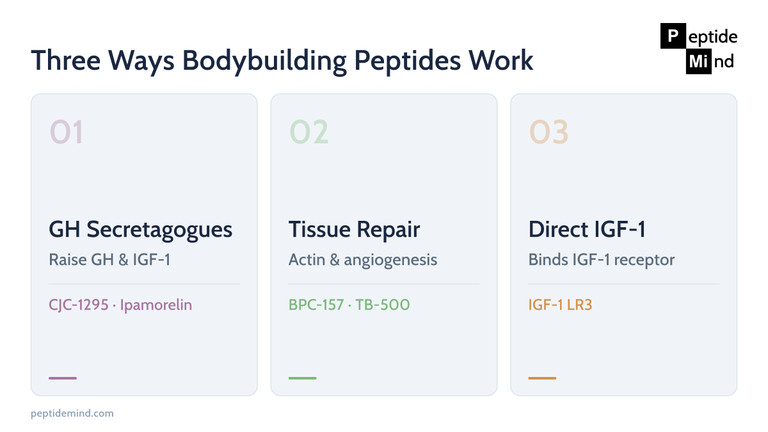
Most items on this list fall into one of three mechanism families. The largest group, CJC-1295, Ipamorelin, Sermorelin, Hexarelin, Tesamorelin, and MK-677, are growth-hormone secretagogues or GHRH/GHRP analogs. CJC-1295, Sermorelin, and Tesamorelin bind GHRH receptors on pituitary somatotroph cells, prompting the pituitary to release its own growth hormone in a pulsatile pattern that raises downstream IGF-1; Tesamorelin's version resists enzymatic breakdown, and CJC-1295's DAC variant binds blood albumin to extend how long it stays active.
Ipamorelin and Hexarelin instead act on the ghrelin receptor (GHS-R1a) in the pituitary and hypothalamus, triggering GH release through a separate pathway; Hexarelin does this through a calcium/PKC cascade while blunting somatostatin's inhibitory signal, and Ipamorelin is considered more selective because it does not meaningfully raise cortisol or prolactin alongside GH.
MK-677 works through that same ghrelin-receptor pathway but is chemically a small-molecule compound, not a true peptide, even though bodybuilding content routinely groups it with the others. A second family, BPC-157 and TB-500, targets tissue repair rather than the GH axis: BPC-157 is proposed to work through angiogenesis, nitric-oxide signaling, and anti-inflammatory activity, while TB-500 binds actin to promote cell migration, blood-vessel formation, and collagen deposition.
The third family, IGF-1 LR3, skips the GH-signaling step entirely, binding directly to the IGF-1 receptor on muscle tissue and activating the PI3K/Akt and MAPK pathways tied to cell growth.
Human clinical evidence tying these mechanisms to bodybuilding outcomes, meaning measurable muscle mass, strength, or body-composition change, is limited for most compounds covered here.
Shop research peptides
Live pricing from our top-rated vendor. Prices update as vendor listings change.
Tesamorelin's Phase 3 trials and Sermorelin's original approval studies were built around HIV-associated lipodystrophy and pediatric growth failure, not muscle building, so their bodybuilding use rests on extrapolation rather than direct testing. CJC-1295, Ipamorelin, and Hexarelin's strongest human data mostly measure GH and IGF-1 levels, sleep, or tolerability in small trials, not strength or lean-mass gains. BPC-157, TB-500, and IGF-1 LR3 have no completed human trials at all; their evidence comes from rodent and cell-culture research, leaving any muscle-growth claim for these three compounds preliminary and non-human in origin.
Best Peptide Stack for Muscle Growth: How to Combine Compounds Safely
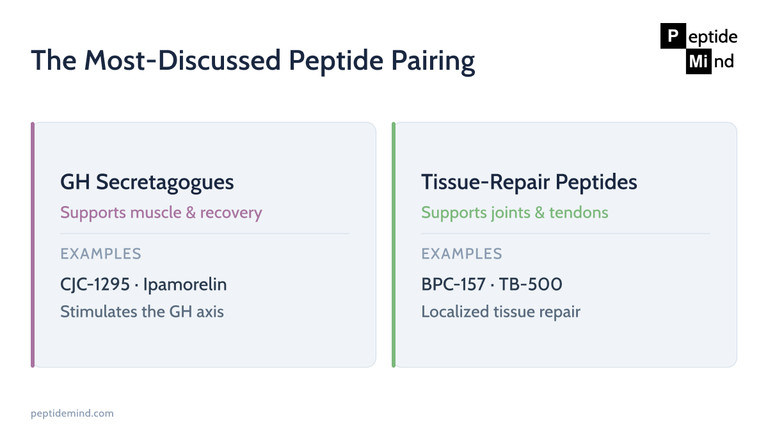
Bodybuilding and sports-medicine sources most often describe two categories of compounds being discussed together rather than any single peptide used in isolation. The first category, growth-hormone secretagogues such as CJC-1295 and Ipamorelin, is proposed to stimulate the pituitary gland's own growth-hormone release and downstream IGF-1 output, an approach tied to lean mass and recovery support in the research reviewed for this list.
The second category, tissue-repair peptides such as BPC-157 and TB-500, is studied instead for soft-tissue, tendon, and wound-healing effects linked to angiogenesis and cell migration rather than direct hormone stimulation. Because these two categories act through different proposed pathways, one aimed at the growth-hormone axis and the other at localized tissue repair, this pairing (a secretagogue alongside a repair peptide) is the combination most frequently described across bodybuilding peptide discussions, with the secretagogue framed as supporting muscle and recovery capacity and the repair peptide framed as supporting the joints and connective tissue that sustain harder training. A
ny decision about which compounds to combine, in what order, or for how long is a decision that belongs to a licensed medical provider, not to self-directed research.
Combining compounds multiplies the number of potential side effects at play, and stacking unapproved research chemicals without medical supervision carries meaningfully more risk than using a single compound on its own.
Legal Status, Safety, and Side Effects of Bodybuilding Peptides

None of the bodybuilding peptides on this list are over-the-counter products. Most are not FDA-approved for human use, some exist only through a prescription or compounding pharmacy tied to a different condition, and the rest are sold exclusively as unregulated "research chemicals" not intended for human consumption. All nine also appear on WADA's prohibited list for tested athletes.
Here is a condensed recap of where each compound currently stands:
CJC-1295: not FDA-approved; an FDA advisory committee rejected adding it to the approved compounding list in 2024, citing toxicity and an unresolved cardiac signal.
Ipamorelin: not FDA-approved; its compounding status has shifted repeatedly since 2023 and remains unsettled.
BPC-157: not FDA-approved; barred from pharmacy compounding under an FDA Category 2 listing since 2023.
TB-500: not FDA-approved; an FDA advisory review is scheduled for July 2026, with agency staff already recommending against approval.
IGF-1 LR3: not FDA-approved and chemically distinct from the FDA-approved pediatric drug Increlex.
Tesamorelin: FDA-approved as Egrifta and Egrifta WR, but only for visceral fat reduction in HIV-associated lipodystrophy; bodybuilding use is off-label.
Sermorelin: previously FDA-approved as Geref, discontinued in 2008 for business reasons rather than safety; available now only through compounding pharmacies.
Hexarelin: not FDA-approved and not available through licensed compounding pharmacies.
MK-677 (Ibutamoren): not FDA-approved; rejected for a compounding pathway in a 2024 FDA advisory vote.
Several risk patterns repeat across the research on these nine compounds:
Injection-site reactions such as pain, redness, or swelling, reported regardless of which compound is involved.
Hormonal and blood-sugar disruption, including elevated cortisol and prolactin, reduced insulin sensitivity, and hypoglycemia risk tied to IGF-1 receptor activity.
Fluid retention and joint discomfort, a recurring effect of growth-hormone-axis stimulation across the secretagogues in this list.
Contamination and unverified purity in compounds sold strictly as research chemicals, since no regulatory body checks their concentration or sterility.
Limited long-term human safety data for most compounds, with evidence generally drawn from short trials, animal studies, or research on a different indication.
Legitimate access to the compounds with an approved or off-label clinical pathway, tesamorelin and sermorelin among them, generally runs through a licensed prescriber or telehealth hormone clinic dispensing through a state-licensed compounding pharmacy. The rest of the list has no FDA-sanctioned compounding pathway and exists only within the research-chemical market.
Frequently Asked Questions About Peptides for Bodybuilding
What are the top peptides for bodybuilding right now?
CJC-1295, Ipamorelin, BPC-157, and TB-500 rank as the most frequently discussed options in this category across sports-medicine and hormone-clinic sources, occupying the top four spots on this list. CJC-1295 and Ipamorelin are growth-hormone secretagogues studied for lean mass and recovery, while BPC-157 and TB-500 are tissue-repair peptides linked to faster recovery from training strain. Their prevalence across research and clinical discussion, not proven superiority in trials, places them at the top of this ranking.
Do peptides work as well as anabolic steroids?
Most peptides on this list have a milder, slower, and less-studied effect on muscle mass than anabolic steroids. Growth-hormone secretagogues such as CJC-1295 and Ipamorelin raise GH and IGF-1 gradually through the pituitary, while steroids act directly on muscle tissue. Most peptide evidence measures hormone levels rather than strength or lean-mass gains. Peptides are a lower-potency, higher-uncertainty alternative, not an equivalent substitute.
Shop research peptides
Live pricing from our top-rated vendor. Prices update as vendor listings change.
Which BPC-157 product or form is considered best?
There is no single "best" BPC-157 product because BPC-157 is not an FDA-approved, standardized commercial drug; it is sold almost exclusively as an unregulated research chemical labeled not for human consumption. The FDA placed it on a Category 2 do-not-compound list in 2023 over impurity and immune-reaction concerns, so no licensed compounding pharmacy can prepare it either. Quality and legitimacy depend entirely on the seller, so no specific vendor or form should be treated as authoritative.
Does BPC-157 actually help with muscle growth?
BPC-157's research base centers on soft-tissue and gut-lining repair, not direct muscle hypertrophy. Animal studies from a Croatian research group attribute its effects to angiogenesis and fibroblast activity in healing tendons, ligaments, and muscle tissue, not to building new muscle protein. Only one small human trial exists, and no controlled research has tested BPC-157 for muscle growth specifically. Any muscle-related benefit is likely indirect, through faster recovery between sessions rather than a direct anabolic effect.
Are peptides for bodybuilding legal in the US?
Legal status varies by compound. Tesamorelin is FDA-approved as Egrifta for visceral fat reduction in HIV lipodystrophy, and Sermorelin held a past FDA approval before being discontinued for business reasons; both are now prescription-only through compounding pharmacies when used off-label for bodybuilding. The other seven have no FDA approval and exist only as unregulated research chemicals not meant for human use. None are approved for muscle growth, and all nine appear on WADA's prohibited list.
What are the side effects of peptides for bodybuilding?
The most frequently reported risks include injection-site pain, redness, or swelling; hormonal disruption such as elevated cortisol or prolactin; and blood-sugar or fluid-retention changes tied to growth-hormone and IGF-1 receptor activity. Because most of these peptides are sold as unregulated research chemicals, contamination and mislabeled potency add risk on top of the physiological effects. Long-term safety data remains limited for most of these compounds, so risks beyond short trials or animal studies are largely unknown.
Final Thoughts on the Best Peptides for Bodybuilding
CJC-1295 stands out as the strongest overall pick among the peptides covered here, backed by the clearest dose-dependent evidence for sustained growth hormone and IGF-1 elevation among the group, though even that evidence stops at a single Phase 1 trial rather than confirmed body-composition outcomes. Ipamorelin follows closely as a complementary option for lifters focused on lean mass and recovery, offering a more selective growth-hormone-secretagogue profile that avoids meaningful cortisol or prolactin spikes seen with older compounds in its class.
Neither compound, nor any other peptide on this list, substitutes for consistent resistance training, adequate protein intake, and sufficient recovery, which remain the primary drivers of muscle growth regardless of which peptide a person considers. Anyone weighing CJC-1295, Ipamorelin, or any other option discussed here should consult a licensed medical provider before pursuing any peptide protocol.
Disclaimer: This article is for informational purposes only, is not medical advice, and readers should consult a licensed healthcare provider before considering any of the compounds discussed here.
Add a comment
This will be publicly visible.
Your email address will not be published.
Your comment will be reviewed by an admin before it is published.