Best Peptides for Sleep: 5 Options Compared on Trial Data
The best peptides for sleep ranked by human trial data, not reputation. DSIP, ipamorelin, epitalon, selank and MK-677 compared on evidence, timing and dosing.
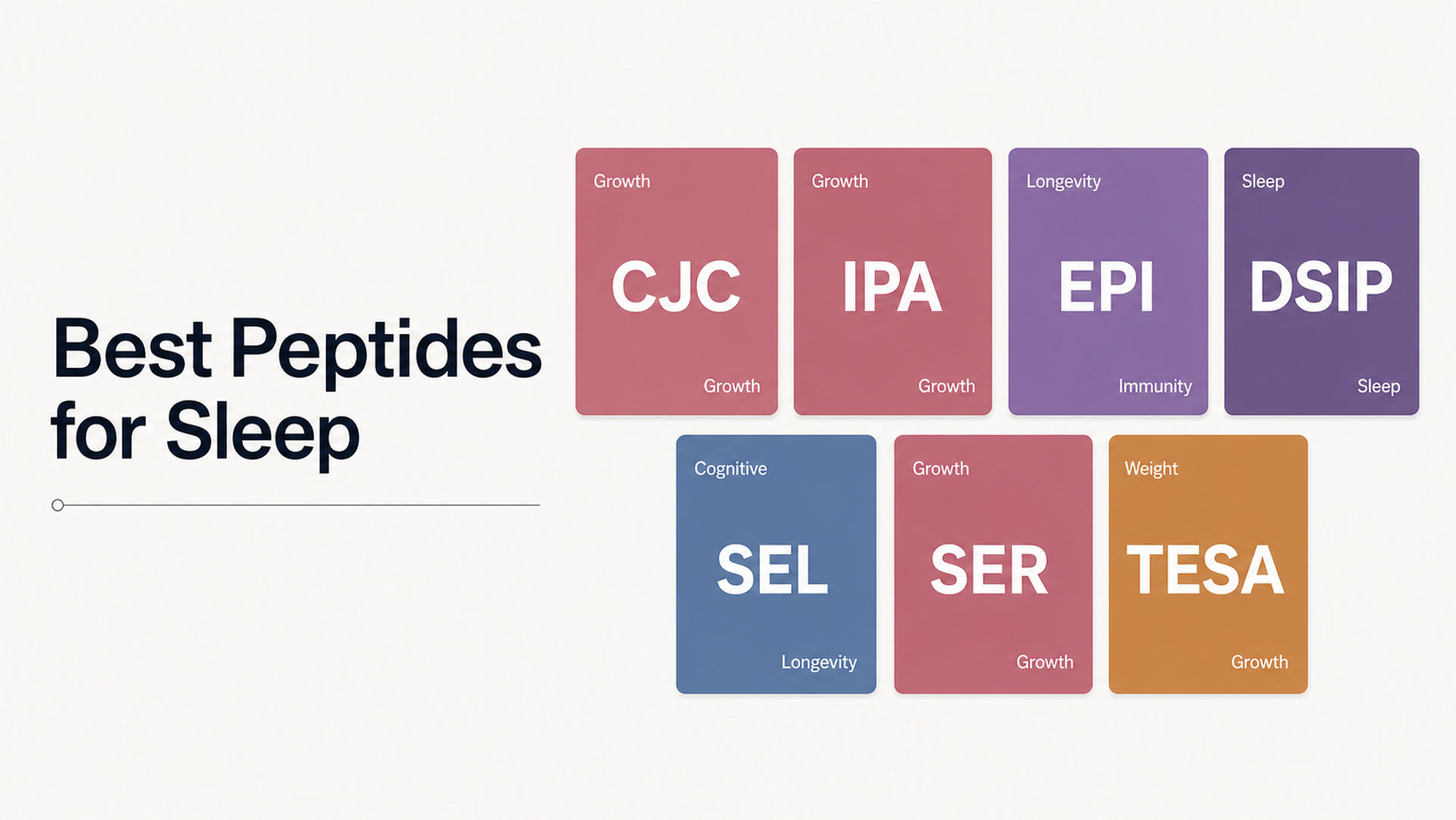

The best peptides for sleep are the growth hormone secretagogues, ipamorelin and MK-677, because they are the only compounds in this category with controlled human data showing measured changes in sleep architecture. The peptides with the loudest reputations for sleep, particularly DSIP, have the weakest human evidence behind them. This guide ranks each option by what the published trials actually measured, then covers timing, dosing and the compounds that make sleep worse.

Why Some Peptides Affect Sleep and Others Do Not
Peptides that influence sleep do it through one of three pathways: the growth hormone axis, the pineal and melatonin system, or the stress and anxiety circuits that keep people awake. Understanding which pathway a peptide acts on tells you whether it addresses your specific sleep problem or something unrelated to it.
The growth hormone pathway is the best documented of the three. Growth hormone has been observed for more than 30 years to be preferentially secreted during deep, slow-wave sleep, and the two events share a regulatory mechanism. In a 2004 review, Van Cauter and colleagues at the University of Chicago described how two populations of GHRH neurons appear to need simultaneous activity to stimulate slow-wave sleep and pituitary growth hormone release in coordinated fashion.
That link runs in both directions. Work at the University of Ulm found that on baseline nights, growth hormone secretory bursts closely tracked the appearance of slow-wave sleep, and delaying sleep onset until 2:00 AM delayed the growth hormone bursts with it.
The practical consequence is that a peptide which amplifies a growth hormone pulse at bedtime is acting on a real, mapped mechanism. A peptide marketed for sleep with no defined pathway is not.
The pineal pathway works differently. Melatonin output falls with age, and pineal peptides are studied for their ability to restore the nocturnal melatonin rhythm rather than to sedate. The third group, the anxiolytic peptides, do not touch sleep biology at all. They reduce the arousal that prevents sleep, which is a different target and matters only if anxiety is your actual problem.
Best Peptides for Sleep, Ranked by Evidence
Ranked by the strength of published human data on measured sleep outcomes, the order is MK-677, ipamorelin with CJC-1295, epitalon, selank, then DSIP. Reputation and evidence are close to inverted in this category, which is why the ranking below looks different from most lists.
Peptide | Pathway | Strongest human evidence |
|---|---|---|
MK-677 (ibutamoren) | GH secretagogue, oral | Polysomnography crossover trial, stage IV and REM increases |
Ipamorelin + CJC-1295 | GH secretagogue + GHRH analog | Mechanism established; no direct sleep trial |
Epitalon | Pineal, melatonin rhythm | Small Russian trials on melatonin acrophase |
Selank | Anxiolytic, GABAergic | Controlled anxiety trial vs medazepam, n=62 |
DSIP | Hypothalamic sleep centers | Two controlled insomnia trials, both negative |
GHRH analogs | GHRH class data only, no product-specific sleep trial |
1. MK-677 (Ibutamoren): The Strongest Human Sleep Data
MK-677 has the best sleep-architecture evidence of any compound in this category, from a polysomnography-controlled crossover trial published in Neuroendocrinology in 1997. It is an orally active growth hormone secretagogue rather than an injectable peptide, which is why most sleep peptide lists leave it out.

Copinschi and colleagues at the Free University of Brussels ran eight young adults through three 7-day treatment periods in a double-blind, placebo-controlled crossover design, with 5 mg, 25 mg and matching placebo taken at bedtime. Six older adults aged 65 to 71 completed two 14-day periods.
In young subjects, high-dose MK-677 produced an approximately 50% increase in the duration of stage IV sleep and a more than 20% increase in REM sleep compared to placebo. The frequency of deviations from normal sleep fell from 42% under placebo to 8% under high-dose MK-677. (Copinschi et al., Neuroendocrinology, 1997)
In the older group, MK-677 was associated with a nearly 50% increase in REM sleep and a decrease in REM latency. Both findings reached statistical significance.
The trade-off is real. MK-677 raises appetite and can cause water retention, and the 25 mg dose that produced these results is higher than what most people use. Morning grogginess is a common report at that dose.
2. Ipamorelin and CJC-1295 (No DAC): Best-Supported Mechanism
Ipamorelin paired with CJC-1295 without DAC is the most defensible injectable choice for sleep, on mechanism rather than on a direct sleep trial. Ipamorelin is a pentapeptide (Aib-His-D-2-Nal-D-Phe-Lys-NH2) developed at Novo Nordisk and first described by Raun and colleagues in 1998.
Shop research peptides
Live pricing from our top-rated vendor. Prices update as vendor listings change.
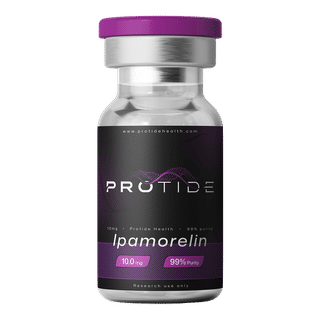

Its distinguishing feature matters specifically for sleep. Raun's team found that ipamorelin did not release ACTH or cortisol at levels different from GHRH stimulation, even at doses more than 200-fold higher than the ED50 for growth hormone release. GHRP-6 and GHRP-2, the older secretagogues in the same class, both raised cortisol. A compound that spikes cortisol at bedtime works against the outcome you want.
The CJC-1295 half of the pair is where timing becomes critical. In a 1996 study at the Medical University of Lubeck, Marshall and colleagues gave healthy volunteers 200 micrograms of GHRH intravenously either as four 50-microgram boluses through the night or as a continuous infusion. Episodic administration enhanced slow-wave sleep and REM sleep against placebo and reduced time spent awake, while the continuous infusion produced no significant sleep effect.
That result is the reason the no-DAC version is the one used for sleep. CJC-1295 with DAC produces a sustained elevation closer to the continuous infusion arm, which is the arm that did nothing. The difference between the GHRH analogs comes down to how sharply each one pulses.
No trial has tested the ipamorelin and CJC-1295 combination on polysomnography directly. The mechanism is well mapped; the specific product is not.
3. Epitalon: Circadian Rhythm and Melatonin
Epitalon is a synthetic tetrapeptide, Ala-Glu-Asp-Gly (AEDG), studied for restoring the nocturnal melatonin rhythm in older adults rather than for inducing sleep. It was synthesized to match the amino acid composition of epithalamin, a bovine pineal gland extract, and has been researched primarily by Khavinson's group at the St. Petersburg Institute of Bioregulation and Gerontology.

The relevant finding for sleep concerns rhythm rather than sedation. Korkushko and colleagues reported that in aging monkeys and people, night and average daily melatonin levels decline along with the amplitude of the circadian rhythm, and that pineal peptide preparations recover nocturnal release of endogenous melatonin. The effect was selective: subjects with pineal insufficiency saw night melatonin rise, while those with normal pineal function did not.
That selectivity is the useful detail. Epitalon appears to correct a deficit rather than push melatonin higher in people who do not have one. If you fall asleep fine but wake at 3:00 AM and your sleep timing has drifted with age, this is the pathway that matches. If you are 28 and cannot fall asleep because you are stressed, it is not.
Most of this work comes from Russian and Ukrainian groups and has not been replicated in Western trials. A 2025 review in the International Journal of Molecular Sciences noted that despite 25 years of study, the mechanisms behind epitalon's neuroendocrine effects remain incompletely characterized. Peptide Mind covers the compound in more depth in its guide to peptides studied for longevity.

4. Selank: When Anxiety Is the Sleep Problem
Selank is a synthetic heptapeptide (Thr-Lys-Pro-Arg-Pro-Gly-Pro) developed at the Institute of Molecular Genetics in Moscow, studied as an anxiolytic rather than as a sleep compound. It belongs on this list because a large share of insomnia is arousal-driven, and treating the arousal is often more effective than targeting sleep directly.
In a controlled trial of 62 patients with generalized anxiety disorder and neurasthenia, Zozulia and colleagues compared selank in 30 patients against medazepam, a benzodiazepine, in 32. The anxiolytic effects of both drugs were similar, with selank also showing antiasthenic and psychostimulant effects that medazepam did not produce.
That psychostimulant component is a genuine caution for anyone searching for peptides for sleep and anxiety. Selank reduces anxiety without sedating, which is why it is typically dosed intranasally during the day rather than at bedtime. Taken late, some users report it delays sleep onset rather than helping it. Selank's mechanism and its relationship to the other Russian nootropic peptides is covered in Peptide Mind's Semax vs Selank comparison.
5. DSIP: The Reputation Outruns the Evidence
DSIP (delta sleep-inducing peptide) is the compound most strongly associated with sleep and the one with the weakest human results. It is a nonapeptide isolated in the 1970s from the cerebral venous blood of rabbits in induced slow-wave sleep, and its name has carried its reputation ever since.
Two controlled trials tested it in chronic insomniacs, and both reached the same conclusion. Bes and colleagues at the University of Amsterdam studied 16 chronic insomniac patients in a double-blind, matched-pairs parallel-groups design, giving 25 nmol/kg DSIP intravenously before three consecutive nights.
Shop research peptides
Live pricing from our top-rated vendor. Prices update as vendor listings change.
Sleep efficiency was higher and sleep latency shorter with DSIP than placebo, but the statistically significant effects were weak and in part could be due to an incidental change in the placebo group. Subjective sleep quality showed no change. The authors concluded that short-term treatment of chronic insomnia with DSIP is not likely to be of major therapeutic benefit. (Bes et al., Neuropsychobiology, 1992)
Monti and colleagues found the same pattern five years earlier using the same 25 nmol/kg dose in a double-blind crossover design. Nocturnal awakenings, NREM sleep latency and total waking time all decreased under DSIP, but no significant differences were found against baseline or placebo nights. Where total sleep time rose, the increase came from stage 2. Slow wave sleep, the stage the peptide is named for, was not modified.
This is the finding that almost no article on sleep peptides reports. DSIP did not increase delta sleep in the trials that measured it. Monti's team concluded that the sleep improvement was of little clinical significance.
None of that makes DSIP useless, and the stress-modulating and analgesic research on it is a separate question worth its own treatment. It does mean that if you are choosing an injectable peptide for sleep based on evidence, DSIP is not the leading candidate its name suggests. Peptide Mind's full DSIP research guide covers the wider literature, including the preclinical work.
6. Sermorelin and Tesamorelin: The GHRH Analogs

Sermorelin and tesamorelin act on the same GHRH receptor that produced the slow-wave sleep effect in Marshall's 1996 study, but neither has been tested on sleep outcomes directly. Tesamorelin is the only FDA-approved compound of the two, cleared for HIV-associated lipodystrophy rather than for anything sleep-related.
Both are reasonable on mechanism and both are frequently prescribed in a wellness context for sleep. The honest framing is that the class evidence is good and the product-specific evidence does not exist. Sermorelin has the shorter half-life of the two, which makes it closer in profile to the episodic dosing that worked in the GHRH trial.
Peptides for Sleep Quality vs Sleep and Recovery
Sleep quality and recovery are different endpoints, and the peptide that serves one may do nothing for the other. Sleep quality means measured architecture: time in stage III and IV slow-wave sleep, REM percentage, sleep efficiency and the number of awakenings. Recovery means tissue repair and adaptation, most of which is downstream of the growth hormone released during deep sleep.
The growth hormone secretagogues are the only group that plausibly addresses both, because deepening slow-wave sleep and raising nocturnal growth hormone are the same event. That is what makes MK-677 and the ipamorelin pairing the reasonable answer for anyone searching best peptides for sleep and recovery.
Epitalon and selank do not touch recovery. The repair peptides that people combine with them, BPC-157 and TB-500, do not touch sleep. Combining a sleep peptide and a repair peptide is a legitimate approach, but it is two mechanisms running in parallel rather than one compound doing both. Peptide Mind's guide to peptide stacking by goal covers how those combinations are typically structured.
Timing, Dosing and Protocol Considerations
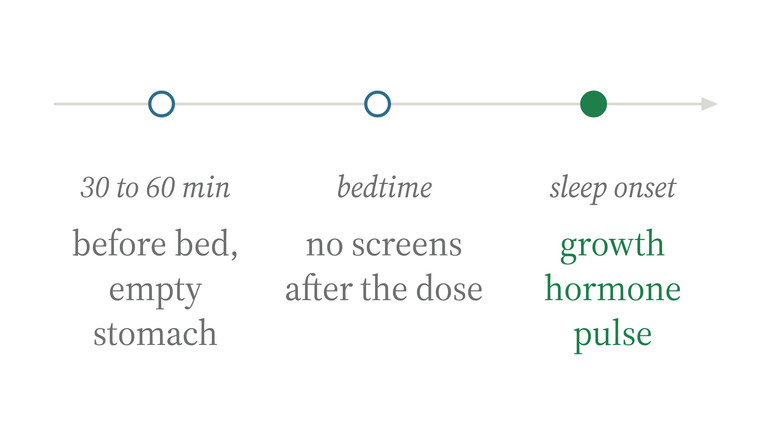
Timing matters more for sleep peptides than for any other category, because the target is a growth hormone pulse that occurs in a narrow window after sleep onset. Getting the timing wrong wastes the dose.
Peptide | Typical research or protocol timing | Route |
|---|---|---|
Ipamorelin + CJC-1295 no DAC | 30 to 60 minutes before bed, empty stomach | Subcutaneous |
MK-677 | At bedtime, as dosed in the 1997 trial | Oral |
Epitalon | Evening, in short cycles of 10 to 20 days | Subcutaneous |
Selank | Daytime, not before bed | Intranasal |
DSIP | Evening; trials used 25 nmol/kg intravenously | Subcutaneous |
Two rules apply across the group. Food, and carbohydrate in particular, blunts the growth hormone response to a secretagogue, which is why the pre-bed dose is taken on an empty stomach. And the pulse has to line up with sleep onset, which means a dose taken and then followed by three hours of screen time is a dose largely wasted.
Reconstitution accuracy is the other common failure point. A 5 mg vial reconstituted with 2 mL of bacteriostatic water gives a different unit measurement than the same vial with 3 mL, and the error compounds across a protocol. Peptide Mind's peptide dosage calculator handles that math directly, and the first-time peptide guide covers reconstitution and storage step by step.
Peptides That Can Make Sleep Worse
Several compounds in the growth hormone category disrupt sleep rather than improve it, and the reasons are predictable from their mechanisms.
Shop research peptides
Live pricing from our top-rated vendor. Prices update as vendor listings change.
CJC-1295 with DAC. The DAC modification extends the half-life to roughly a week, producing a sustained elevation rather than a pulse. That is the continuous-infusion pattern that showed no sleep benefit in Marshall's comparison. Users frequently report a flat, hazy quality to sleep on the DAC version.
GHRP-6 and GHRP-2. Both raise cortisol and prolactin alongside growth hormone, which is the specific problem ipamorelin was designed to solve. GHRP-6 also drives strong hunger, which is not compatible with staying asleep.
MK-677 at high doses. The same 25 mg dose that produced the stage IV increase also produces the most reported morning grogginess and water retention. Many people find that a lower dose gives most of the sleep benefit with less of the hangover.
Selank taken late. Its psychostimulant component makes evening dosing counterproductive for some people despite the anxiolytic effect.
Any injectable taken too close to lights-out. Subcutaneous injection is a minor stressor. Most protocols allow 30 to 60 minutes between the dose and getting into bed for a reason.
Practical Considerations
Purity is the variable that most often explains why a protocol produces nothing. None of the compounds discussed here except tesamorelin are FDA-approved for any sleep indication, and all of them are sold for research use only, which means quality control varies substantially between suppliers. A certificate of analysis from an independent lab, with HPLC and mass spectrometry results tied to the specific batch number on the vial, is the minimum standard.
Storage is the second variable. Lyophilized peptides are stable at room temperature for shipping but belong in a freezer for long-term storage. Once reconstituted, most are refrigerated and used within 28 days, which is also the shelf life of the bacteriostatic water doing the dissolving.
The third consideration is diagnostic rather than logistical. Poor sleep is often a symptom of something specific: untreated sleep apnea, a thyroid problem, perimenopausal hormone shifts, or an evening caffeine and alcohol pattern. No peptide corrects a mechanical airway obstruction. Women navigating sleep disruption alongside other symptoms may find Peptide Mind's guide to peptides studied for perimenopause a closer fit for what is actually driving the problem.
Frequently Asked Questions
Do peptides help with sleep?
Some do, with measured effects in controlled trials. MK-677 produced roughly a 50% increase in stage IV sleep and more than a 20% increase in REM in a 1997 polysomnography study. Growth hormone secretagogues have the strongest data. DSIP, despite its name and reputation, failed to increase slow-wave sleep in the two controlled insomnia trials that measured it.
Which peptide is best for sleep?
By evidence, MK-677 has the strongest human sleep-architecture data, and ipamorelin paired with CJC-1295 without DAC has the best-supported mechanism among injectables. The right answer depends on the problem. Falling asleep, staying asleep, anxiety-driven arousal and age-related circadian drift each point to a different pathway.
Can peptides cause insomnia?
Yes. CJC-1295 with DAC produces sustained growth hormone elevation rather than a pulse and is commonly reported to flatten sleep quality. GHRP-6 and GHRP-2 raise cortisol, which works against sleep onset. Selank has a psychostimulant component that makes evening dosing counterproductive for some people.
What is the best injectable peptide for sleep?
Ipamorelin combined with CJC-1295 without DAC is the strongest injectable option on mechanism, because ipamorelin raises growth hormone without raising cortisol and the no-DAC version delivers the sharp pulse that enhanced slow-wave sleep in GHRH research. No trial has tested that specific combination on polysomnography.
Are peptides for sleep FDA approved?
No. No peptide is FDA-approved for insomnia or any sleep indication. Tesamorelin is FDA-approved for HIV-associated lipodystrophy, not for sleep. Every other compound covered here is sold for research use only and has no approved therapeutic indication in the United States.
Shop research peptides
Live pricing from our top-rated vendor. Prices update as vendor listings change.
Do peptides make you tired during the day?
MK-677 at higher doses is the most common cause of morning grogginess in this category, alongside water retention. A dose taken too late relative to sleep onset can also shift the growth hormone pulse into the early morning, producing a groggy wake-up. Lowering the dose usually resolves both.
Should you take peptides in the morning or at night?
Growth hormone secretagogues intended for sleep are taken 30 to 60 minutes before bed on an empty stomach, so the amplified pulse aligns with the natural surge that follows sleep onset. Anxiolytic peptides like selank are taken during the day. Fat-loss and repair peptides follow their own schedules unrelated to sleep.
Choosing a Sleep Peptide Based on Your Actual Problem
The best peptides for sleep are not interchangeable, and the ranking changes depending on whether your problem is sleep depth, circadian timing or anxiety-driven arousal. Match the pathway to the symptom, weigh the human evidence honestly, and treat the compounds with the loudest reputations most skeptically. Explore the research behind each compound in Peptide Mind's ipamorelin research guide and DSIP research guide.

References
Copinschi G, Leproult R, Van Onderbergen A, et al. "Prolonged oral treatment with MK-677, a novel growth hormone secretagogue, improves sleep quality in man." Neuroendocrinology, 1997. PubMed 9349662.
Marshall L, Mölle M, Böschen G, Steiger A, Fehm HL, Born J. "Greater efficacy of episodic than continuous growth hormone-releasing hormone (GHRH) administration in promoting slow-wave sleep (SWS)." The Journal of Clinical Endocrinology & Metabolism, 1996. PubMed 8772566.
Van Cauter E, Latta F, Nedeltcheva A, et al. "Reciprocal interactions between the GH axis and sleep." Growth Hormone & IGF Research, 2004. PubMed 15135771.
Raun K, Hansen BS, Johansen NL, et al. "Ipamorelin, the first selective growth hormone secretagogue." European Journal of Endocrinology, 1998. PubMed 9849822.
Bes F, Hofman W, Schuur J, Van Boxtel C. "Effects of delta sleep-inducing peptide on sleep of chronic insomniac patients. A double-blind study." Neuropsychobiology, 1992. PubMed 1299794.
Monti JM, Debellis J, Alterwain P, Pellejero T, Monti D. "Study of delta sleep-inducing peptide efficacy in improving sleep on short-term administration to chronic insomniacs." International Journal of Clinical Pharmacology Research, 1987. PubMed 3583493.
Korkushko OV, Lapin BA, Goncharova ND, Khavinson VKh, et al. "Normalizing effect of the pineal gland peptides on the daily melatonin rhythm in old monkeys and elderly people." Advances in Gerontology, 2007. PubMed 17969590.
Zozulia AA, Neznamov GG, Siuniakov TS, et al. "Efficacy and possible mechanisms of action of a new peptide anxiolytic selank in the therapy of generalized anxiety disorders and neurasthenia." Zhurnal Nevrologii i Psikhiatrii imeni S.S. Korsakova, 2008. PubMed 18454096.
Disclaimer: The information on Peptide Mind is for educational purposes only and is not a substitute for professional medical advice, diagnosis, or treatment. The peptides discussed are unapproved research chemicals for laboratory and research use only, not for human consumption. These statements have not been evaluated by the FDA, and nothing on this site is intended to diagnose, treat, cure, or prevent any disease. By accessing this site, you confirm you are 21 or older and agree to our Terms of Service.
Add a comment
This will be publicly visible.
Your email address will not be published.
Your comment will be reviewed by an admin before it is published.