TB-500: A Beginner's Research Guide (Benefits & Dosage)
10 mins read
TB-500 is a synthetic peptide studied for tissue repair and wound healing. A beginner's research guide to its mechanism, benefits, dosage, and safety.
Research updates, peptide guides, and science-backed insights to help you understand how peptides work and what the evidence says.
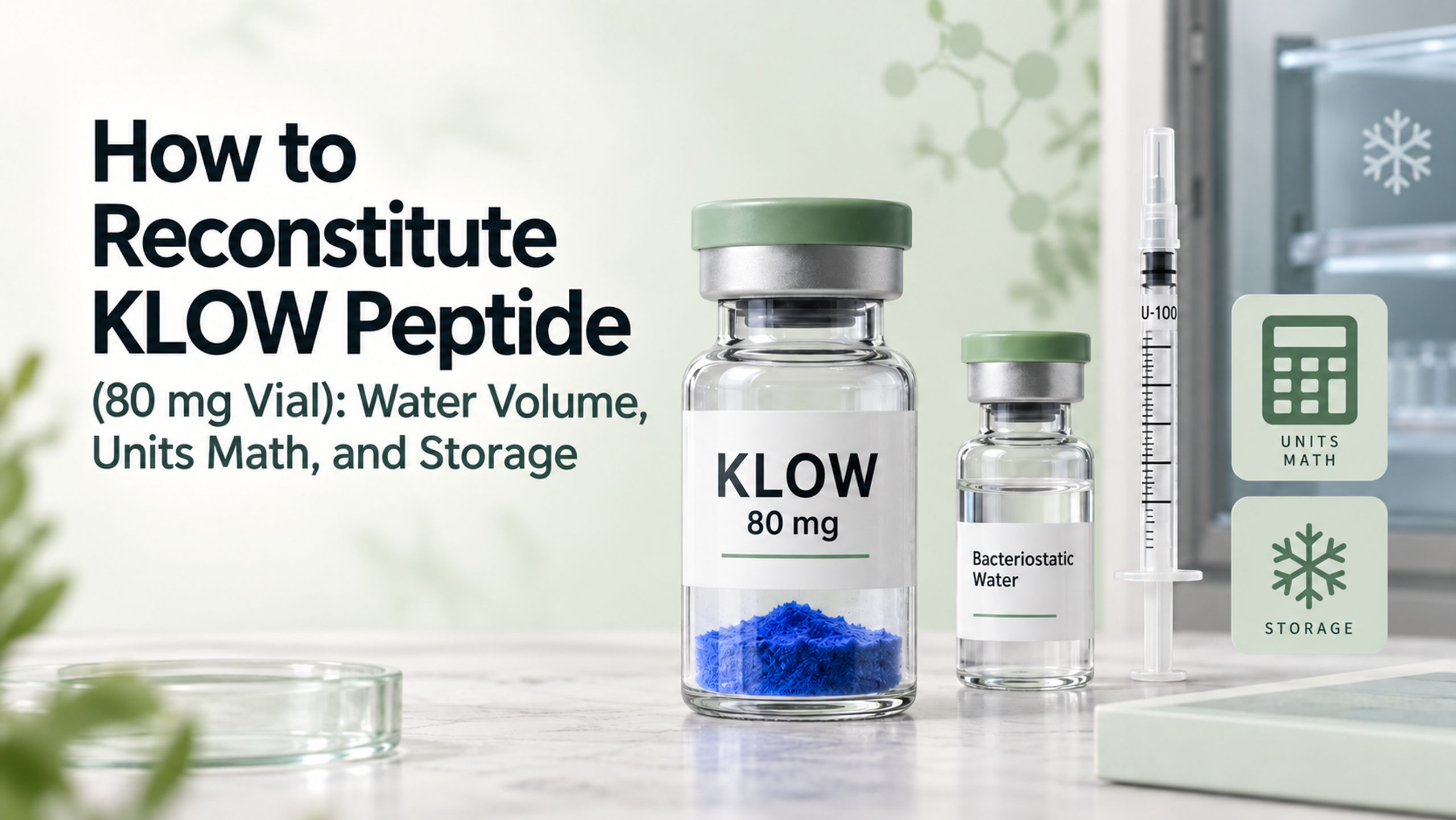
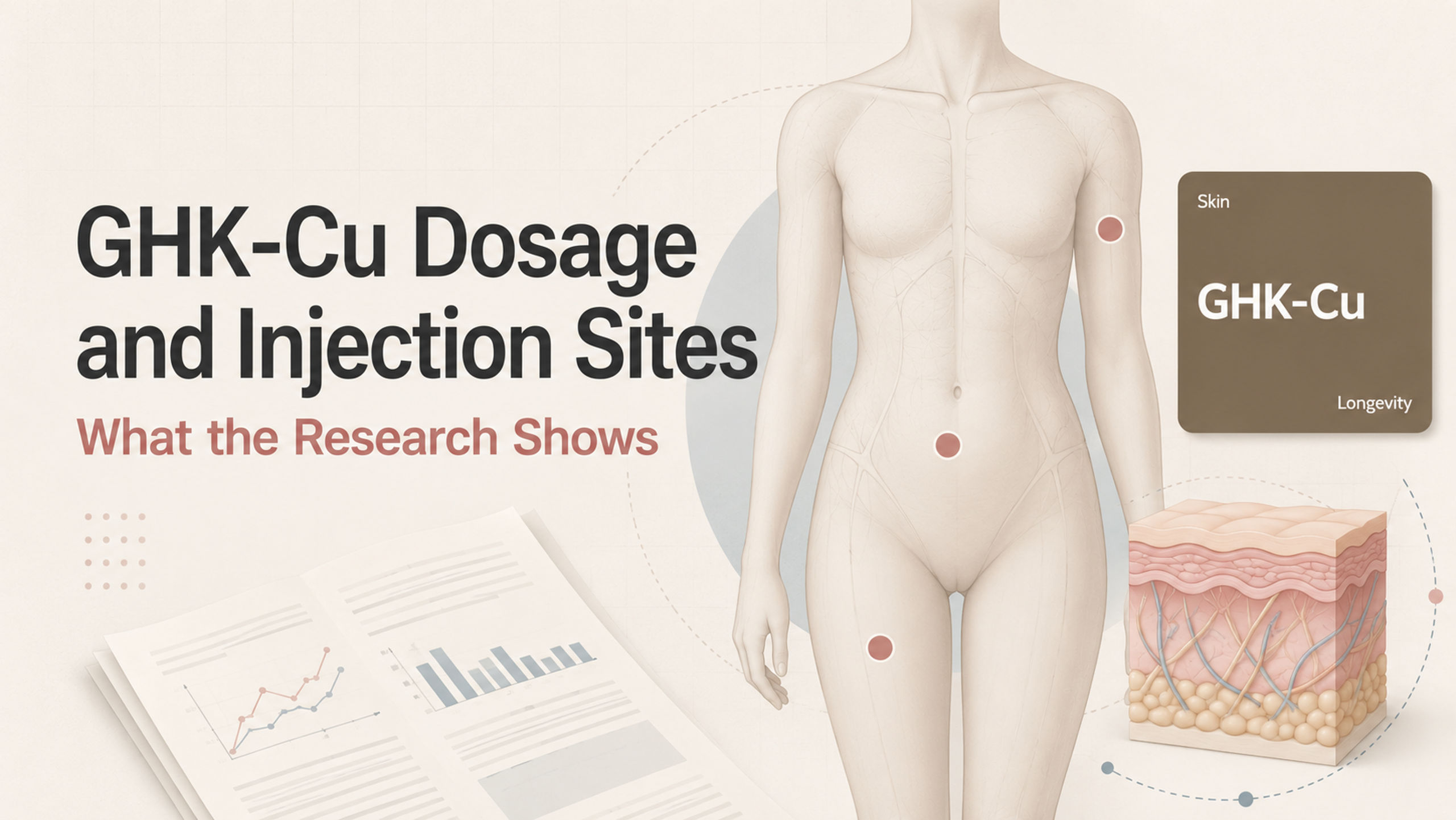
How to reconstitute KLOW peptide: 2, 2.5 or 3 mL of bacteriostatic water for the 80 mg vial, the syringe units for each, why it is blue, and how long it keeps.
Show more
Peptide Mind Research Team
September 4th, 2026
TB-500 is a synthetic peptide studied for tissue repair and wound healing. A beginner's research guide to its mechanism, benefits, dosage, and safety.

Compare 8 trusted BPC-157 peptide for sale vendors ranked by purity, COA testing, pricing, and shipping for RUO buyers in 2026.
8 Best BPC-157 Vendors: Where to Buy BPC-157 Peptide for Sale in 2026
The 10 most popular peptides people take in 2026, sorted by category: healing, weight loss, growth hormone, skin, cognition, and sexual health.
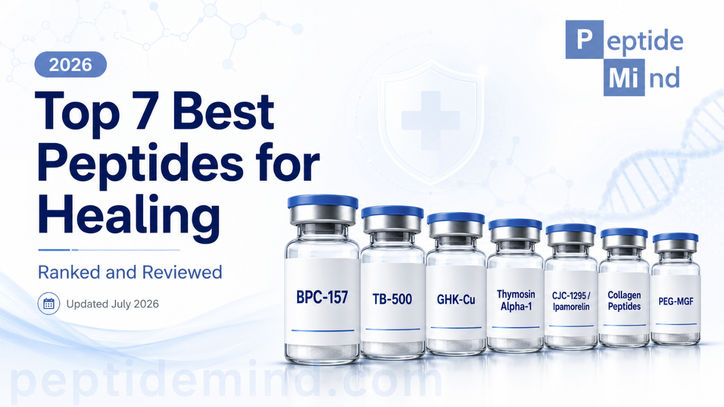
The best peptides for healing in 2026: BPC-157, TB-500, GHK-Cu, and more, ranked by mechanism, safety, and recovery use case.
Top 7 Best Peptides for Healing in 2026 (Ranked and Reviewed)
What KLOW peptide actually does: benefits of GHK-Cu, BPC-157, TB-500 and KPV graded by evidence, plus a results timeline and side effects.

Glow peptide benefits graded against the research: what GHK-Cu, BPC-157 and TB-500 actually do for skin, pain, gut and energy, plus side effects.
Glow Peptide Benefits: What It Does for Skin, Healing & More

Where to buy KPV peptide in 2026: eight vendors ranked on batch COA purity, certificate age and scope, and price, every certificate pulled and read.
KPV peptide benefits graded by evidence: gut inflammation, skin, wound healing and antimicrobial data, with the actual study numbers, dosages and 2026 FDA status.
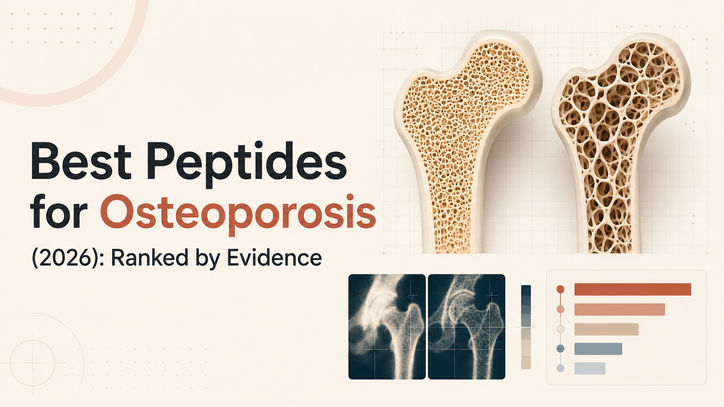
Peptides for osteoporosis ranked by human trial data. Teriparatide, abaloparatide, collagen peptides, calcitonin and GH secretagogues compared on real BMD numbers.
Best Peptides for Osteoporosis: 6 Options and the Bone Density Data

Peptides for eczema, graded by evidence. Topical peptides with human trial data, injectable research peptides like KPV and GHK-Cu, and what community reports say.
Peptides for Eczema: Research, Topical Options, and Community Reports
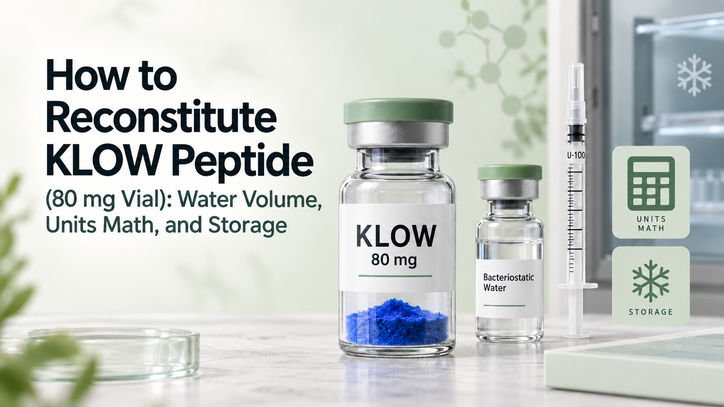
How to reconstitute KLOW peptide: 2, 2.5 or 3 mL of bacteriostatic water for the 80 mg vial, the syringe units for each, why it is blue, and how long it keeps.
How to Reconstitute KLOW Peptide (80 mg Vial): Water Volume, Units Math, and Storage
A peptide dosage calculator is a free tool that converts your vial size, bacteriostatic water volume, and target dose into an exact syringe draw volume. Instead of doing the reconstitution math by hand, you enter three inputs and instantly get the concentration of your solution and how many milliliters or syringe units to draw. This calculator works for single peptide compounds and multi-peptide blends.
To calculate your peptide dose, divide the total peptide content of your vial in micrograms by the volume of bacteriostatic water you added in milliliters. This gives you your solution concentration in mcg/mL. Then divide your target dose by that concentration to get your draw volume. For example, a 5mg (5,000 mcg) vial reconstituted with 2mL of BAC water gives a concentration of 2,500 mcg/mL. A 250 mcg dose would require drawing 0.1mL. This calculator automates all of those steps instantly.
Most people add 2mL to 3mL of bacteriostatic water per vial, but the right amount depends on the dose you want to draw and the syringe size you are using. Adding 1mL to a 5mg vial gives you a concentration of 5,000 mcg/mL, making each dose very small in volume. Adding 2mL gives you 2,500 mcg/mL, which is easier to measure on a standard insulin syringe. A general guideline is to choose a volume that puts your typical dose somewhere between 10 and 30 units on a U-100 syringe. Use the calculator above to test different water volumes and find what works for your dose.
Both are made of amino acids, but peptides are much smaller than proteins. Because of their tiny size, peptides can act like tiny messengers in the body, sending specific signals to your cells to tell them exactly what to do.