How to Reconstitute KLOW Peptide (80 mg Vial): Water Volume, Units Math, and Storage
How to reconstitute KLOW peptide: 2, 2.5 or 3 mL of bacteriostatic water for the 80 mg vial, the syringe units for each, why it is blue, and how long it keeps.
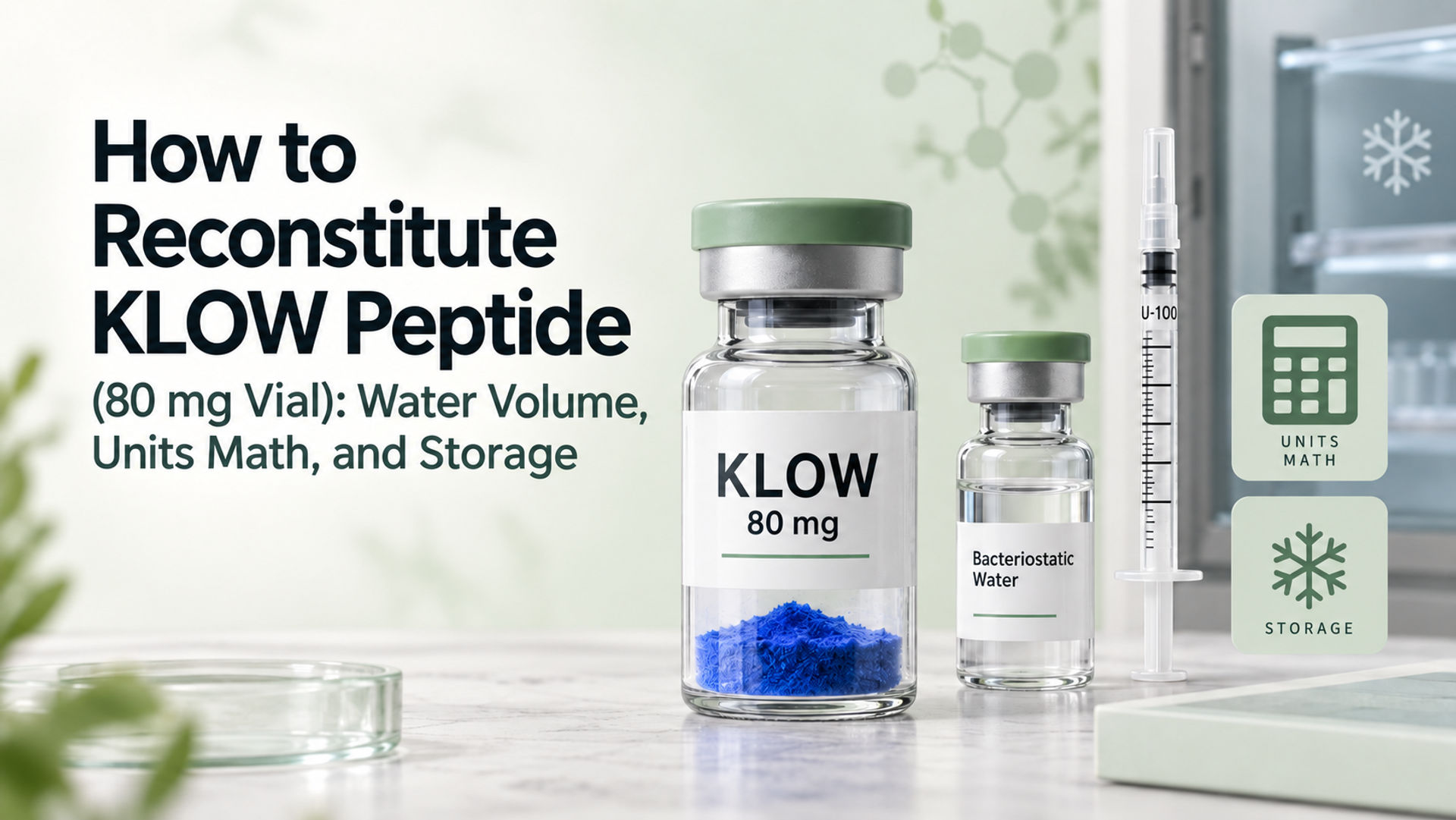

Here is how to reconstitute KLOW peptide: add 2 to 3 mL of bacteriostatic water to the 80 mg KLOW vial, let it run down the glass rather than onto the powder, and swirl until the solution turns clear blue. With 3 mL, every 10 units on an insulin syringe holds 1.67 mg of GHK-Cu and 333 mcg each of BPC-157, TB-500, and KPV.

How to Reconstitute KLOW Peptide: Know the Vial Before Adding Water
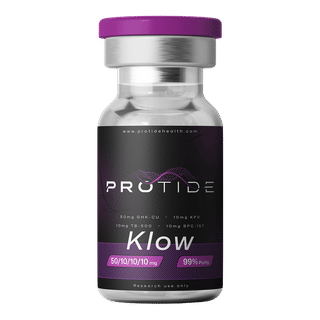
KLOW is a four-peptide research blend, so reconstituting it means dissolving four compounds at once and dosing by one of them. The standard 80 mg vial holds 50 mg GHK-Cu, 10 mg BPC-157, 10 mg TB-500, and 10 mg KPV as one freeze-dried powder. Because the ratio is fixed, the water volume you choose sets the concentration of all four at once.
GHK-Cu (glycyl-L-histidyl-L-lysine bound to copper) is the largest fraction and the reason the finished solution is blue. BPC-157 is a 15-amino-acid gastric peptide, TB-500 is a synthetic fragment of thymosin beta-4, and KPV is a three-amino-acid fragment of alpha-MSH. The KLOW peptide guide covers what each has been studied for, and the general guide on how to reconstitute peptides covers the technique for any single-compound vial.
Supplies
One 80 mg KLOW vial (check the certificate of analysis, since a few suppliers use a different ratio)
Bacteriostatic water
One 3 mL syringe with an 18 to 21 gauge needle to transfer the water
U-100 insulin syringes (29 to 31 gauge) for drawing doses
Alcohol swabs
Sharps container (optional)
Use bacteriostatic water, not plain sterile water: its 0.9 percent benzyl alcohol holds bacterial growth down while the vial is punctured repeatedly over several weeks.
Step 1: Choose the Water Volume (2, 2.5, or 3 mL)
The water volume does not change how much peptide is in the vial; it changes how many units you draw for a given amount and how concentrated each injection is. For an 80 mg KLOW vial, the three volumes in use are 2, 2.5, and 3 mL of bacteriostatic water. The KLOW reconstitution and dosage chart below shows what each 10-unit (0.1 mL) draw contains.
Water added | GHK-Cu per 10 units | BPC-157, TB-500, KPV per 10 units (each) |
|---|---|---|
2 mL (40 mg/mL) | 2.5 mg | 500 mcg |
2.5 mL (32 mg/mL) | 2 mg | 400 mcg |
3 mL (26.7 mg/mL) | 1.67 mg | 333 mcg |

Each volume has a reason to pick it. Choose 2.5 mL to land the KLOW protocol page's reference dose, 3.2 mg of blend with 2 mg of GHK-Cu and 400 mcg of each other peptide, on exactly 10 units. Choose 3 mL for the most dilute solution and the most draws per vial (30 at 10 units), with 12 units delivering that same 2 mg. Choose 2 mL only for the smallest injection volume, since more dilute solutions are consistently reported to sting less. Check the vial first: 3 mL fills a standard 3 mL vial to the stopper.
Community threads lean toward 3 mL. In an r/Peptidesource reconstitution thread, the most upvoted reply (17 votes) walks through the 3 mL math, and another user reports 2.5 mL. In a separate r/Peptides thread, the one 2 mL user wishes they had used 3 mL, while two users on 3 mL report little or no stinging.
Step 2: Prepare the Vial, the Water, and the Syringe
Take the KLOW vial out of the fridge and let it sit for 10 to 15 minutes before opening it, so cold powder does not pull in condensation. Peptide handling guidelines published in Clinical Chemistry state that lyophilized powder should reach room temperature before reconstitution for this reason.
Flip the plastic caps off the KLOW vial and the bacteriostatic water bottle.
Wipe both rubber stoppers with an alcohol swab and let them dry for 30 seconds.
Draw 3 mL (or your chosen volume) of water into the 3 mL syringe and push out the air bubble.
Step 3: Run the Water Down the Vial Wall
Insert the needle through the KLOW stopper at an angle so the tip points at the inside wall of the vial, not the powder. Push the plunger slowly, over 20 to 30 seconds, letting the water run down the glass and pool under the powder cake. Many vials are sealed under vacuum, so if the water jumps in on its own, let it finish.
The reason for the slow pour is foam. Peptides and proteins denature at the air-water interface, and a review in The AAPS Journal notes that transient interfacial exposure combined with mechanical disruption such as agitation is particularly conducive to aggregation. Water hitting dry powder makes bubbles, and bubbles are that interface.
Shop research peptides
Live pricing from our top-rated vendor. Prices update as vendor listings change.
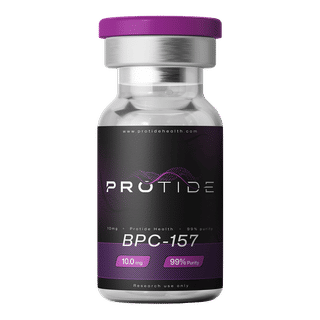
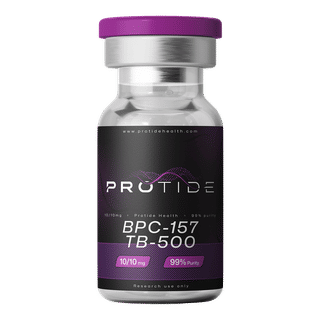
A single fast fill is rarely fatal, though. When a user in an r/Peptidesource thread panicked after the vacuum slammed water into a GHK-Cu, BPC-157, and TB-500 vial, the top reply (18 upvotes) said a quick hit of water is usually not enough to denature these peptides.
Step 4: Swirl, Check the Color, and Label the Vial
Roll the vial between your palms or swirl it gently for 30 to 60 seconds until no powder remains. Do not shake it. A correctly reconstituted KLOW vial is a clear, uniformly blue solution with nothing floating in it. Label it with the date.
Why KLOW is blue
The color comes from copper. Pickart and colleagues describe in BioMed Research International how GHK functions as a complex with copper 2+. Copper(II) complexes absorb red light and appear blue, and since GHK-Cu is 50 of the 80 mg, the tint is strong. A colorless KLOW solution is the warning sign; a blue one is expected.
What cloudiness means
Cloudiness, particles, or a shift toward gray or brown means the vial should not be used. None of the four components is fragile in neutral water: a preformulation study in Pharmaceutical Development and Technology found GHK stable in water and pH 4.5 to 7.4 buffers for at least two weeks at 60°C, and BPC-157 is described in Frontiers in Pharmacology as stable in human gastric juice for more than 24 hours. Persistent cloudiness points to the powder or the water, not to handling.
Step 5: Work Out the Draw in Units

Dose KLOW by its GHK-Cu content, not by the 80 mg total. On a U-100 insulin syringe, 100 units is 1 mL, so 10 units is 0.1 mL. GHK-Cu sits at 25 mg/mL at 2 mL, 20 mg/mL at 2.5 mL, and 16.67 mg/mL at 3 mL, which gives these reference points.
Water added | Units for 1 mg GHK-Cu | Units for 2 mg GHK-Cu |
|---|---|---|
2 mL | 4 units | 8 units |
2.5 mL | 5 units | 10 units |
3 mL | 6 units | 12 units |
The peptide blend calculator has a KLOW preset that shows all four amounts for any volume and target.
At 3 mL of bacteriostatic water, a 10-unit draw of KLOW contains 1.67 mg GHK-Cu and 333 mcg each of BPC-157, TB-500, and KPV, derived from the 50/10/10/10 mg vial ratio; at 2.5 mL the same draw contains 2 mg GHK-Cu and 400 mcg of each, and at 2 mL, 2.5 mg and 500 mcg.
The most common math error in community threads is treating the vial as 80 mg of one substance. In an r/Peptides reconstitution thread, a user asked how to draw a "1 mg" starting amount; one reply worked it out as 4 units from the 80 mg total, and the correction pointed out that 1 mg of GHK-Cu at 3 mL is 6 units and 2 mg is 12. As the 17-upvote reply in the r/Peptidesource thread puts it, you cannot draw 1 mg of KLOW, only 1 mg of GHK-Cu plus whatever rides along.
Step 6: Store the Reconstituted Vial
Store reconstituted KLOW in the refrigerator at 2 to 8°C and use it within 28 days. That window is the bacteriostatic water's preservative limit, not a measured peptide degradation point. Do not freeze a mixed vial: the Clinical Chemistry guidelines note that oxidation of susceptible residues is accelerated during freeze-thaw cycles. Unopened powder keeps for months at minus 20°C or below; the peptide storage guide covers both states.

Reconstituted KLOW shelf life is where published guidance and community practice diverge most. In an r/Peptides thread on Glow and Klow shelf life, users report finishing vials at 10 to 16 weeks with no visible change, while conceding that everyone is guessing. No study has measured KLOW potency over time in solution. A 3 mL vial drawn at 10 to 12 units daily is empty in 25 to 30 days anyway.
Common Mistakes and How to Avoid Them
Each mistake below comes from a linked thread, with the fix from the same discussion.
Shop research peptides
Live pricing from our top-rated vendor. Prices update as vendor listings change.
Dosing by total milligrams. Starting amounts like "1 mg of KLOW" get corrected in the threads above. Anchor every draw to GHK-Cu.
Choosing 2 mL for round numbers, then regretting it. The 2 mL user in the r/Peptides thread called the injections "copper bee stings." You cannot un-concentrate a vial, so pick 2.5 or 3 mL from the start.
Adding extra water in the syringe to soften the sting. One user added 0.17 mL of bacteriostatic water to each draw; the most upvoted reply called it pointless.
Injecting cold solution fast into the abdomen. In an r/Peptidesource tips thread, the top fixes were half-inch needles (20 upvotes), the upper glute instead of the stomach (17 upvotes), a room-temperature syringe, and a slow push.
Reading no sting as a fake vial. A user who felt nothing at 3 mL asked whether the product was counterfeit; several others on tested, blue vials reported the same. Blue color plus a certificate of analysis tells you more than pain does.
Frequently Asked Questions
How much bacteriostatic water do you add to KLOW 80 mg?
For most people, how to reconstitute KLOW peptide 80 mg means 3 mL of bacteriostatic water, which gives 26.7 mg/mL total and 1.67 mg of GHK-Cu per 10 units. Use 2.5 mL to land 2 mg of GHK-Cu on exactly 10 units. The 2 mL option gives 2.5 mg per 10 units but stings more by most community accounts.
Does reconstituted KLOW need to be refrigerated?
Yes. Once bacteriostatic water is added, KLOW belongs in the refrigerator at 2 to 8°C and should never be frozen, since freeze-thaw cycles accelerate oxidation of susceptible amino acids. Only the mixed solution is time-limited.
How long does reconstituted KLOW last?
The standard answer is 28 days in the fridge, the preservative window for bacteriostatic water. Community reports on r/Peptides describe vials used at 10 to 16 weeks without visible change, but no study has measured KLOW potency over time.
Why is KLOW peptide blue?
KLOW is blue because of the copper in GHK-Cu, which makes up 50 of the vial's 80 mg. Copper(II) complexes absorb red light and appear blue, so clear blue is the expected result. A colorless or brownish vial is the abnormal case.
Why does KLOW sting when injected?
Stinging is reported with the concentrated copper peptide solution rather than any single ingredient; threads on injection comfort consistently link less sting to a more dilute reconstitution (2.5 or 3 mL rather than 2), a room-temperature syringe, a slow push, and the upper glute or thigh instead of the abdomen.
The Water Volume Sets Everything Else
KLOW peptide reconstitution is a water-volume decision first, and how to reconstitute KLOW peptide well follows from it: 3 mL means 6 units per milligram of GHK-Cu, 2.5 mL means 5, 2 mL means 4, and the other three peptides ride along in fixed proportion. Pour slowly, swirl, expect blue, refrigerate, and finish the vial within a month. For the research behind each component, explore the KLOW protocol page; the general peptide reconstitution guide covers single-compound vials.
Disclaimer: The information on Peptide Mind is for educational purposes only and is not a substitute for professional medical advice, diagnosis, or treatment. The peptides discussed are unapproved research chemicals for laboratory and research use only, not for human consumption. These statements have not been evaluated by the FDA, and nothing on this site is intended to diagnose, treat, cure, or prevent any disease. By accessing this site, you confirm you are 21 or older and agree to our Terms of Service.
Add a comment
This will be publicly visible.
Your email address will not be published.
Your comment will be reviewed by an admin before it is published.