What is a peptide dosage calculator?
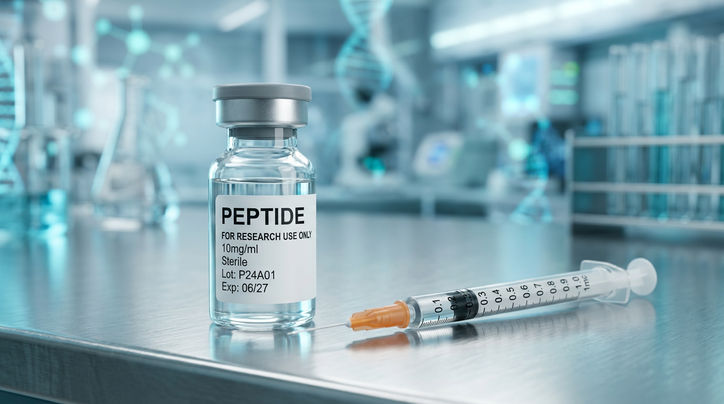
A peptide dosage calculator is a free tool that converts your vial size, bacteriostatic water volume, and target dose into an exact syringe draw volume. Instead of doing the reconstitution math by hand, you enter three inputs and instantly get the concentration of your solution and how many milliliters or syringe units to draw. This calculator works for single peptide compounds and multi-peptide blends.
How do I calculate peptide dosage from a vial?
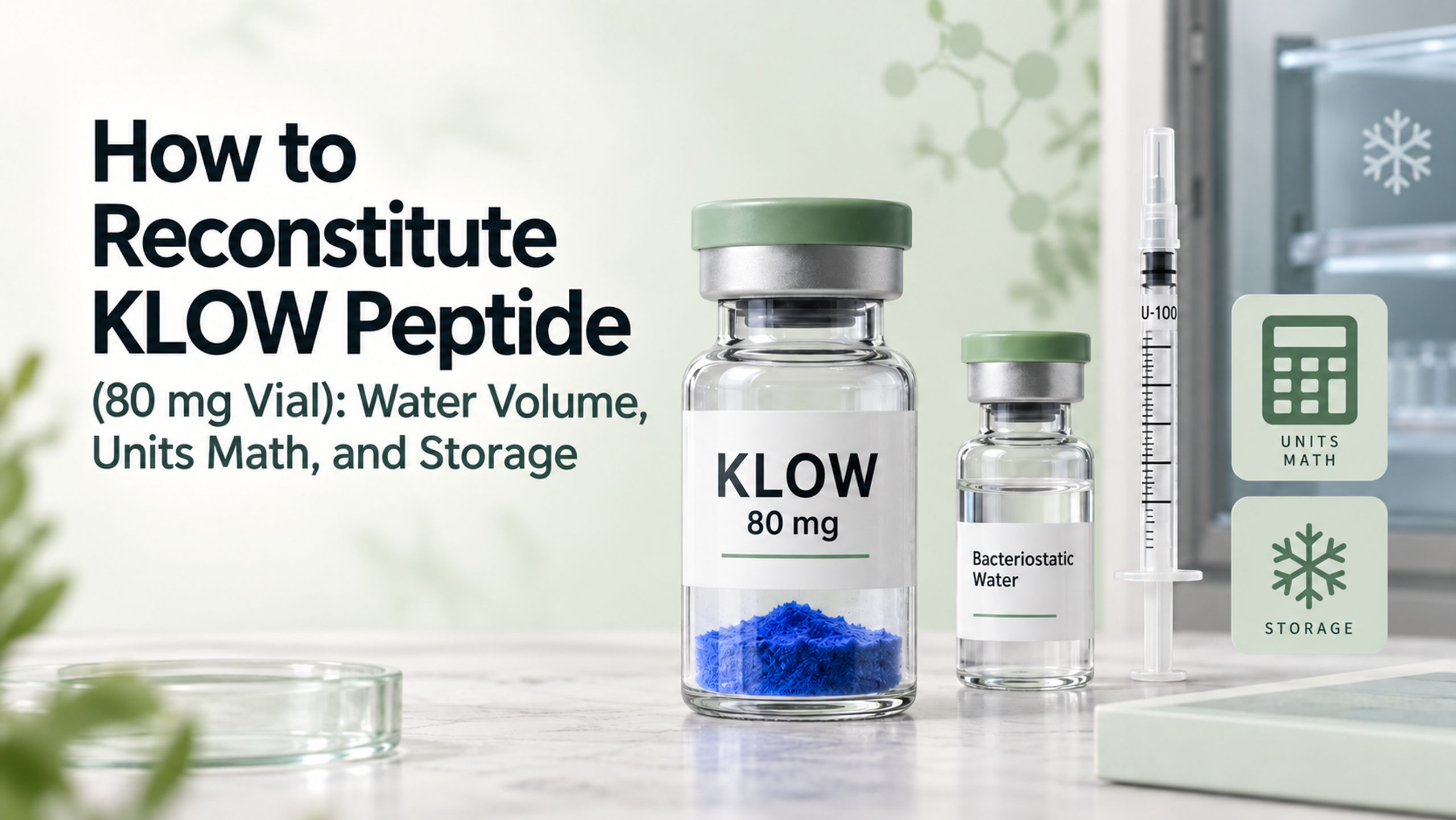
To calculate your peptide dose, divide the total peptide content of your vial in micrograms by the volume of bacteriostatic water you added in milliliters. This gives you your solution concentration in mcg/mL. Then divide your target dose by that concentration to get your draw volume. For example, a 5mg (5,000 mcg) vial reconstituted with 2mL of BAC water gives a concentration of 2,500 mcg/mL. A 250 mcg dose would require drawing 0.1mL. This calculator automates all of those steps instantly.
How much Bacteriostatic water should I add to a peptide vial?
Most people add 2mL to 3mL of bacteriostatic water per vial, but the right amount depends on the dose you want to draw and the syringe size you are using. Adding 1mL to a 5mg vial gives you a concentration of 5,000 mcg/mL, making each dose very small in volume. Adding 2mL gives you 2,500 mcg/mL, which is easier to measure on a standard insulin syringe. A general guideline is to choose a volume that puts your typical dose somewhere between 10 and 30 units on a U-100 syringe. Use the calculator above to test different water volumes and find what works for your dose.
How are peptides different from proteins?
Both are made of amino acids, but peptides are much smaller than proteins. Because of their tiny size, peptides can act like tiny messengers in the body, sending specific signals to your cells to tell them exactly what to do.
Are peptides safe?
There is no single answer because every peptide is entirely different. Safety depends on the specific compound, how pure it is, the dose you take, the way it was made, and your own personal medical history.
Are all peptides medicines?
No, they are not all medicines. The word "peptide" just describes the shape and chemical makeup of the molecule, rather than its legal or medical status. While some are officially approved prescription drugs, many others are strictly for research or are used as standard health supplements.
What does peptide reconstitution mean?
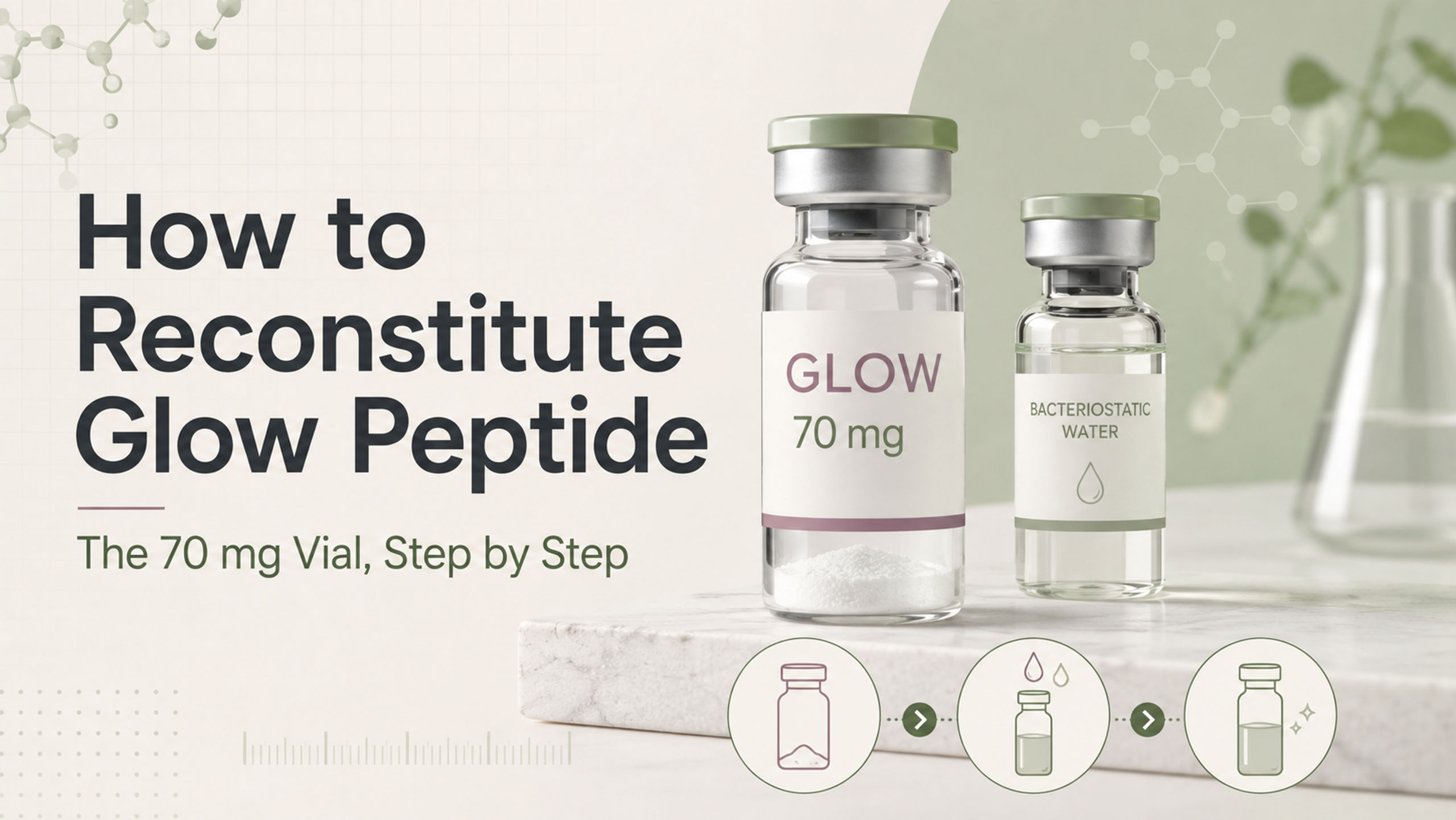
Reconstitution is the simple process of mixing a freeze-dried powder with a safe liquid to turn it into a usable liquid solution. Whenever this is done, it requires very clean and sterile methods to prevent any harmful bacteria from getting into the mixture.
Which peptide is best for my goals?
There is rarely one single best option for everyone. Instead of looking for a magic compound, it is much safer and more effective to start by looking at your specific goals. We recommend exploring our category pages first to learn about the different options that align with what you want to achieve.