KPV Peptide Benefits: What the Research Actually Shows
KPV peptide benefits graded by evidence: gut inflammation, skin, wound healing and antimicrobial data, with the actual study numbers, dosages and 2026 FDA status.

KPV peptide benefits studied in published research center on three areas: intestinal inflammation, inflammatory skin conditions, and wound healing. KPV is a three-amino-acid peptide (lysine-proline-valine) that forms the tail end of alpha-melanocyte-stimulating hormone, and nearly all of the evidence behind those benefits comes from rodent and cell-culture models rather than human trials. This guide covers what each benefit is actually supported by, the numbers from the underlying studies, the dosages researchers used, and where KPV stands after the FDA's July 2026 advisory vote.
What Is KPV Peptide?
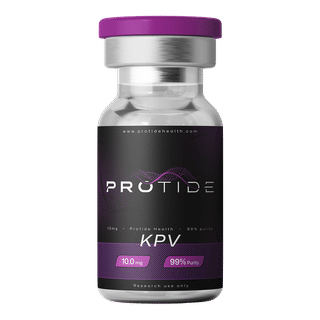
KPV is a synthetic tripeptide made of lysine (K), proline (P), and valine (V), corresponding to amino acids 11 through 13 of alpha-melanocyte-stimulating hormone (alpha-MSH). Alpha-MSH is a 13-amino acid hormone with well-documented anti-inflammatory activity, and researchers isolated its C-terminal fragment to find out whether the anti-inflammatory effect survived without the rest of the molecule.
It did. Work published in the early 2000s established that most of the anti-inflammatory activity of alpha-MSH can be attributed to this three-residue tail. That matters because the full alpha-MSH molecule also drives pigmentation and appetite signalling through melanocortin receptors. KPV appears to keep the inflammation-related activity while leaving those hormonal effects behind, which is the core reason it became a research target in its own right.
Three properties define KPV in the literature:
It is tiny. At three amino acids and roughly 342 daltons, KPV is one of the smallest peptides in active research, which is why it survives digestion better than larger peptides like BPC-157.
It is not a receptor agonist in the usual sense. Research indicates KPV does not depend on melanocortin receptors to work, which separates it from alpha-MSH.
It enters cells through a transporter that inflammation itself upregulates. This is the mechanism that makes the gut data interesting, covered in detail below.
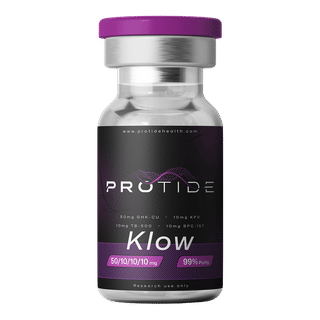
KPV also appears as the "K" in the four-peptide KLOW research blend, alongside GHK-Cu, BPC-157, and TB-500.
KPV Peptide Benefits: What the Research Actually Shows

The benefits attributed to KPV are not equally supported. Gut inflammation has replicated rodent data with quantified endpoints. Skin and antimicrobial claims rest on thinner ground. Systemic and neurological claims are largely extrapolation. The table below grades each one, and the sections that follow give the underlying numbers.
Claimed Benefit | Strongest Evidence Available |
|---|---|
Intestinal inflammation / IBD | Multiple independent rodent colitis models, quantified endpoints |
Inflammatory skin conditions | Cell culture and animal dermatitis models |
Wound and mucosal healing | Rodent and ex vivo epithelial models |
Antimicrobial activity | In vitro only, with published disagreement |
Systemic and neuroinflammation | Mechanistic extrapolation, minimal direct data |
Any human outcome | No completed randomized controlled trials |
Gut Inflammation and Inflammatory Bowel Disease
Gut inflammation is the best-supported of the KPV peptide benefits, and the anchor study is a 2008 paper from Dalmasso and colleagues at Emory University School of Medicine, published in Gastroenterology. The team tested KPV in two separate chemically induced colitis models in mice and measured what actually changed.

In the DSS-induced colitis model, mice receiving KPV in drinking water at 100 μM showed roughly a 50% reduction in myeloperoxidase activity, the standard marker of neutrophil infiltration into inflamed tissue. Colon length and weight, which shorten and thicken as colitis progresses, were preserved. IL-6 and IL-12 messenger RNA both dropped significantly.
The second model, TNBS-induced colitis, produced a smaller but consistent effect: about a 30% reduction in myeloperoxidase activity, with significant decreases in IL-1β, IL-6, TNF-α, and IFN-γ. Two different inflammatory triggers, the same direction of effect.
In cell culture, KPV reduced inflammatory signalling in intestinal epithelial cells at concentrations as low as 10 nM, a potency that reflects active transport into the cell rather than passive diffusion. Source: Dalmasso et al., Gastroenterology, 2008.
A 2016 follow-up from Viennois and colleagues extended the finding into colitis-associated tumor development. In that model, KPV prevented carcinogenesis in wild-type mice but had no effect in mice lacking the PepT1 transporter, which confirmed that the transporter is required for KPV to do anything at all. This is mouse cancer-model data and does not establish anything about cancer in humans, but it is unusually clean mechanistic evidence.
Inflammatory Skin Conditions
KPV has been studied for acne, eczema, psoriasis, and contact dermatitis, and the evidence here is real but earlier-stage than the gut data. In keratinocyte and dermal fibroblast cultures stimulated with TNF-α or LPS, KPV suppresses IL-8 production and inhibits NF-κB activation. In animal models, alpha-MSH and its fragments reduce inflammation in irritant and allergic contact dermatitis.
Shop research peptides
Live pricing from our top-rated vendor. Prices update as vendor listings change.
The practical appeal is the same one that drives the gut research: KPV appears to quiet inflammatory signalling without the broad immune suppression that topical corticosteroids produce, and without the pigmentation effect of full-length alpha-MSH. What does not exist is a controlled human trial in any dermatologic condition. Reports of KPV clearing eczema or psoriasis are anecdotal.
Wound Healing and Mucosal Repair
The clearest wound-healing data for KPV comes from a 2017 study in Molecular Therapy by Xiao and colleagues, who packaged KPV into hyaluronic-acid-functionalized nanoparticles roughly 272 nm across and delivered them orally in an ulcerative colitis model. Wounded colonic epithelial layers treated with the KPV nanoparticles showed significant, dose-dependent increases in recovery compared with untreated controls.
Two things are worth separating here. The healing effect was real in that model, but the delivery vehicle was doing substantial work: the nanoparticles concentrated KPV at inflamed colonic tissue in a way that a plain oral dose does not replicate. Studies using targeted delivery systems are not direct evidence for what an unformulated peptide does.
For skin wounds specifically, the data is thinner still, and comes mostly from alpha-MSH research rather than KPV alone. Researchers looking at peptides with a deeper tissue-repair literature usually land on BPC-157 or TB-500 instead.
Antimicrobial Activity
KPV's antimicrobial reputation traces to a 2000 report from Cutuli and colleagues describing activity against Staphylococcus aureus and Candida albicans across a broad concentration range, including picomolar levels. Subsequent work by Singh and Mukhopadhyay described 90% staphylocidal activity of Ac-KPV-NH2 at micromolar concentrations and 50% activity in the nanomolar range.
This is the one benefit category with published disagreement in the literature. The original antifungal finding was disputed in 2009, and all of this work is in vitro. Treat "KPV is antimicrobial" as a laboratory observation that has not been carried into an animal infection model, let alone a human one.
Systemic and Neuroinflammation
Claims that KPV reduces systemic inflammation, brain fog, or neuroinflammation are the weakest in the set. The reasoning is mechanistic: KPV inhibits NF-κB and NLRP3 inflammasome activation, both of which are involved in microglial activation, so a neuroprotective effect is plausible. Plausible is not the same as demonstrated. There is no published animal study measuring a KPV effect on cognition or neuroinflammatory endpoints, and the peptide's short half-life and preferential accumulation in the gut make systemic exposure the harder case to argue.
How KPV Works: PepT1, NF-κB, and MAPK

KPV works through a three-step sequence: it enters cells through the PepT1 di/tripeptide transporter, then blocks NF-κB nuclear translocation, then suppresses MAP kinase signalling, which together cut production of the inflammatory cytokines those pathways drive.
PepT1 transport. PepT1 is a transporter that normally sits in the small intestine and moves di- and tripeptides across the cell membrane. In inflammatory bowel disease it becomes abnormally expressed in the colon, and human biopsy work confirms it rises with inflammation. Dalmasso's group measured KPV's transport affinity at roughly 160 μM in epithelial cells and 700 μM in immune cells. The practical consequence is unusual: the sicker the tissue, the more transporter is available, so KPV concentrates preferentially where inflammation is worst.
NF-κB inhibition. NF-κB is the transcription factor that switches on most inflammatory gene expression. Once inside the cell, KPV prevents it from moving into the nucleus, so the genes stay off.
MAP kinase suppression. MAPK is a parallel signalling cascade that amplifies inflammatory responses. KPV dampens it, which is why the cytokine reductions in the colitis models span multiple cytokine families rather than a single one.
What KPV does not appear to do is act on melanocortin receptors. Getting and colleagues concluded KPV is unlikely to work through melanocortin receptors and more likely acts by inhibiting IL-1β function. That is the mechanistic reason KPV does not produce the tanning or appetite effects associated with alpha-MSH-derived compounds.
Research Dosages and Administration Routes
Published KPV studies used doses that do not translate cleanly to the amounts circulating in community protocols, and the gap is worth stating plainly. Dalmasso's mice received 100 μM KPV in drinking water. Cell-culture work used 10 nM to micromolar concentrations depending on the cell type. Neither figure converts to a human milligram dose without assumptions that no published study has validated.
Route | What the research supports |
|---|---|
Oral | The only route with replicated in vivo efficacy data, because PepT1 sits in the gut lining |
Subcutaneous | No published dose-response study; used in community protocols by extrapolation |
Topical | Cell-culture and animal dermatitis support; no controlled human dosing data |
Shop research peptides
Live pricing from our top-rated vendor. Prices update as vendor listings change.
The oral route is the mechanistically coherent one. KPV survives digestion better than larger peptides and is actively transported by an intestinal transporter, so an oral dose lands where the strongest evidence is. Subcutaneous administration bypasses that transporter entirely, which is a real argument against assuming injection is the stronger route for gut applications.
If you are working through concentration math on a reconstituted vial, the peptide dosage calculator handles the mg-to-units conversion, and Peptide Mind's guide on how to use peptides for the first time covers reconstitution and storage.

KPV vs BPC-157 vs Alpha-MSH
KPV, BPC-157, and alpha-MSH are frequently confused because all three are studied for gut-related inflammation, but they differ in size, mechanism, and what the research has actually measured.
Characteristic | KPV | BPC-157 |
|---|---|---|
Amino Acid Count | 3 | 15 |
Origin | Fragment of alpha-MSH | Fragment of human gastric juice protein BPC |
Key Mechanism | PepT1 transport, NF-κB and MAPK inhibition | Growth factor and nitric oxide pathway modulation |
Primary Research Focus | Intestinal and skin inflammation | Tissue repair, tendon and gut healing |
Research Stage | Preclinical | Preclinical |
The distinction that matters most: KPV is an anti-inflammatory, and BPC-157 is a repair agent. KPV quiets the signalling that drives inflammation but has no documented angiogenic or growth-factor activity. BPC-157 has a substantial rodent literature on tendon, ligament, and gut mucosal healing but a weaker case as a pure anti-inflammatory. They are studied together in blends for that reason, and Peptide Mind's breakdown of KLOW peptide benefits covers how the four-peptide combination is framed.
Against alpha-MSH, the parent molecule, KPV trades breadth for selectivity. Alpha-MSH activates melanocortin receptors and carries pigmentation, appetite, and sexual-function effects. KPV retains the anti-inflammatory activity without them.
KPV Peptide Side Effects and Safety
No controlled human safety data for KPV exists, so the side effect profile is assembled from animal studies and user reports rather than from trial adverse-event tables. In the rodent colitis studies, KPV was well tolerated at the doses tested, with no reported toxicity.
Side effects reported anecdotally are mild and mostly gastrointestinal: nausea, loose stools, or transient bloating in the first days of oral use. Injection-site redness is reported with subcutaneous administration, which is common to most injected peptides. Unlike alpha-MSH derivatives such as melanotan, KPV does not appear to cause skin darkening.
The real safety concerns sit elsewhere:
Drug interactions are uncharacterized. No interaction studies have been published. If you take immunosuppressants, biologics for autoimmune disease, or anything that modulates inflammatory signalling, there is no data on how KPV combines with them.
Long-term use is unstudied. The longest published animal exposures run weeks, not months.
Product quality is the largest variable. Research-use-only peptides are not manufactured to pharmaceutical standards, and purity varies widely between suppliers. Peptide Mind's KPV vendor comparison reviews batch certificates of analysis and measured vial content.
Pregnancy, nursing, and active malignancy have no safety data at all, in either direction.
KPV Legal Status After the July 2026 FDA Vote
KPV is not FDA-approved for any indication, and as of August 2026 it remains a research chemical rather than a medicine. What changed this summer is that it moved a step closer to legal compounding.
On July 23 and 24, 2026, the FDA's Pharmacy Compounding Advisory Committee reviewed seven nominated peptides and voted to recommend six of them for the Section 503A Bulks List. KPV passed 8 to 6 with one abstention, alongside BPC-157, TB-500, MOTS-c, epitalon, and Semax. Only emideltide was recommended against.
That vote is a recommendation, not a rule. The FDA is not required to adopt it, and compounding pharmacies cannot legally use KPV under 503A until the agency completes formal rulemaking, a process that typically runs 8 to 24 months.
Frequently Asked Questions
What does KPV peptide do?
KPV blocks inflammatory signalling inside cells. It enters through the PepT1 transporter, prevents NF-κB from activating inflammatory genes, and suppresses MAP kinase signalling. In mouse colitis models this cut myeloperoxidase activity by 30% to 50% and reduced IL-1β, IL-6, TNF-α, and IFN-γ. It does not repair tissue directly and does not stimulate growth factors.
Shop research peptides
Live pricing from our top-rated vendor. Prices update as vendor listings change.
Is KPV peptide safe?
There is no controlled human safety data. In rodent studies KPV was well tolerated with no reported toxicity, and anecdotal side effects are mild and mostly gastrointestinal. The unresolved risks are uncharacterized drug interactions, no long-term exposure data, and highly variable purity across research-use-only suppliers. It is not approved for human use.
How long does KPV peptide take to work?
No published study has measured a time-to-effect endpoint in humans, so any specific timeline is anecdotal. In the rodent colitis models, measurable reductions in inflammatory markers appeared within the study windows of roughly one to two weeks. Community reports for skin applications tend to cite faster subjective changes than gut applications, but neither is supported by trial data.
Is KPV peptide FDA approved?
No. KPV is not FDA-approved for any indication. In July 2026 the FDA's Pharmacy Compounding Advisory Committee voted 8 to 6 to recommend adding KPV to the 503A Bulks List, which would allow compounding pharmacies to prepare it. The FDA has not acted on that recommendation, and formal rulemaking typically takes 8 to 24 months.
Can KPV peptide be taken orally?
Yes, and oral is the route with the strongest supporting evidence. KPV is small enough to survive digestion and is actively transported by PepT1 in the intestinal lining, which is where the replicated animal efficacy data comes from. Subcutaneous injection bypasses that transporter, so it is not automatically the more effective route for gut applications.
KPV vs BPC-157: which is better for gut health?
They do different jobs. KPV is an anti-inflammatory that suppresses NF-κB and MAPK signalling and has replicated colitis-model data. BPC-157 is a repair agent with a larger rodent literature on mucosal and tendon healing but a weaker anti-inflammatory case. For inflammation-driven gut symptoms the KPV mechanism is the closer match; for structural damage, BPC-157 is.
Should KPV be taken in the morning or at night?
No published study has compared dosing times, so there is no evidence-based answer. Timing preferences circulating in community protocols are not derived from research. What the literature does address is route rather than schedule: oral administration is the mechanistically supported path for gut applications, because PepT1 expression is concentrated in the intestinal lining.
What the KPV Evidence Adds Up To
KPV peptide benefits are best understood as one strong research area surrounded by several weaker ones: intestinal inflammation has replicated, quantified rodent data across two colitis models and a confirmed transporter-dependent mechanism, while skin, antimicrobial, and systemic claims rest on cell culture or extrapolation. No human randomized controlled trial has been completed, which is the single most important fact about this peptide in 2026. Explore Peptide Mind's KPV research profile for the full study index and vendor testing data.
References
Dalmasso G, Charrier-Hisamuddin L, Nguyen HTT, Yan Y, Sitaraman S, Merlin D. "PepT1-Mediated Tripeptide KPV Uptake Reduces Intestinal Inflammation." Gastroenterology, 134(1), 166-178, 2008. PMC2431115.
Viennois E, Ingersoll SA, Ayyadurai S, Zhao Y, Wang L, Zhang M, Han MK, Garg P, Xiao B, Merlin D. "Critical Role of PepT1 in Promoting Colitis-Associated Cancer and Therapeutic Benefits of the Anti-inflammatory PepT1-Mediated Tripeptide KPV in a Murine Model." Cellular and Molecular Gastroenterology and Hepatology, 2(3), 340-357, 2016.
Xiao B, Xu Z, Viennois E, Zhang Y, Zhang Z, Zhang M, Han MK, Kang Y, Merlin D. "Orally Targeted Delivery of Tripeptide KPV via Hyaluronic Acid-Functionalized Nanoparticles Efficiently Alleviates Ulcerative Colitis." Molecular Therapy, 25(7), 1628-1640, 2017.
Getting SJ, Schiöth HB, Perretti M. "Dissection of the anti-inflammatory effect of the core and C-terminal (KPV) alpha-melanocyte-stimulating hormone peptides." Journal of Pharmacology and Experimental Therapeutics, 306(2), 631-637, 2003. PMID 12750433.
Songok AC, Panta P, Doerrler WT, Macnaughtan MA, Taylor CM. "Structural modification of the tripeptide KPV by reductive 'glycoalkylation' of the lysine residue." PLoS One, 13(6), 2018. PMC6023233.
Cutuli M, Cristiani S, Lipton JM, Catania A. "Antimicrobial effects of alpha-MSH peptides." Journal of Leukocyte Biology, 67(2), 2000. PMID 10670585.
Holland & Knight. "FDA Advisory Committee Endorses Compounding of Certain Peptides." August 2026.
Disclaimer: The information on Peptide Mind is for educational purposes only and is not a substitute for professional medical advice, diagnosis, or treatment. The peptides discussed are unapproved research chemicals for laboratory and research use only, not for human consumption. These statements have not been evaluated by the FDA, and nothing on this site is intended to diagnose, treat, cure, or prevent any disease. By accessing this site, you confirm you are 21 or older and agree to our Terms of Service.
Add a comment
This will be publicly visible.
Your email address will not be published.
Your comment will be reviewed by an admin before it is published.