Weight Loss Peptide Cheat Sheet
Complete guide to weight loss peptides including Semaglutide, AOD-9604, CJC-1295, Sermorelin, GHRP-6, and more. Compare dosages, fat-burning mechanisms, and protocols.
For research purposes only.
This cheat sheet is a research reference only — not for human consumption or therapeutic use.
| Peptide | Purpose | Vial Size | BAC Water | Dosing | Frequency | Cycle |
|---|---|---|---|---|---|---|
sur SurvodutideWeight | Weight Loss | 5 mg | 2 mL | 1.2–4.8 mg | Weekly | 12–24 weeks |
bam BAM-15Weight | Fat Loss / Metabolic | 10 mg | 2 mL | 50–200 mg | Daily | 4–8 weeks |
maz MazdutideWeight | Weight Loss | 5 mg | 2 mL | 3–9 mg | Weekly | 12–24 weeks |
cag CagrilintideWeight | Weight Loss | 10 mg | 3 mL | 0.25–0.5 mg | 2–3×/week | 8–12 weeks |
hex HexarelinGrowth | Muscle Growth | 2 mg | 2 mL | 100 mcg | 1–2× daily | 4 weeks on / 4 off |
GLP-2 GLP-2 (Tirzepatide)Weight | Weight Loss | 10 mg | 2 mL | 2.5–15 mg | Weekly | 16–48 weeks |
ipa IpamorelinGrowth | Fat Loss / Muscle | 10 mg | 3 mL | 200–300 mcg | 5 days on / 2 off | 12 weeks on / 4 weeks off |
cjc1 CJC-1295 with DACGrowth | Fat Loss / Muscle | 2 mg | 2 mL | 1–2 mg | Weekly | 8–12 weeks |
ghrp GHRP-6Growth | Muscle Growth | 5 mg | 3 mL | 100–200 mcg | 1–2× daily | 8–12 weeks |
ser SermorelinGrowth | Muscle Growth | 5 mg | 3 mL | 200–500 mcg | 5 days on / 2 off | 8–12 weeks on / 4 weeks off |
tes Tesamorelin/Ipamorelin BlendGrowth | Fat Loss / Muscle | 10 mg | 3 mL | 200–300 mcg each | 5 days on / 2 days off | 8–12 weeks |
tesa TesamorelinWeight | Fat Loss / Muscle | 10 mg | 3 mL | 0.5mg–2 mg | 5 days on / 2 days off | 8–12 weeks |
GLP-1 GLP-1 (Semaglutide)Weight | Weight Loss | 18 mg | 3 mL | 0.25–2.4 mg (titrated) | Weekly | 16+ weeks |
GLP-3 GLP-3 (Retatrutide)Weight | Weight Loss | 10 mg | 2 mL | 2–12 mg (titrated) | Weekly | 16-48 weeks |
5am 5-Amino-1MQMetabolic | Weight + Fat Loss | 25 mg | 3 mL | 1–5 mg | Daily | 16+ weeks |
aod AOD-9604Weight | Weight + Fat Loss | 10 mg | 0.6% acetic acid + 2 mL BAC water | 300–500 mcg | 5 days on / 2 days off | 12 weeks on / 4 weeks off |
cjci CJC-1295/Ipamorelin BlendGrowth | Fat Loss / Muscle | 10 mg | 2 mL | 100–300 mcg each | Daily | 8–12 weeks on / 4 weeks off |
cjc CJC-1295 (without DAC)Growth | Fat Loss / Muscle | 10 mg | 3 mL | 100–250 mcg | 5 days on / 2 days off | 8–12 weeks |
ghr GHRP-2Growth | Muscle Growth | 5 mg | 3 mL | 100–200 mcg | 1–2× daily | 8–12 weeks |
sur
Weight
- Purpose
- Weight Loss
- Vial Size
- 5 mg
- BAC Water
- 2 mL
- Dosing
- 1.2–4.8 mg
- Frequency
- Weekly
- Cycle
- 12–24 weeks
bam
Weight
- Purpose
- Fat Loss / Metabolic
- Vial Size
- 10 mg
- BAC Water
- 2 mL
- Dosing
- 50–200 mg
- Frequency
- Daily
- Cycle
- 4–8 weeks
maz
Weight
- Purpose
- Weight Loss
- Vial Size
- 5 mg
- BAC Water
- 2 mL
- Dosing
- 3–9 mg
- Frequency
- Weekly
- Cycle
- 12–24 weeks
cag
Weight
- Purpose
- Weight Loss
- Vial Size
- 10 mg
- BAC Water
- 3 mL
- Dosing
- 0.25–0.5 mg
- Frequency
- 2–3×/week
- Cycle
- 8–12 weeks
hex
Growth
- Purpose
- Muscle Growth
- Vial Size
- 2 mg
- BAC Water
- 2 mL
- Dosing
- 100 mcg
- Frequency
- 1–2× daily
- Cycle
- 4 weeks on / 4 off
GLP-2
Weight
- Purpose
- Weight Loss
- Vial Size
- 10 mg
- BAC Water
- 2 mL
- Dosing
- 2.5–15 mg
- Frequency
- Weekly
- Cycle
- 16–48 weeks
ipa
Growth
- Purpose
- Fat Loss / Muscle
- Vial Size
- 10 mg
- BAC Water
- 3 mL
- Dosing
- 200–300 mcg
- Frequency
- 5 days on / 2 off
- Cycle
- 12 weeks on / 4 weeks off
cjc1
Growth
- Purpose
- Fat Loss / Muscle
- Vial Size
- 2 mg
- BAC Water
- 2 mL
- Dosing
- 1–2 mg
- Frequency
- Weekly
- Cycle
- 8–12 weeks
ghrp
Growth
- Purpose
- Muscle Growth
- Vial Size
- 5 mg
- BAC Water
- 3 mL
- Dosing
- 100–200 mcg
- Frequency
- 1–2× daily
- Cycle
- 8–12 weeks
ser
Growth
- Purpose
- Muscle Growth
- Vial Size
- 5 mg
- BAC Water
- 3 mL
- Dosing
- 200–500 mcg
- Frequency
- 5 days on / 2 off
- Cycle
- 8–12 weeks on / 4 weeks off
tes
Growth
- Purpose
- Fat Loss / Muscle
- Vial Size
- 10 mg
- BAC Water
- 3 mL
- Dosing
- 200–300 mcg each
- Frequency
- 5 days on / 2 days off
- Cycle
- 8–12 weeks
tesa
Weight
- Purpose
- Fat Loss / Muscle
- Vial Size
- 10 mg
- BAC Water
- 3 mL
- Dosing
- 0.5mg–2 mg
- Frequency
- 5 days on / 2 days off
- Cycle
- 8–12 weeks
GLP-1
Weight
- Purpose
- Weight Loss
- Vial Size
- 18 mg
- BAC Water
- 3 mL
- Dosing
- 0.25–2.4 mg (titrated)
- Frequency
- Weekly
- Cycle
- 16+ weeks
GLP-3
Weight
- Purpose
- Weight Loss
- Vial Size
- 10 mg
- BAC Water
- 2 mL
- Dosing
- 2–12 mg (titrated)
- Frequency
- Weekly
- Cycle
- 16-48 weeks
5am
Metabolic
- Purpose
- Weight + Fat Loss
- Vial Size
- 25 mg
- BAC Water
- 3 mL
- Dosing
- 1–5 mg
- Frequency
- Daily
- Cycle
- 16+ weeks
aod
Weight
- Purpose
- Weight + Fat Loss
- Vial Size
- 10 mg
- BAC Water
- 0.6% acetic acid + 2 mL BAC water
- Dosing
- 300–500 mcg
- Frequency
- 5 days on / 2 days off
- Cycle
- 12 weeks on / 4 weeks off
cjci
Growth
- Purpose
- Fat Loss / Muscle
- Vial Size
- 10 mg
- BAC Water
- 2 mL
- Dosing
- 100–300 mcg each
- Frequency
- Daily
- Cycle
- 8–12 weeks on / 4 weeks off
cjc
Growth
- Purpose
- Fat Loss / Muscle
- Vial Size
- 10 mg
- BAC Water
- 3 mL
- Dosing
- 100–250 mcg
- Frequency
- 5 days on / 2 days off
- Cycle
- 8–12 weeks
ghr
Growth
- Purpose
- Muscle Growth
- Vial Size
- 5 mg
- BAC Water
- 3 mL
- Dosing
- 100–200 mcg
- Frequency
- 1–2× daily
- Cycle
- 8–12 weeks
Download the Weight Loss Peptide Cheat Sheet PDF
Save a free printable PDF of this peptide dosage cheat sheet — vial sizes, BAC water ratios, dosing amounts, and cycle lengths in one quick-reference chart.
Weight Loss Peptide Cheat Sheet — Research Notes
Key considerations and protocol notes for each peptide in this cheat sheet.
Weight
sur
Metabolic
Survodutide is an experimental weekly injection being studied for weight loss. It works by curbing appetite and boosting the number of calories your body burns, and early studies show it also helps with a liver condition called MASH.
Weight
bam
Metabolic
BAM-15 is an experimental compound that helps the body burn fat without raising body temperature, which makes it safer than similar older compounds. Most of what we know comes from animal studies, not humans.
Weight
maz
Metabolic
Mazdutide is an experimental injection being studied for weight loss and blood sugar control in type 2 diabetes. It works by curbing appetite and helping your body burn more energy.
Weight
cag
Metabolic
Cagrilintide mimics a natural hormone called amylin to help curb your appetite.
Growth
hex
Growth
Hexarelin triggers a strong release of growth hormone, but the body gets used to it quickly, so its effects can fade with regular use. It's given as an injection under the skin.
Weight
GLP-2
Metabolic
This is Tirzepatide, a medication that activates two gut hormone pathways (GIP and GLP-1) to help with weight loss and blood sugar. Dosing starts at 2.5 mg once weekly for four weeks, then moves to 5 mg, and can rise in 2.5 mg steps every four weeks up to a maximum of 15 mg. Maintenance doses are 5, 10, or 15 mg weekly. Some people use very small 'microdoses' of 0.5 mg or less, or split the weekly dose into two injections, to reduce side effects. Splitting doses has shown to lower the peak blood level by roughly 28%, which is the usual explanation for less nausea.
Growth
ipa
Growth
Ipamorelin encourages your body to release its own growth hormone and tends to cause fewer side effects than similar peptides. It's usually injected at night on an empty stomach, since that's when the body's own growth hormone surge happens. Doses above 300 mcg don't produce proportionally more growth hormone, so 300 mcg per injection is the practical ceiling.
Growth
cjc1
Growth
CJC-1295 with DAC is a long-acting peptide that keeps growth hormone levels steadily elevated over time.
Growth
ghrp
Growth
GHRP-6 triggers the release of growth hormone and also tends to increase appetite.
Growth
ser
Growth
Sermorelin encourages your body to release more of its own growth hormone. It's injected at night on an empty stomach, 30 to 60 minutes before bed, to line up with the body's natural overnight growth hormone release. Most protocols start at 200 to 300 mcg and increase by about 100 mcg every week or two.
Growth
tes
Metabolic
This is a combination of Tesamorelin and Ipamorelin that helps reduce belly fat while boosting your body's natural growth hormone release. Taken once daily in the evening on an empty stomach, since food blunts the growth hormone pulse. Because the two peptides are blended in equal amounts, the dose is capped by Ipamorelin, which stops producing more growth hormone above 300 mcg.
Weight
tesa
Growth
Tesamorelin stimulates natural growth hormone release and is best known for reducing visceral (belly) fat and can improve overall metabolism. Injected before bed, at least two hours after the last meal.
Weight
GLP-1
Metabolic
This is Semaglutide, a long-acting medication that helps control appetite and blood sugar. Dosing starts at 0.25 mg once weekly and steps up every four weeks: 0.25 → 0.5 → 1 → 1.7 → 2.4 mg, with most people settling at 1.7 or 2.4 mg. It's also available as a ready-to-use pen that doesn't require mixing with water, and as a once-daily pill.
Weight
GLP-3
Metabolic
This is Retatrutide, an experimental medication that activates three different gut hormone pathways at once. Doses are raised slowly over time, a process called titration, with each step held for four weeks. In the Phase 3 TRIUMPH trials, everyone starts at 2 mg per week and steps up from there: 2 → 4 → 6 → 9 → 12 mg. Earlier trials found that starting at 2 mg rather than 4 mg caused fewer stomach side effects while producing the same weight loss at 48 weeks. Some people take much smaller 'microdoses,' often around 0.5 mg per week, to reduce side effects further. Going up gradually matters because most side effects, especially nausea and other stomach issues, appear right after a dose increase rather than at a steady dose.
Metabolic
5am
Longevity
5-Amino-1MQ supports mitochondrial function and can help with fat loss.
Weight
aod
Metabolic
AOD-9604 is a small fragment of growth hormone that helps promote fat burning. It's injected in the morning on an empty stomach. It won't dissolve properly in plain bacteriostatic water and will cloud, flake, or gel at the bottom of the vial instead. Add a small amount of 0.6% acetic acid first and swirl until the solution turns clear, then top it up with bacteriostatic water, around 2 mL. If it has already gelled, adding the acid a few drops at a time will usually bring it back.
Growth
cjci
Growth
CJC-1295 and Ipamorelin work together to trigger a natural growth hormone pulse. Taken on an empty stomach before bed, with a break between cycles to keep the receptors responsive.
Build your own protocol
Create a custom peptide stack tailored to your goals. Add peptides, set dosages, and share it with the community.
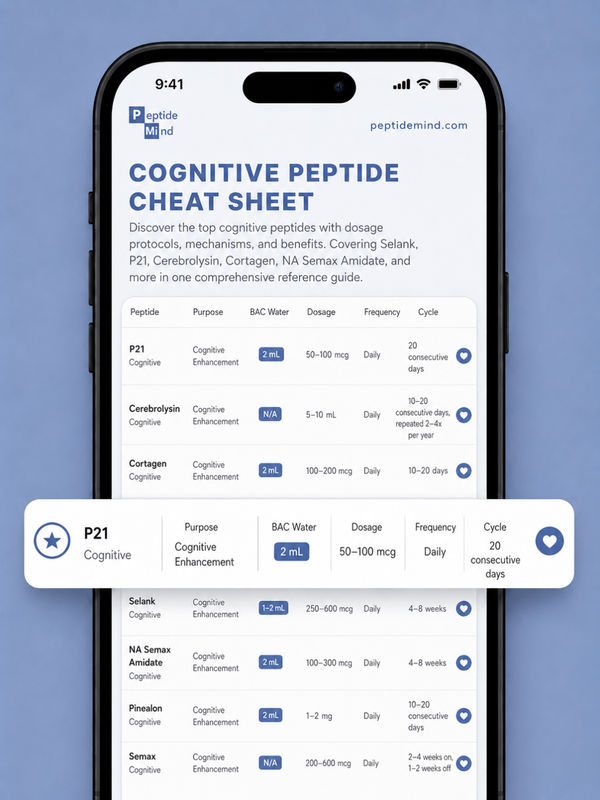
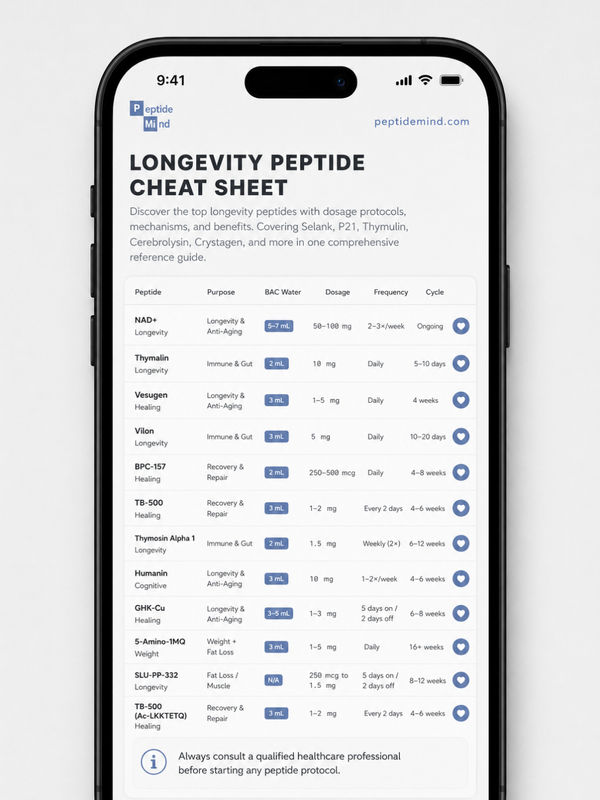
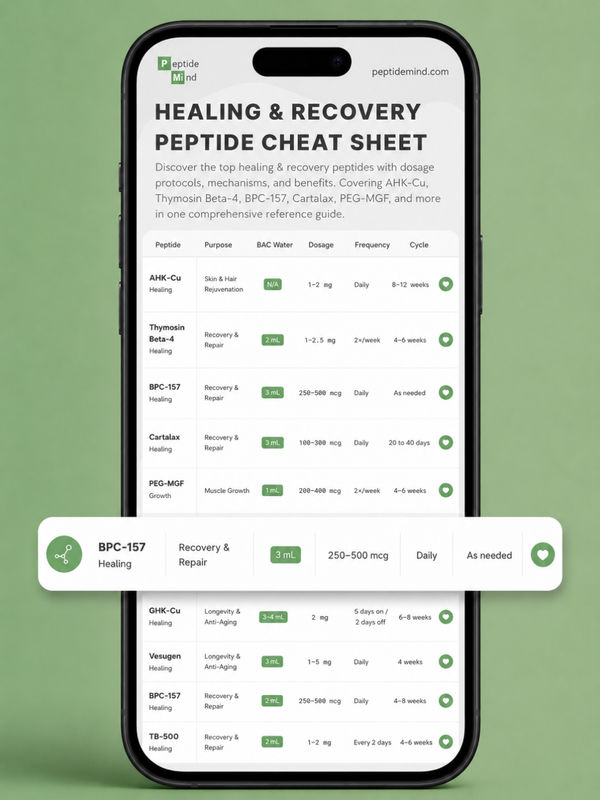
More Cheat Sheets
Explore other peptide reference sheets from PeptideMind.


Frequently asked questions
What is a peptide dosage calculator?
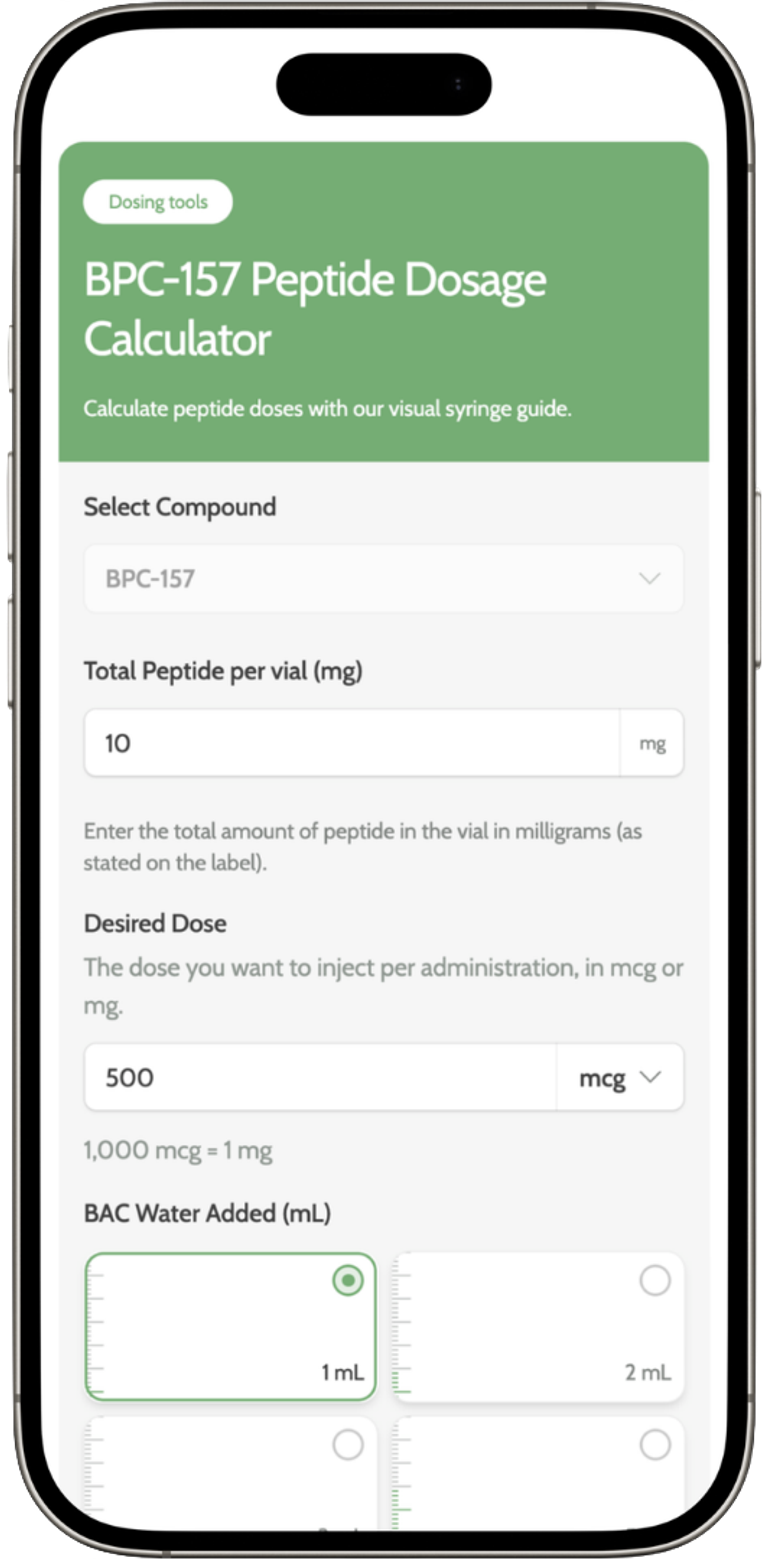
A peptide dosage calculator is a free tool that converts your vial size, bacteriostatic water volume, and target dose into an exact syringe draw volume. Instead of doing the reconstitution math by hand, you enter three inputs and instantly get the concentration of your solution and how many milliliters or syringe units to draw. This calculator works for single peptide compounds and multi-peptide blends.
How do I calculate peptide dosage from a vial?
To calculate your peptide dose, divide the total peptide content of your vial in micrograms by the volume of bacteriostatic water you added in milliliters. This gives you your solution concentration in mcg/mL. Then divide your target dose by that concentration to get your draw volume. For example, a 5mg (5,000 mcg) vial reconstituted with 2mL of BAC water gives a concentration of 2,500 mcg/mL. A 250 mcg dose would require drawing 0.1mL. This calculator automates all of those steps instantly.
How much Bacteriostatic water should I add to a peptide vial?
Most people add 2mL to 3mL of bacteriostatic water per vial, but the right amount depends on the dose you want to draw and the syringe size you are using. Adding 1mL to a 5mg vial gives you a concentration of 5,000 mcg/mL, making each dose very small in volume. Adding 2mL gives you 2,500 mcg/mL, which is easier to measure on a standard insulin syringe. A general guideline is to choose a volume that puts your typical dose somewhere between 10 and 30 units on a U-100 syringe. Use the calculator above to test different water volumes and find what works for your dose.
How are peptides different from proteins?
Both are made of amino acids, but peptides are much smaller than proteins. Because of their tiny size, peptides can act like tiny messengers in the body, sending specific signals to your cells to tell them exactly what to do.
Calculate peptide research quantities
Reference our peptide dosage, blend, and accumulation calculators for research purposes. Enter vial size, reconstitution volume, and target research quantity to calculate draw volumes instantly. For research use only — not administration or dosing guidance of any kind.